
Table of Contents
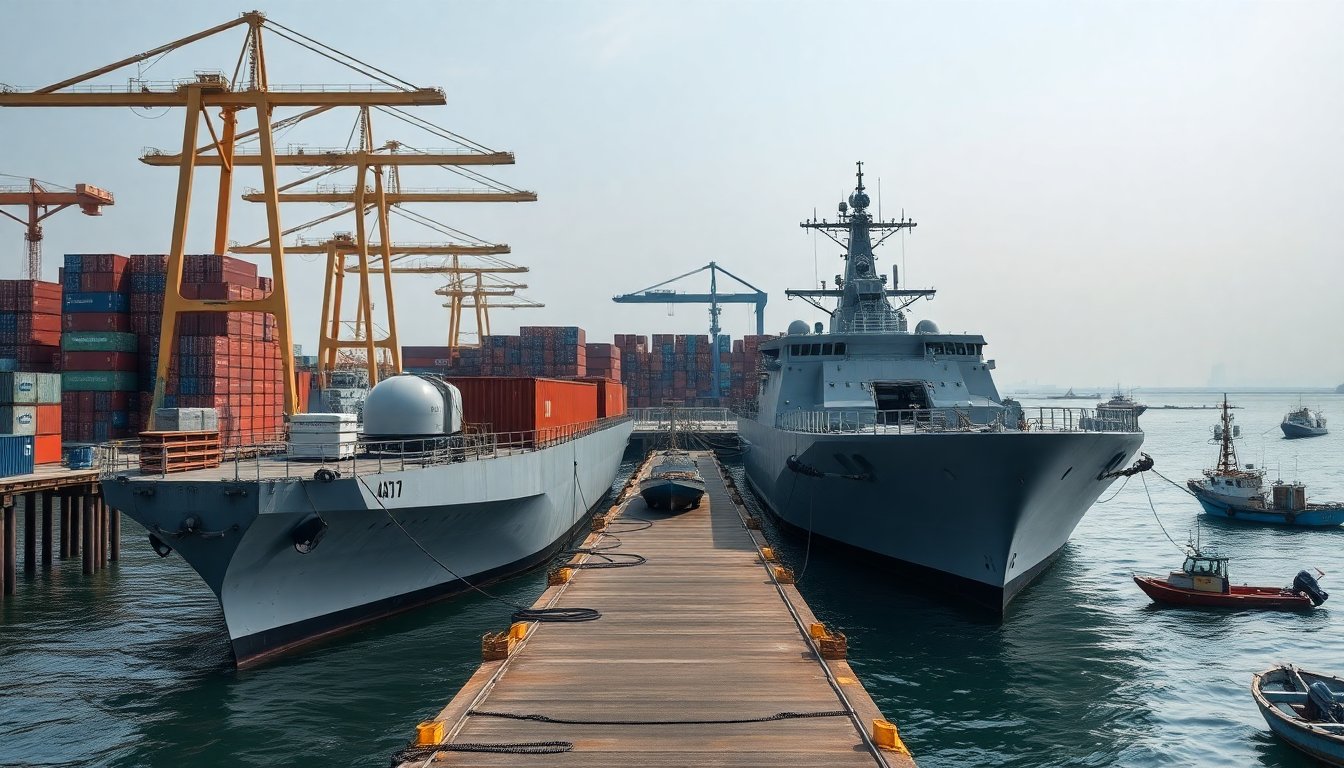
The appearance of the USS Tulsa and USS Santa Barbara in Penang has drawn attention because both vessels are configured for mine countermeasures and had been operating farther west in the Gulf region. Social media images and open reporting placed the two Independence‑class ships at the North Butterworth Container Terminal, a sighting that prompted questions about why platforms meant to help secure the Strait of Hormuz and nearby waters were hundreds — and in practical terms thousands — of miles away. The move has stirred discussion among analysts and critics over logistics, regional posture and the practical availability of mine‑clearing capability during an active confrontation in the Middle East.
To be precise about roles: these Independence‑class Littoral Combat Ships (LCS) were fitted with a mine package intended to replace aging purpose‑built vessels. The term mine countermeasures here covers a set of activities and systems — from towed sonar and unmanned surface vessels to helicopter‑deployed neutralizers — designed to find and clear explosive hazards at sea. That combination of sensors, drones and air assets is central to why the ships’ presence in Southeast Asian waters has generated debate: it reduces immediate availability of those systems in a region where reports of attempted mine‑laying and attacks have already disrupted shipping and raised the specter of long delays for convoys and commercial transits.
What was observed in Penang
Observers and defence reporters noted images showing the two ships alongside a container terminal in Penang. The public trail began with spotter photographs and amplified through social posts and specialist outlets. Those images were followed by reporting that both ships had spent recent months assigned to operations in and around the Middle East, including periods in Bahrain. The ships in question are among a subset of Independence‑class hulls prepared to perform mine countermeasures tasks using an ensemble of tools: towed mine‑hunting sonar, aerial detection systems, and unmanned surface vehicles equipped for sweeping and reconnaissance. The visibility of those assets in Malaysia produced practical questions about where the Navy intends to concentrate its regional mine‑clearing resources.
Ship fit and mission packages
The Independence variant in this role carries a modular collection of gear sometimes referred to as a module. That package can include Common Unmanned Surface Vehicles (CUSV), helicopter‑borne sensors operated from MH‑60 Sea Hawk airframes, and specialized sonar systems. While the modularity promised flexible reconfiguration, the real‑world employment has often left ships committed to particular mission sets for extended stretches. The practical effect is that when an LCS is laden with the mine module it becomes one of the Navy’s principal tools for clearing navigational hazards, even as questions persist about whether a metal‑hulled LCS fully replicates the low‑signature advantages of older fiberglass‑hulled designs.
Why the redeployment matters
Strategically, moving vessels configured for mine work away from the Gulf reduces the pool of assets immediately available should mine‑related incidents escalate in the Strait of Hormuz. The United States had positioned these LCS hulls to backfill the retirement of Avenger‑class mine hunters, ships purpose‑built to limit magnetic and acoustic signatures while painstakingly clearing mines. The shift raises operational concerns because mine‑clearing tasks are inherently time‑consuming and need specialised crews and support. If a substantial portion of that capability is operating far from where a crisis is unfolding, planners face harder choices about escorts, convoying and how quickly shipping lanes can be reopened.
Limitations and maintenance realities
Beyond distance, there are technical limitations to consider. Field reports and briefings have pointed to long prep and calibration times for unmanned systems, occasional mission‑length failures in sensors, and the risk of single‑point mechanical failures during deployment or recovery. Those issues mean an LCS team may need hours of maintenance before a sortie and still face the possibility that critical data is not collected until after a mission is complete. Such constraints underline how replacing a specialised, purpose‑built class with a larger multi‑mission vessel changes the tempo and reliability of mine‑clearing operations.
Diplomatic and operational context going forward
There are nontechnical reasons the ships might be in Malaysia: friendly port access, routine logistics, or decisions aimed at reducing vulnerability in a theater recently exposed to drone and missile strikes. U.S. naval spokespeople have described port visits as standard practice reflecting military cooperation with regional partners. At the same time, the visible relocation of mine‑countermeasures assets is likely to feed renewed calls from allies and critics for clearer explanations about resource allocation in a time of heightened maritime risk. For planners and commercial shippers alike, the immediate question is how long those ships will remain in Southeast Asian waters and whether additional mine‑clearing platforms will return to the Gulf quickly enough to support any convoy or escort operations that might be required.