
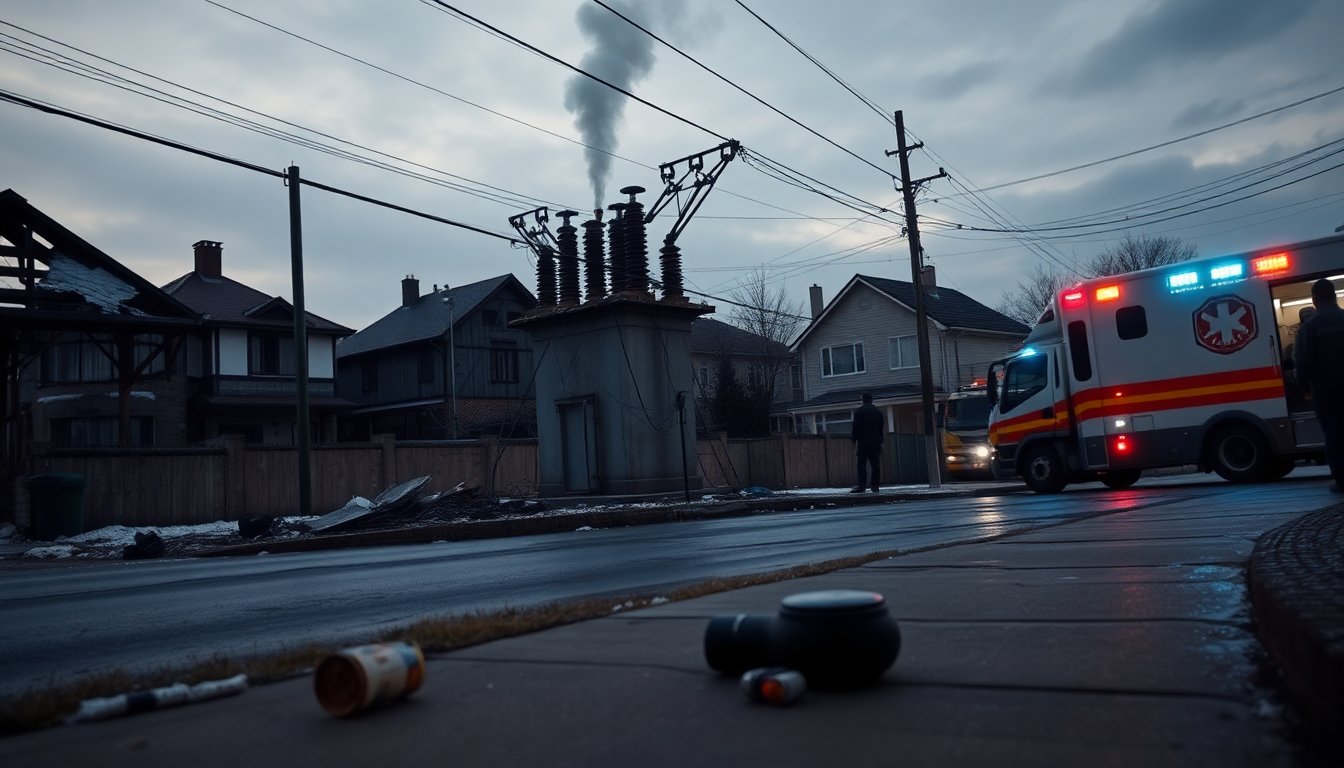
Russian strikes overnight battered Ukraine’s power network and struck civilian sites across several regions, leaving towns plunged into darkness and emergency services racing to respond. Officials say the attack combined missiles and waves of drones, aiming largely at electrical infrastructure but also hitting homes, transport hubs and public buildings.
The human toll was immediate and painful. President Volodymyr Zelenskyy and regional authorities confirmed multiple deaths and numerous injuries as rescue teams sifted through rubble. In Lviv, an explosion on a busy shopping street killed a 23‑year‑old policewoman and injured more than two dozen people; the mayor denounced the blast as a terrorist act. Kyiv and nearby districts reported further casualties, including children, and widespread damage to apartments, schools and civic facilities.
Ukrainian authorities described the onslaught as large-scale — roughly 345 weapons in total: about 50 missiles and nearly 297 unmanned aerial systems. Air‑defence units managed to intercept a substantial share, downing dozens of missiles and hundreds of drones, officials said. Still, damage to multiple substations and distribution nodes cut electricity to hospitals, water treatment sites and heating systems, leaving vital services operating only intermittently or not at all.
The consequences are more than technical. Extended outages endanger medical care, disrupt supply chains, and thrust vulnerable people into harsher winter conditions. Elderly residents, those with chronic illnesses and displaced families face rapidly escalating risks as heating, clean water and transport falter. Humanitarian groups warn that the longer repairs stretch out, the deeper and more widespread the suffering will become.
Beyond immediate needs, the strikes highlight how fragile energy systems ripple through society and the economy. Power failures stall production, squeeze logistics and force companies to brace for higher insurance and operational costs. That reality underlines the value of investments in grid hardening, decentralized generation and faster repair capacity — measures that are both humanitarian and pragmatic.
Practical steps could shorten recovery times: pre‑positioning repair crews and spare parts, expanding microgrids and backup generation, and building clear contingency plans into corporate and municipal strategies. Stockpiles of fuel, modular power units and tested supply‑chain redundancies can cut the downstream damage when networks are hit.
Reports also came from border areas and occupied territories. Local officials in Zaporizhia, where Russia has installed authorities, said energy facilities were damaged and crews were trying to restore supplies. Across the border in Russian regions such as Belgorod, governors reported interruptions to electricity, heating and water services. Moscow’s defence ministry offered a different narrative, claiming intercepts of Ukrainian drones over several central regions; independent verification remains hard amid restricted access and the fog of war.
Conflicting accounts and limited on‑the‑ground reporting complicate accurate damage assessments and slow the targeted deployment of humanitarian and repair resources. Meanwhile, the strikes have widened the conflict’s footprint beyond the front lines — disrupting airports, igniting fires at fuel depots and striking transport and storage nodes that keep everyday life moving. The result is not only immediate human suffering but a cascade of social and economic shocks that will take time and coordinated effort to repair.