
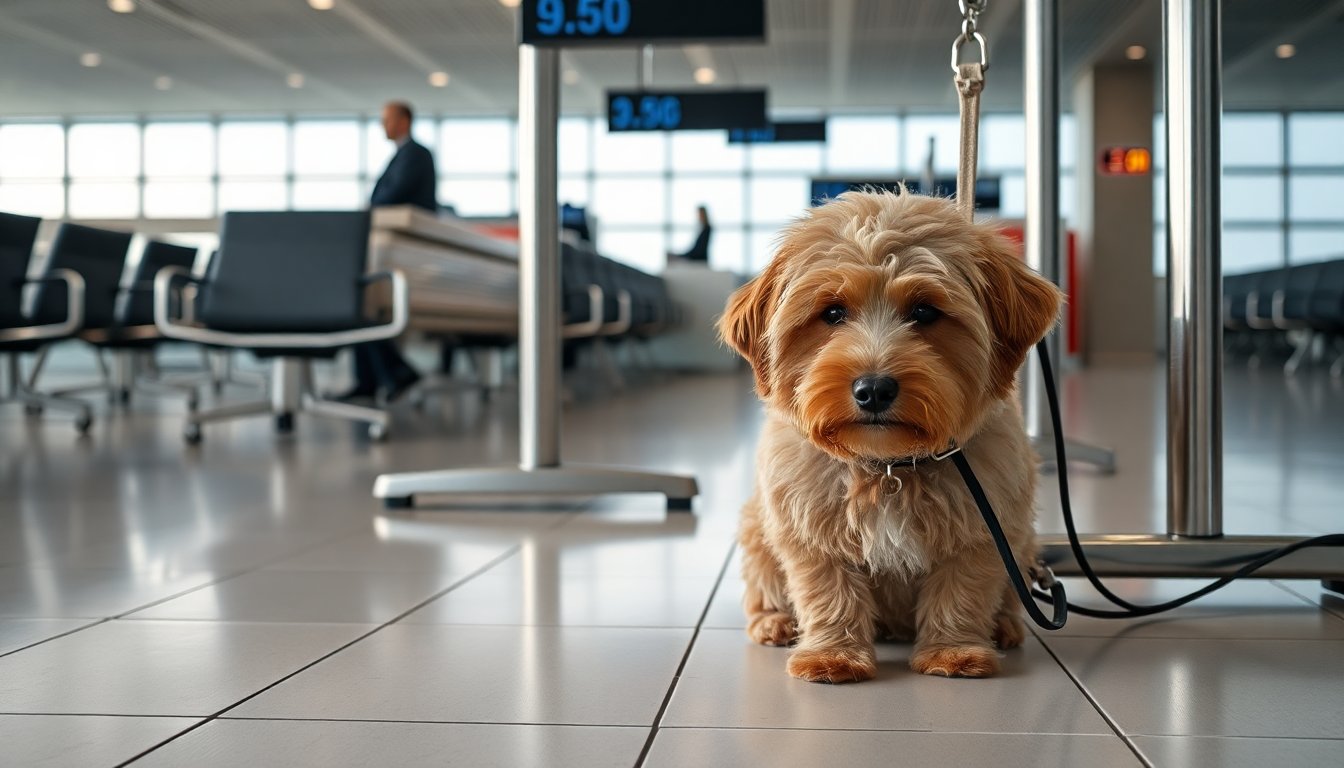
Surveillance video and police reports show a disturbing scene at Harry Reid International Airport on Feb. 2: a woman walked up to the JetBlue ticket counter, tied her two-year-old goldendoodle–mini poodle mix to a metal baggage sizer used for carry-on measurements, and left. Airline employees alerted authorities after determining the passenger hadn’t submitted the required online paperwork to travel with an animal as a service companion and therefore could not receive a boarding pass. When staff confronted her, the passenger’s explanation—that she was stepping away to rebook her flight—did not match the employees’ account. Las Vegas Metropolitan Police officers who reviewed the footage arrested the woman on charges of animal abandonment and resisting arrest.
The dog, quickly nicknamed “Jet Blue” by airport personnel, became the immediate focus of staff and responding officers. After being taken from the checkpoint, the animal was transported for a veterinary evaluation. Authorities reported no life-threatening injuries; routine vaccinations and a basic health screening were completed, and any further diagnostics haven’t been disclosed. The dog was held under the required 10-day reclaim period; when the owner did not return, custody was transferred to Retriever Rescue of Las Vegas.
Retriever Rescue says interest from potential adopters has been strong, but staff plan to vet applicants carefully. Rescue representatives describe the dog as affectionate and resilient but traumatized by the experience. They emphasized that their placement decisions will prioritize stability and long-term security, and that they’ll be deliberate about the dog’s next home.
Police continue to investigate, reviewing surveillance footage and witness statements. A claim that the dog carried a tracking device remains unverified, officials say. Meanwhile, the woman’s case will move through the local criminal justice system, where prosecutors will decide on formal filings based on the evidence in the police report.
This episode has drawn attention to airline rules and the risks of leaving a pet unattended. Airport and animal-welfare officials reiterated that failure to complete required documentation—or to communicate clearly with airline staff—can lead to denied boarding and, in extreme cases, criminal consequences. They urged travelers to plan ahead: check carrier policies, bring paperwork proving service-animal status if applicable, and contact airline agents right away if problems arise. A few minutes of planning and clear communication can prevent a frightening, possibly criminal, situation for both people and animals.