
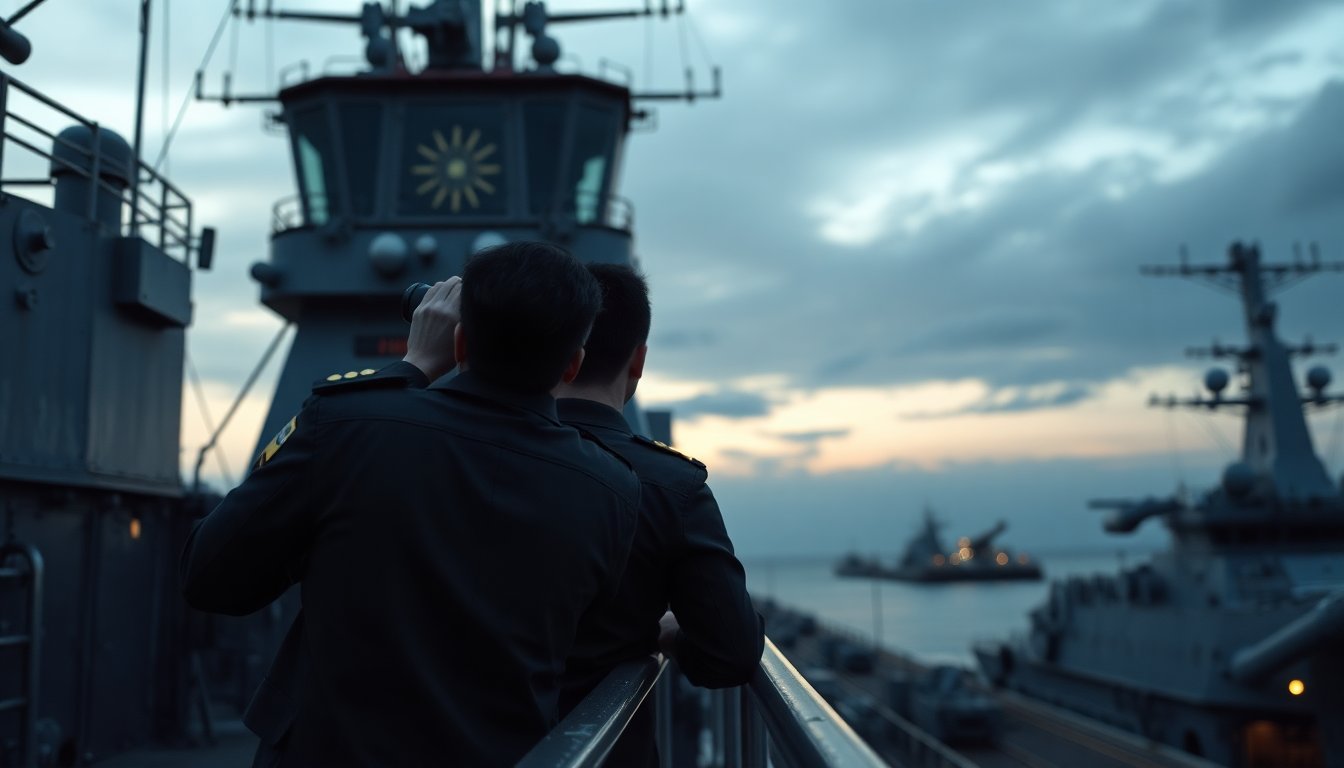
January brought sudden, high‑profile shakeups at the top of China’s military and state nuclear apparatus. On January 24, authorities announced that Central Military Commission members Generals Zhang Youxia and Liu Zhenli were being probed for “serious violations of discipline and law.” Five days earlier, officials had accused Gu Jun, a senior executive at the China National Nuclear Corporation, of similar offenses. These moves came as the People’s Liberation Army (PLA) presses an aggressive modernization program and steps up activity around Taiwan — a combustible mix of personnel change and capability growth.
Why this matters now These investigations target senior leaders at a pivotal moment for the PLA. As Beijing accelerates procurement of new ships, missiles and logistics systems and deepens joint‑operations training, purges at the top alter how analysts interpret both Beijing’s internal politics and its external behaviour. Discipline drives can root out corruption and tighten political control, but they can also fracture command continuity just when units are absorbing sophisticated platforms and updated doctrines.
Ripple effects on regional risk Swapping out senior officers during an intense modernization push changes the regional risk equation. New appointees bring fresh assumptions about planning and operations; they can speed decision‑making or unsettle established command relationships. At the same time, steady investment in hardware and logistics keeps pressure on neighbouring militaries and diplomats. Personnel turbulence and capability expansion don’t cancel each other out — they interact, sometimes in stabilizing ways, sometimes in ways that raise the odds of miscalculation around the Taiwan Strait.
Consolidation and its costs State media framed the probes as part of a broader campaign to tighten discipline and boost “warfighting readiness.” That narrative links the purges directly to modernization: cleansing the ranks, the message goes, prepares the military for higher performance. But the trade‑offs are real. Removing entrenched figures can clear out corruption and improve unit morale if competent successors are ready to step in. Conversely, abrupt turnover can disrupt training cycles, delay procurement and create short‑term gaps in operational capacity. Analysts will be watching promotion lists, unit rotations and exercise schedules for signs of recovery — or continued instability.
Power increasingly centered at the top Since the Central Military Commission has shrunk, and the January actions left the body increasingly dominated by Xi Jinping and a small inner circle. That concentration shortens the chain of command and makes military decision‑making more tightly linked to political leadership. The upside is faster, more coherent implementation of top‑level strategy; the downside is a weakening of institutional checks and less professional autonomy for senior officers. Expect doctrinal priorities and procurement plans to more directly reflect the leadership’s preferences.
Tension between innovation and control Modernizing a military requires technical expertise, decentralized experimentation and space for field tests. Yet the current push for tighter political oversight nudges the PLA toward uniformity and centralized control. Those forces pull in opposite directions. Which prevails — agility or conformity — will shape performance in complex scenarios, particularly operations focused on Taiwan. Training tempo, logistics resilience and the quality of command relationships will be the clearest indicators of which impulse is winning out.
Exercises as a proving ground Recent drills under the Eastern Theater Command offer a concrete picture of how modernization and personnel change are playing out. Large sea‑air manoeuvres and combined‑arms exercises are increasingly synchronized, rehearsing operations that aim to coerce below the level of full war. These activities demonstrate real gains in interoperability and capability even as leadership churn continues.
What to watch next Keep an eye on several practical signals: the pace and composition of promotions, changes in procurement timelines, the frequency and scale of joint exercises, and any public shifts in doctrine or training emphasis. Those indicators will reveal whether the PLA is stabilizing after the purges, accelerating its modernization without interruption, or experiencing deeper friction between political control and operational requirements.
In short, China’s January personnel moves are more than internal housekeeping. They reshape command dynamics at a moment of rapid military change, and that combination will reverberate across the Taiwan Strait and beyond.