
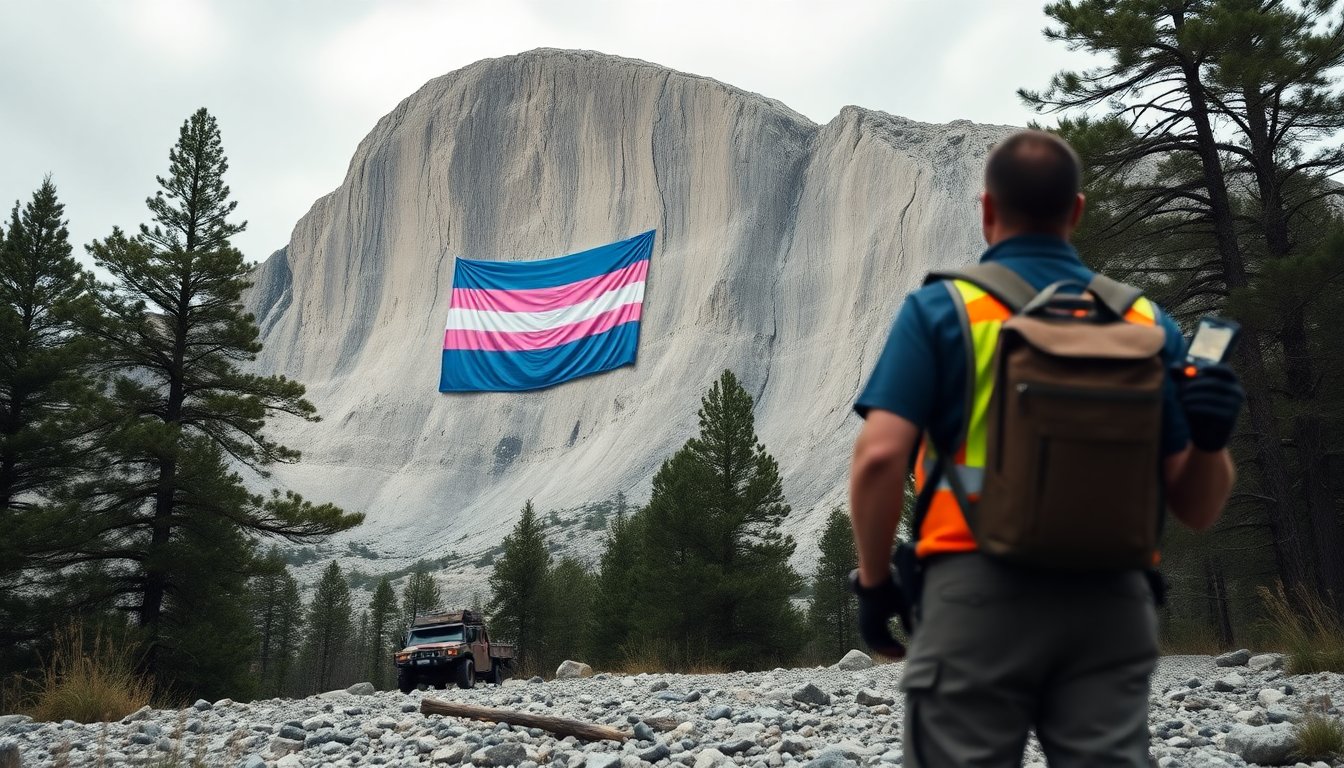
Yosemite National Park is facing a lawsuit after it fired Shannon “SJ” Joslin, a non-binary wildlife biologist who uses they/them pronouns, over a transgender pride flag draped across the face of El Capitan. Joslin says the display happened off the clock and separate from their job duties. They’ve sued, arguing the dismissal punished protected off‑duty speech and amounted to viewpoint discrimination; they want their job back and damages for emotional and medical harms.
What happened
– Joslin and several others hung a very large transgender pride flag — roughly 55 by 35 feet — on El Capitan. Participants told reporters the action was not part of any park assignment and took place outside official work hours.
– Yosemite officials say the employee was fired for failing to meet standards of acceptable conduct. Park spokespeople pointed to rules that bar unpermitted demonstrations on federal land, rules officials say protect resources, ensure visitor safety, and preserve the park experience.
Park response and new limits
– The National Park Service tightened employee conduct guidance and announced restrictions on large banners, flags or signs without permits. The agency framed the move as protecting both people and place, and said permits remain required for many organized displays.
– Officials also emphasized that staff are expected to avoid actions, even off duty, that would impact park resources or interfere with operations.
Why this is legally interesting
– The central legal question is whether the park’s enforcement crossed the line into unconstitutional viewpoint discrimination. Joslin’s complaint claims the punishment and related inquiry were motivated by disagreement with their political expression in support of the transgender community.
– Government lawyers will likely argue the rules are content‑neutral time, place and manner restrictions justified by safety and preservation concerns. Courts typically examine whether such limits are narrowly tailored, content neutral, and leave open adequate alternative channels for expression — factors that will shape this litigation.
What to expect from the case
– Discovery will matter: internal emails, enforcement records and disciplinary files could show whether similar conduct was treated differently depending on its message.
– Expect fights over privileged materials and the scope of discovery, plus attention from civil‑rights groups and congressional oversight. Those records could determine whether enforcement was evenhanded or selective.
Broader implications
– The case tests how federal agencies balance free expression with conservation and public safety on iconic public lands. A ruling could influence permit policies at national parks and set precedent for how large-scale displays are handled on federally managed landscapes.
– Beyond legal doctrine, the dispute highlights institutional trade-offs: agencies must weigh public access and staff speech against resource protection and operational risks.
What Joslin is seeking and next steps
– Joslin seeks reinstatement and unspecified damages for mental anguish and alleged health impacts tied to the termination. The lawsuit names the National Park Service, the Department of the Interior and the Department of Justice.
– The next milestones will likely be discovery battles and motions over preliminary relief. How the court rules on those issues will shape whether this becomes a narrow personnel dispute or a broader First Amendment test case.
Community reaction
– Local civil‑rights organizations and national watchdogs are watching closely. If the record shows inconsistent enforcement, that could prompt policy reviews across agencies and sharpen demands for clearer guidance on when and how expressive acts on federal land may be restricted. It’s a collision of employee speech rights, administrative rules meant to protect fragile public places, and how government bodies enforce those rules. The evidence uncovered in discovery — not just the headlines — will likely decide whether this becomes a landmark free‑speech ruling or a case about internal discipline and permitting practices.