
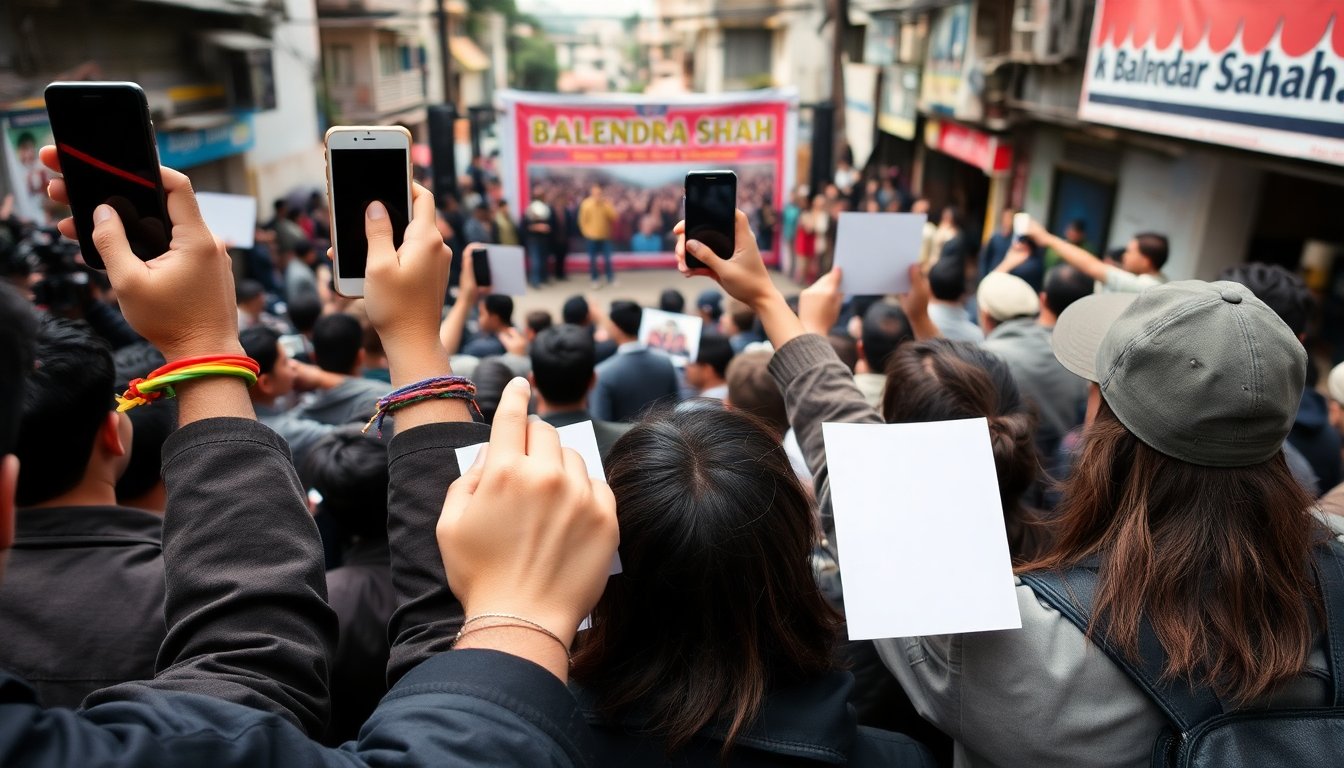
Street energy is electrifying Kathmandu as a striking newcomer takes center stage. Balendra Shah — commonly known as Balen — has swapped his rapper persona for political stardom. After serving as Kathmandu’s mayor, he’s now campaigning for national office and drawing festival-sized crowds.
His supporters, many of them first-time voters, treat him as a symbol of generational change. They’re tired of the same parties and familiar faces; they want a different direction, and they see Balen as the vehicle for that shift.
The veteran against him
Standing across the aisle is KP Sharma Oli, long-time leader of the Communist Party of Nepal (Unified Marxist–Leninist) and a multiple-term prime minister. Oli is contesting in Jhapa, a district heavy with political symbolism and electoral clout. The matchup between Balen and Oli has come to feel like a referendum — not just on two politicians, but on competing visions for Nepal’s future.
What the race means
This election has been shaped by recent, potent street protests. What began as a dispute over social-media restrictions widened into sustained demonstrations against corruption and nepotism. Young people, organized online and on the streets, kept pressure on institutions. Security responses that left many dead and injured intensified public anger and opened space for new voices.
The role of Gen Z
Young voters were not bystanders; they led. They used social platforms to set agendas, fact-check claims and organize across cities and towns. Their tactics have remade campaign playbooks: digital outreach and rapid-response messaging now sit alongside door-to-door canvassing. Parties are paying attention — youth turnout and online engagement are guiding where resources are spent and which promises are amplified.
Street rallies still carry symbolic weight, but digital networks supercharge reach and coordination. That mix has unsettled established parties and boosted candidates who can translate online buzz into on-the-ground momentum. The movement didn’t create a single ideology; it produced a set of expectations — transparency, merit-based appointments and limits on patronage — that now dominate the debate.
Two contrasting appeals
At its core, this contest pits two models against one another. One candidate leans on institutional experience, deep-rooted party machinery and a track record of governance. The other trades in youth culture, viral messaging and a promise of swift change. Urban dissatisfaction tends to favor the latter; rural voting patterns still tend to bolster entrenched forces.
Strategists say the split forces parties to do both: keep retail, neighborhood-level campaigning alive while investing in social-media traction that can make a message go national. But winning isn’t just about attention. Voters want concrete plans on jobs, education and services. Turning online enthusiasm into durable electoral support takes detailed policy proposals and robust local organization.
Oli’s case for experience
Balen has converted municipal visibility and pop-cultural appeal into a campaign focused on job creation and accountability. He often speaks directly through social channels and rallies, sometimes avoiding traditional press interviews — a style that energizes young supporters but leaves critics wondering whether celebrity can substitute for administrative depth.
Oli’s backers make the opposite argument: experience matters. They point to his administrative record and extensive local networks as tools for stable governance. Critics, meanwhile, accuse him of heavy-handed responses to protests — episodes of forceful policing that strained civil liberties. Supporters counter that strong leadership is needed to safeguard the nation, deliver infrastructure and navigate tricky regional diplomacy.
His supporters, many of them first-time voters, treat him as a symbol of generational change. They’re tired of the same parties and familiar faces; they want a different direction, and they see Balen as the vehicle for that shift.0
His supporters, many of them first-time voters, treat him as a symbol of generational change. They’re tired of the same parties and familiar faces; they want a different direction, and they see Balen as the vehicle for that shift.1
His supporters, many of them first-time voters, treat him as a symbol of generational change. They’re tired of the same parties and familiar faces; they want a different direction, and they see Balen as the vehicle for that shift.2
His supporters, many of them first-time voters, treat him as a symbol of generational change. They’re tired of the same parties and familiar faces; they want a different direction, and they see Balen as the vehicle for that shift.3
His supporters, many of them first-time voters, treat him as a symbol of generational change. They’re tired of the same parties and familiar faces; they want a different direction, and they see Balen as the vehicle for that shift.4