
Table of Contents
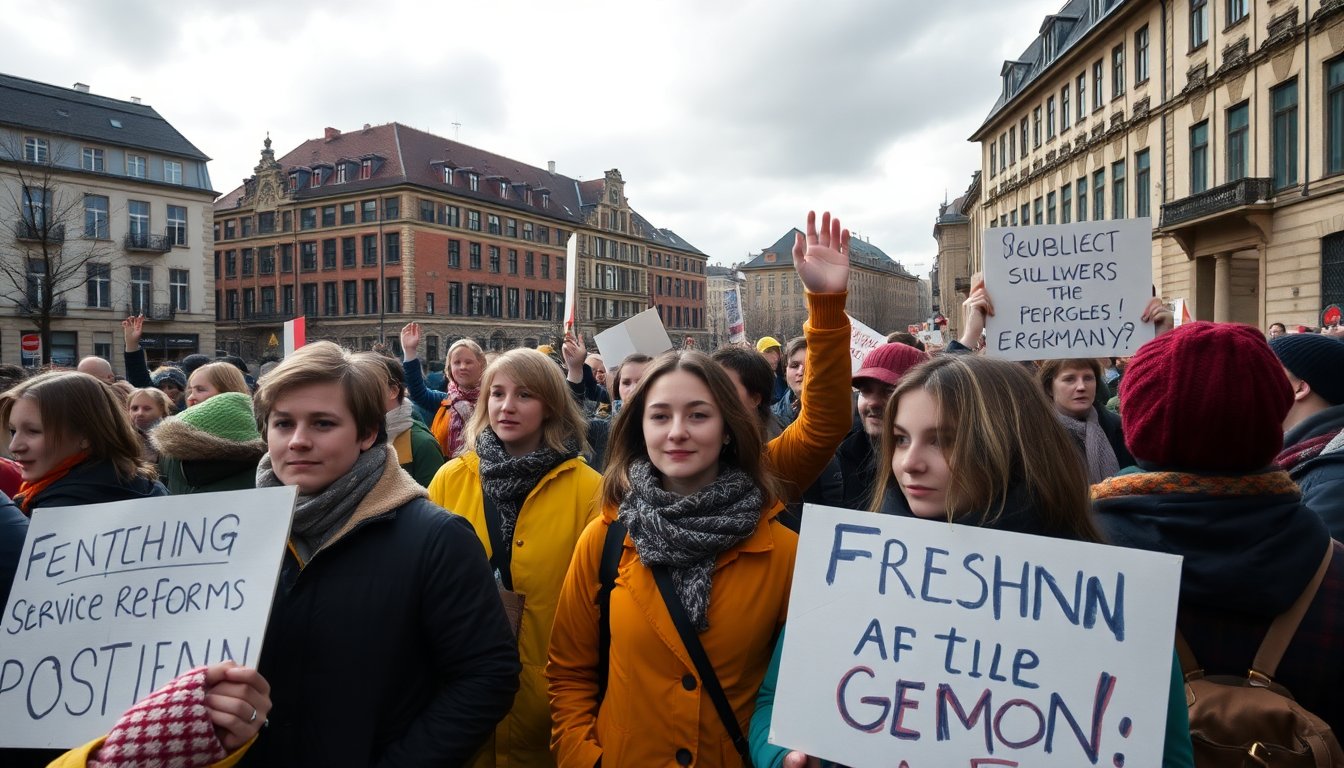
In a significant wave of activism, students from various schools in Germany staged protests on a Friday morning, opposing newly approved military service reforms. The recent legislation mandates that all males aged 18 must complete a questionnaire assessing their fitness and willingness to serve in the military, while participation for females remains optional.
This change coincides with the decision to reinstate obligatory medical evaluations for young men born in 2008 and later. Should the military struggle to meet its recruitment goals through voluntary enlistment, there exists a possibility that some individuals from this group may be conscripted following a vote by the Bundestag.
Protest movements gain momentum
Demonstrations occurred in approximately 90 cities and towns across Germany. Reports from Berlin indicate that around 800 protestors gathered early in the day, with expectations of several thousand joining by the afternoon. The initiative behind these protests, known as Schulstreik gegen Wehrpflicht (School Strike Against Conscription), emphasizes the lack of dialogue between politicians and the youth on such crucial issues.
Voices of the youth
Among the demonstrators was a high school student named Martin from Brandenburg, who expressed concerns about the implications of military service. He remarked, “Resorting to arms to resolve conflicts is merely repeating the mistakes of history, reminiscent of the events leading to the World Wars.” He further disclosed that he had considered ways to evade the draft, including seeking mental health evaluations or claiming illness. Martin questioned, “Why should I follow orders from older generations to engage in training that primarily teaches me to cause harm?”
Another protestor, Nils, aged 17, conveyed a more nuanced perspective. Although he doesn’t oppose those who choose to join the military, he is troubled by the compulsory nature of the reforms. “It’s not right to force anyone into this. There should be an effort to make the military career appealing to those genuinely interested,” he stated.
Government response and military objectives
In a video message directed at the students, German Defense Minister Boris Pistorius acknowledged the protests, underscoring the importance of freedom of expression within a democratic society. He stated, “Our way of life is a privilege that we must defend daily. If we desire to maintain our lifestyle, it’s crucial that we are prepared to protect it.”
In light of increasing tensions, particularly concerning NATO obligations, Germany aims to boost its military personnel from 180,000 to 260,000 active soldiers and increase reservists from 55,000 to 200,000. This plan responds to rising geopolitical threats, notably from Russia.
Legislative background
The military service reform has been a topic of extensive debate among the ruling parties, which comprise a right-leaning coalition and the center-left Social Democrats. After several months of negotiations, they reached an agreement in November to implement this law change.
Such reforms have ignited a passionate discourse among the German youth, who feel their views are not being adequately represented in matters that directly affect their future. The protests serve as a significant reminder of the importance of engaging younger generations in conversations about national policy and military obligations.
Looking ahead
As Germany navigates its military strategy amidst evolving global dynamics, the voices of these young protestors underscore the necessity for dialogue and consideration of diverse perspectives. The outcome of these reforms will not only shape the future of military service in the country but also influence how young people perceive their role in civic duties and defense.
This change coincides with the decision to reinstate obligatory medical evaluations for young men born in 2008 and later. Should the military struggle to meet its recruitment goals through voluntary enlistment, there exists a possibility that some individuals from this group may be conscripted following a vote by the Bundestag.0