
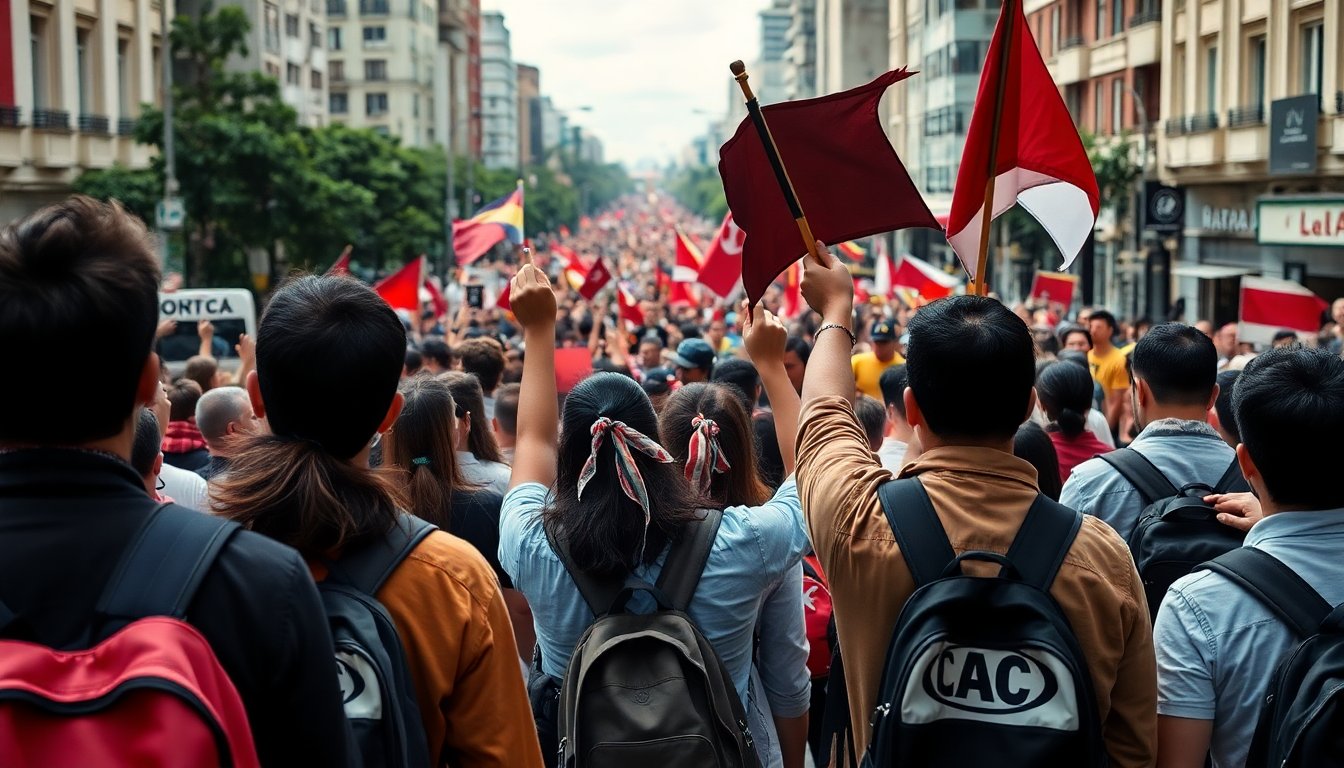
On 14, Caracas erupted into visible civic unrest as thousands of young people poured into the streets for a Youth Day march demanding the release of political prisoners. Witnesses and local outlets describe a crowd that alternated between organized, symbolic displays—banners, chants, calls for judicial review—and flashpoints of confrontation along the route. The demonstration came in the wake of Nicolás Maduro’s capture and immediately tested the authority of acting president Delcy Rodríguez, putting both public confidence and market sentiment on edge.
What unfolded Organizers and independent observers estimated turnout in the thousands, though no definitive headcount has been released. The march blended tightly coordinated elements—slogans, banners, planned stops—with spontaneous clashes at multiple points. Security forces, in uniform and plainclothes, intervened in several locations. Early reports mention detentions and scuffles; human-rights groups and reporters flagged multiple arrests, but official totals remain unclear.
Market reaction Financial markets responded quickly. Local currency volatility and sovereign bond spreads widened on days with major demonstrations, and trading volumes in Venezuela-linked assets spiked intermittently. Short-term movements included higher risk premia for sectors tied to domestic demand, modest increases in bond yields, thinner liquidity in some instruments, and sharper intraday swings in the FX market. Firms faced rising short-term funding costs as uncertainty intensified.
Why this matters now Venezuela’s fragile fiscal footing, persistent inflation and constrained external liquidity make its markets especially vulnerable to political shocks. Historically, unrest triggers brief capital outflows and tighter credit conditions; even small disruptions to transport, retail and public services can squeeze liquidity and push up operating costs across affected neighborhoods.
Critical variables to watch Several developments will shape whether volatility fades or deepens: – Government signals: comments and actions from Delcy Rodríguez—especially gestures such as amnesties or judicial reviews—will matter more than rhetoric alone. – Security posture: whether forces exercise restraint or pursue aggressive crackdowns. – Arrests and legal handling: verified detention figures and transparent procedures for detainees will carry strong political and market signals. – International reaction: diplomatic steps, sanctions or support from regional partners could sway investor confidence. – Information flow: activists’ real-time use of social media shortens news cycles and amplifies reputational risk, accelerating how markets price in events.
Sectoral implications Different parts of the economy felt the effects in predictable ways. Urban services and transport suffered immediate delays and revenue losses in central districts. Retail and hospitality saw declines in foot traffic and cancellations while tensions persisted. Energy and logistics faced localized operational risks if unrest spread to production sites or supply routes. Banks tightened in-branch services in higher-risk areas, making everyday transactions harder and leaving sovereign and bank spreads exposed. Tourism and remittances, sensitive to perceptions of instability, risked knock-on effects on FX corridors.
Near-term outlook Expect continued volatility. Markets and analysts will be searching for concrete, verifiable signals: reliable arrest counts, judicial action on detainees, and clear policy moves from the government. Measured, transparent steps—such as open case reviews or credible reconciliation efforts—would likely calm markets far more quickly than a forceful crackdown, which could widen risk premia and deepen liquidity strains.
Political significance of youth mobilization Young people gave these protests energy and visibility. Their demands mixed narrow legal aims—the release of detainees, independent trials, oversight—with broader generational critiques about governance and accountability. Smartphones and social media turned local scenes into global testimony, inviting international scrutiny and raising the political cost of heavy-handed responses.
What to monitor in the coming days Watch for: official statements and any formal legal steps regarding detainees; verified counts of arrests and injuries; whether public gatherings grow, shrink or shift location; market indicators such as FX volatility, sovereign spreads and trading volumes in Venezuela-related assets; and diplomatic signals from regional partners and major creditors. If authorities opt for engagement and transparent legal processes, markets are likelier to calm. If the response prioritizes broad enforcement without safeguards, expect prolonged market stress and possible regional fallout.