
Table of Contents
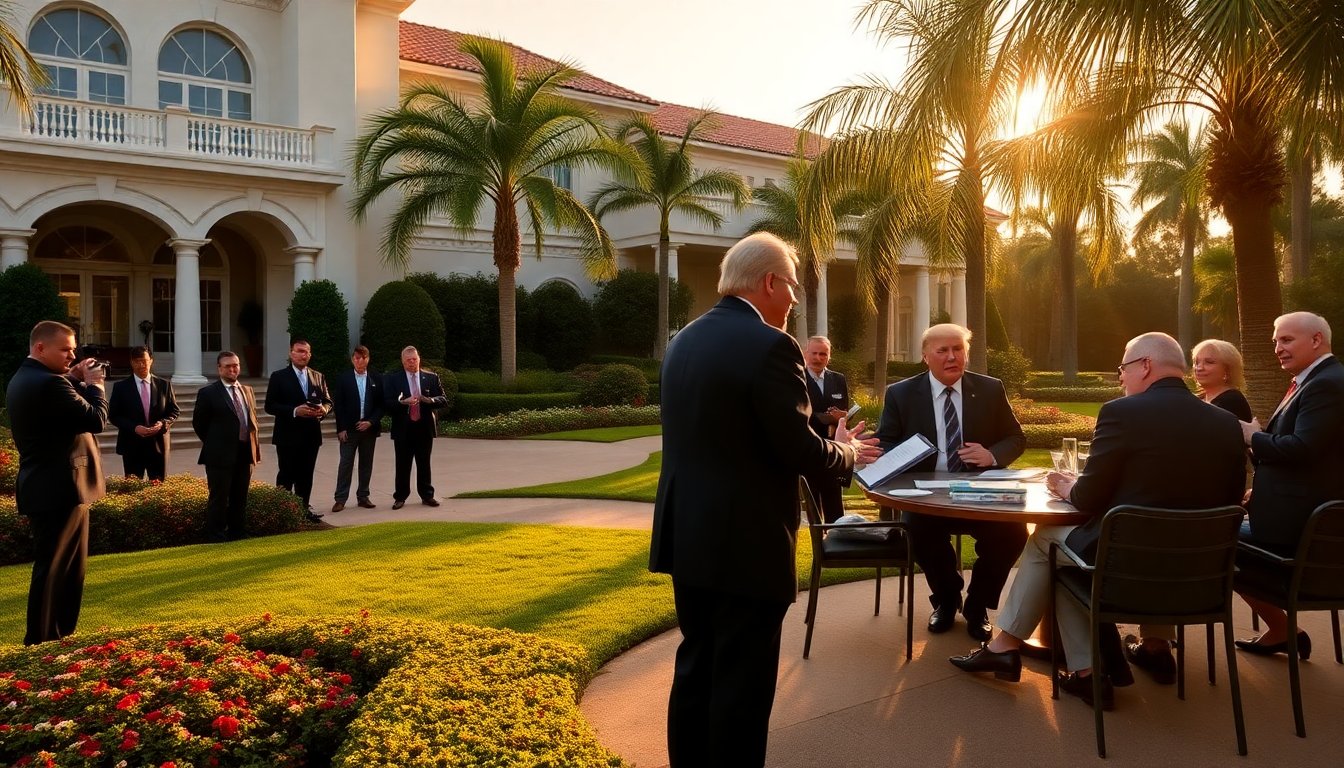
This weekend, the political landscape shifts as Ukrainian President Volodymyr Zelenskyy is set to meet with former U.S. President Donald Trump in Florida. The significant discussion aims to explore the potential for a peace agreement that could end the ongoing conflict between Ukraine and Russia, which has persisted for nearly four years. The meeting is scheduled to take place at Trump’s Mar-a-Lago estate and will focus on several critical issues, including security guarantees for Ukraine and economic agreements.
Framework for peace
Ukrainian President Volodymyr Zelenskyy recently stated that he would consider presenting a peace framework for public referendum if discussions with former President Donald Trump yield a solid agreement. He noted that the current 20-point peace plan is nearing completion, with approximately 90% finalized, suggesting a strong basis for negotiations. However, he expressed doubt about whether any definitive agreements would be reached by the conclusion of their meeting.
Involvement of European nations
In his address to the press, Zelenskyy underscored the necessity of involving European nations in the peace talks. He expressed a desire for a diplomatic format that includes not only Ukraine and the United States but also European representation. Despite the pressing timeline, he recognized the importance of forming a broader coalition for effective peace discussions.
Ongoing diplomatic efforts
The upcoming meeting is part of a broader initiative led by the United States to mediate between Moscow and Kyiv. Ukrainian President Volodymyr Zelenskyy recently had a productive conversation with Canadian Prime Minister Mark Carney, during which he updated Carney on the status of diplomatic efforts. Carney reaffirmed Canada’s support for Ukraine, emphasizing the necessity of maintaining pressure on Russia to engage in negotiations.
Responses from the Kremlin
In response to these discussions, Kremlin spokesperson Dmitry Peskov revealed that Russian representatives have initiated contact with U.S. officials. He indicated that both sides are committed to continuing the dialogue, suggesting they are exploring negotiation avenues. However, it remains unclear whether Russia is willing to concede any withdrawal from the territories it currently occupies.
Proposed demilitarized zones
Ukrainian President Volodymyr Zelenskyy has shown readiness to create a demilitarized zone in eastern Ukraine as part of a peace initiative. He proposed that if Russian forces withdraw from the area, international monitors could oversee the transition. This proposal faces substantial obstacles, as Russia demands that Ukraine cede control over remaining territories in the Donbas region, a request that Kyiv has firmly rejected.
Recent violence and military actions
While peace talks progress, the situation on the ground remains volatile. Recent reports indicate escalating violence, with casualties from aerial bombardments in cities such as Kharkiv and Zaporizhzhia. Local authorities have reported numerous injuries and fatalities due to missile strikes, highlighting the urgent need for a diplomatic resolution.
Ukraine has initiated counter-offensive operations targeting Russian military assets, including a notable strike on a refinery in the Rostov region. This operation employs advanced weaponry supplied by allied nations. The military strategy seeks to weaken Russia’s ability to maintain its invasion while protecting Ukrainian sovereignty.
Future implications
With the upcoming meeting between Ukrainian President Volodymyr Zelenskyy and former U.S. President Donald Trump, the international community is closely monitoring developments that could influence Ukraine’s future. The discussions are expected to cover immediate security issues and the broader economic ramifications of a potential peace agreement. The outcome may significantly reshape Eastern European geopolitics and affect international relations.
Ukrainian President Volodymyr Zelenskyy remains optimistic about the potential for an agreement regarding the ongoing conflict. However, the situation’s complexities necessitate a careful approach. Achieving lasting peace will involve detailed negotiations, mutual concessions, and a commitment to rebuilding trust among all parties involved.