
Table of Contents
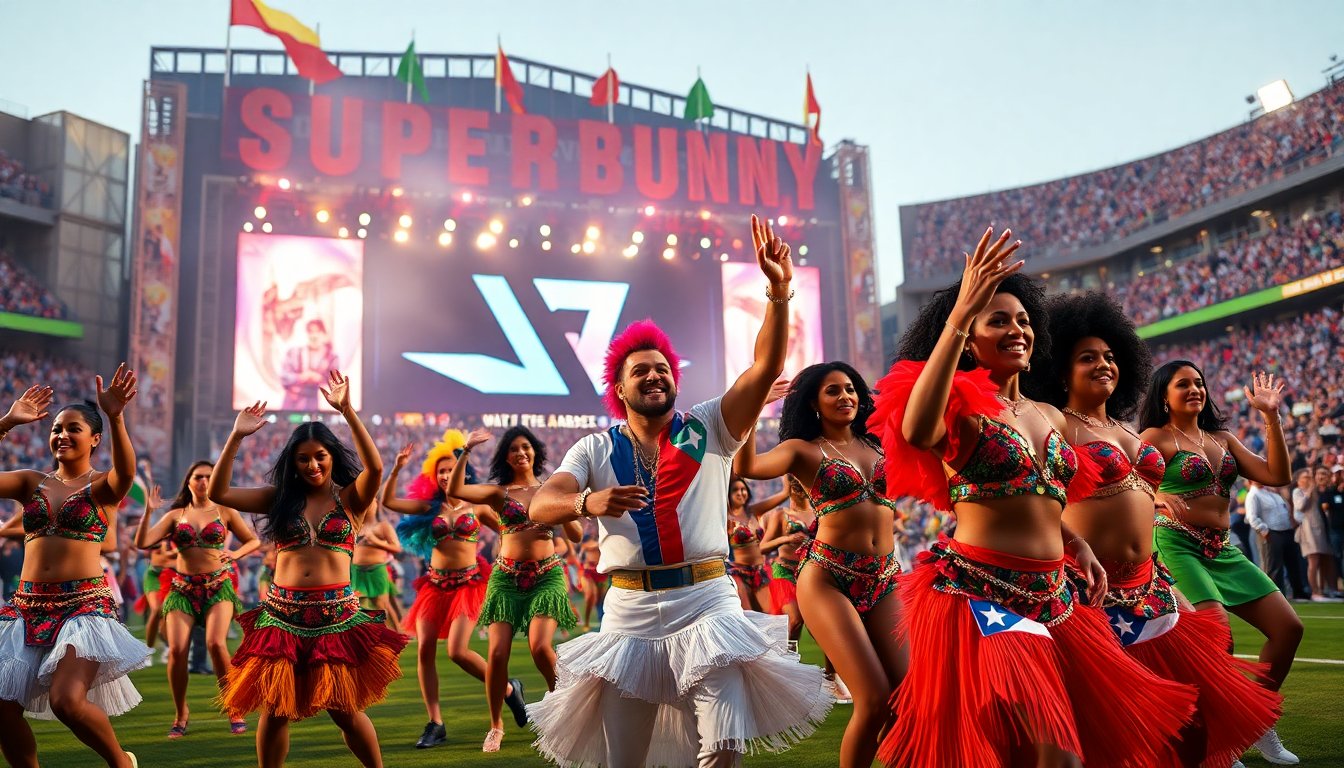
During the recent Super Bowl, Bad Bunny delivered a groundbreaking halftime show that resonated deeply with audiences, transcending entertainment to spotlight critical social issues affecting Puerto Rico. The performance was a vibrant celebration of Puerto Rican culture, intertwined with poignant messages about the ongoing struggles faced by the island’s residents.
As a renowned figure in the music industry, Bad Bunny seized the moment to use his platform for greater awareness. His choice to perform atop a damaged utility pole symbolized the dire state of Puerto Rico’s electricity infrastructure, a topic that has garnered significant attention due to frequent power outages and the ongoing challenges of energy privatization.
Highlighting Puerto Rican sign language
In an impressive move, Celimar Rivera Cosme, a partially deaf performer, took center stage as the lead interpreter during the halftime show. Her role was groundbreaking, as she utilized Puerto Rican Sign Language (LSPR), showcasing the rich cultural identity of the Puerto Rican deaf community. Rivera Cosme’s expressive style brings a unique flair to sign language interpretation, merging rhythm and storytelling to create a captivating performance that resonates with both hearing and deaf audiences.
A historic milestone
Rivera Cosme expressed immense pride in representing her culture, stating, “It’s not just about interpretation; it’s about performance.” This sentiment highlights her commitment to conveying the essence of Bad Bunny’s music through her art. Her participation marks a significant moment in history, demonstrating that sign language can be an integral part of mainstream entertainment.
Her journey to this prominent stage began with previous collaborations with Bad Bunny, where she gained recognition for her dynamic interpretations during earlier performances. Rivera Cosme’s goal at the Super Bowl was not only to shine as an individual artist but also to elevate the visibility of the entire Puerto Rican deaf community, emphasizing their language and culture.
Confronting Puerto Rico’s energy crisis
The backdrop of Bad Bunny’s performance served as a powerful metaphor for the challenges faced by Puerto Rico. His song, “El Apagón” (The Blackout), tackles the island’s persistent struggles with electricity, a critical issue exacerbated by climate change and privatization. By performing on a damaged utility pole, he drew attention to the inadequacies of the current energy system managed by LUMA Energy, a U.S.-Canadian consortium that has faced criticism for failing to provide reliable service.
A call for change
As the lights shone on the Super Bowl stage, Bad Bunny’s conclusion—an emotional roll call of nations across the Americas—was both a celebration of unity and a call to action. His performance underscored the urgent need for reform in Puerto Rico’s energy policies, advocating for a transition to sustainable solutions such as rooftop solar panels and battery storage. This vision for a cleaner energy future resonates with many Puerto Ricans who have long lived under the shadow of unreliable electricity.
The recent struggles of Puerto Rico, highlighted by devastating hurricanes and power outages, underscore the importance of advocating for a more resilient energy infrastructure. Bad Bunny’s show served not only as entertainment but as a poignant reminder of the ongoing fight for justice and equality faced by the people of Puerto Rico.
Bad Bunny's Super Bowl halftime performance was a multifaceted event that transcended typical entertainment boundaries. It celebrated Puerto Rican culture, brought attention to significant social issues, and highlighted the contributions of the deaf community. This landmark moment in television history serves as a testament to the power of music and performance in advocating for change and representing marginalized voices.