
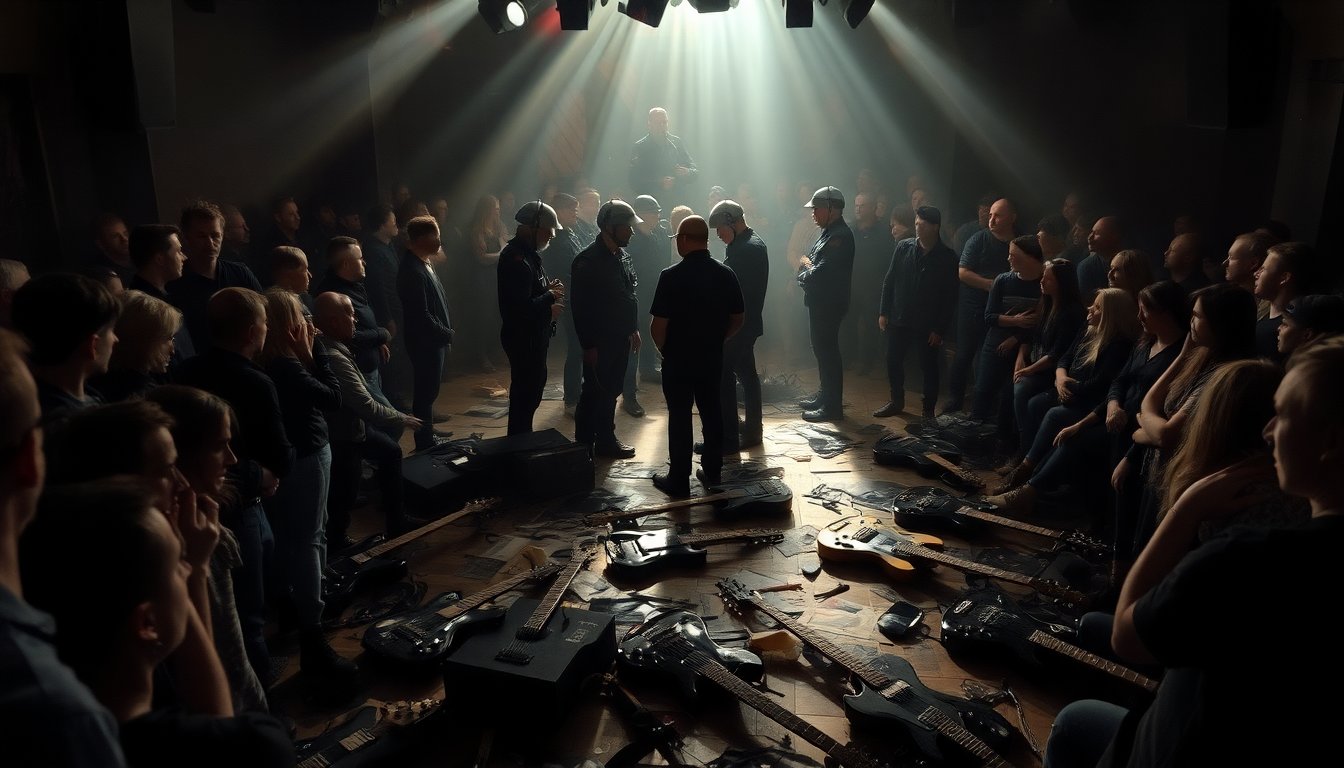
In a significant development, the Russian metal band Nechist is under scrutiny following a police operation targeting what the Kremlin labels as Satanism. On February 7, 2026, law enforcement officials disrupted a concert at the Eclipse club in Moscow, which was intended to celebrate the band’s anniversary. Authorities cited the presence of prohibited symbols linked to extremism as the reason for their intervention.
State-affiliated media reports indicate that this incident is part of a broader crackdown on what the government refers to as the International Satanism Movement, an entity that appears to lack any real existence. At least ten individuals were detained, although no formal charges have been reported against them.
The concert and its aftermath
The Eclipse club had generated considerable excitement, having announced the concert on social media in. The event featured a lineup including three other bands: Neargroth, Arcanorum Astrum, and BalsamatoR from Yaroslavl. Organizers framed the concert as a celebration of darkness and chaos, creating an atmosphere that was both ominous and exhilarating.
As the concert progressed, the charged atmosphere was abruptly interrupted by police intervention. Videos circulating on social media depicted a chaotic scene, with musicians in elaborate makeup being detained and questioned. One band member humorously commented that their music primarily revolves around morgues.
A culture clash
Reports from state media such as Izvestia and REN TV indicated that the club was decorated with symbols deemed offensive by authorities, including pentagrams and inverted crosses. These visuals, intended to enhance the concert’s aesthetic, became the justification for the police’s aggressive response. The raid on Nechist reflects a broader societal intolerance in Russia towards cultural expressions that diverge from state-sanctioned norms.
This police action aligns with a legal framework established in, when the Russian Supreme Court designated the non-existent International Satanism Movement as extremist. This ruling has empowered local law enforcement to impose fines for displaying what they categorize as Satanic symbols. For example, individuals have faced penalties for sharing images on social media that authorities consider inappropriate, including tattoos or memes featuring occult symbols.
Wider implications of state censorship
The crackdown on Nechist is not an isolated incident; it signifies a troubling trend that jeopardizes creative freedoms in Russia. Following the Supreme Court’s ruling, numerous cultural events have faced cancellation. A notable instance is the cancellation of the Necrocomicon festival in St. Petersburg, initially scheduled for. The festival’s organizer was detained just a day prior, accused of hosting an event that might promote Satanism.
Despite a brief opening, the festival was forced to shut down when its permit was revoked. Organizers expressed their discontent on social media, highlighting their commitment to challenge such arbitrary censorship. They underscored the importance of preserving the right to organize private events free from government interference.
The impact on the music scene
The repercussions of these events extend beyond Nechist and other artists, indicating a chilling effect on the music scene in Russia. Bands may now reconsider incorporating controversial themes into their performances. Musicians face the challenging decision of self-censorship or risking legal consequences in an increasingly hostile climate towards alternative cultural expressions.
As the crackdown persists, it raises critical questions about the future of artistic freedom in Russia. The government’s focus on suppressing alternative beliefs and practices could stifle creativity and diminish the vibrant cultural landscape that has thrived despite oppressive measures. The incident involving Nechist serves as a stark reminder of the ongoing tension between state control and individual expression.


