
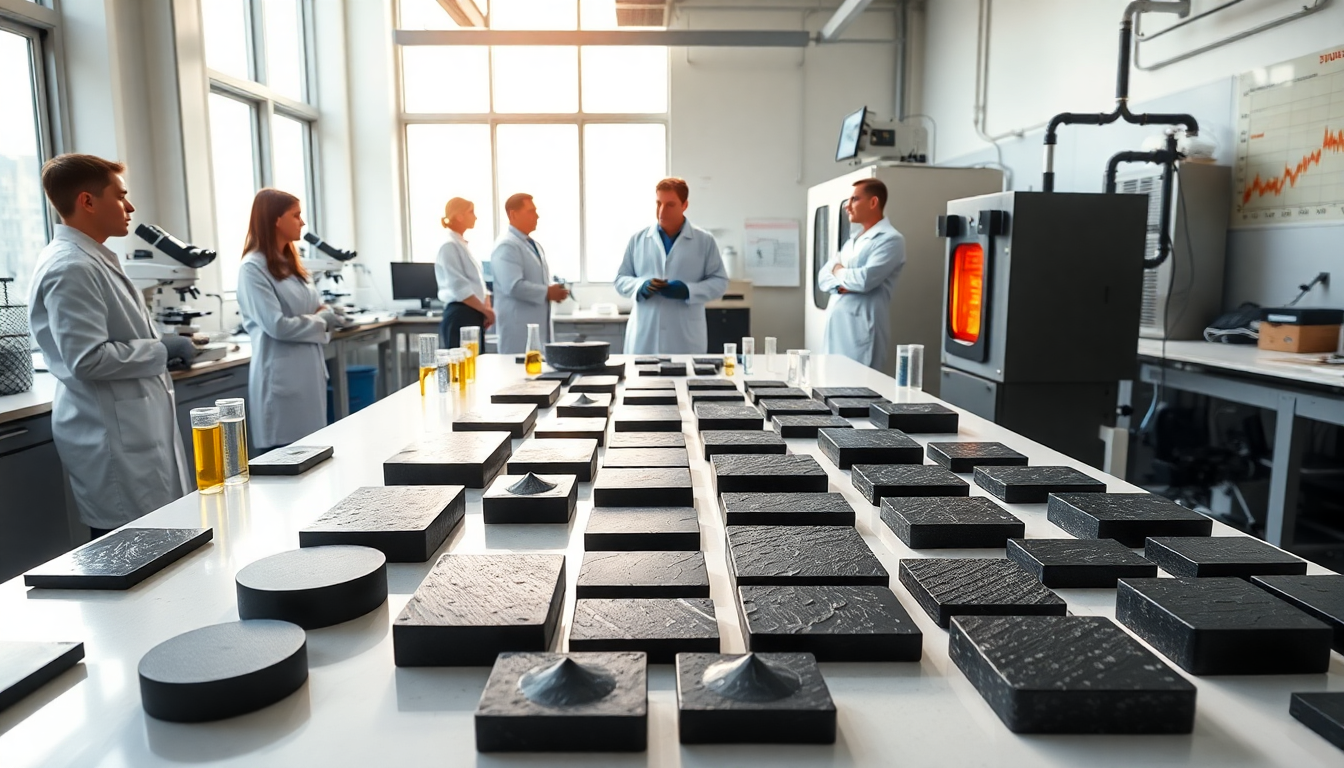
Imagine a world where the limits of materials are pushed beyond anything we’ve seen before. A world where temperatures soar and materials don’t just survive—they thrive. Enter the Chinese research team that has developed a carbide ceramic capable of withstanding temperatures as high as 3,600 degrees Celsius. Yes, you read that right. While lesser materials have crumbled under the heat, these innovators have crafted something that could redefine industries like aerospace and energy. Think about it—what does it take to achieve such a feat? Maybe it’s sheer brilliance, or perhaps a touch of madness? Who knows?
The downfall of traditional materials
Let’s break this down. Most metal alloys start to lose their cool at around 2,000 degrees Celsius. They’re like that friend who can’t handle the heat and bails out at the first sign of trouble. And carbon-carbon composites? They can take the heat up to 3,000 degrees in inert environments, but throw some air in the mix, and they quickly oxidize—like a diva that can’t handle a spotlight. Before you know it, their mechanical performance drops faster than a bad reality TV show. So, what’s the solution? Apparently, it’s high-entropy, multi-component design. But what does that mean for you? Probably nothing, unless you’re in the lab with a degree in materials science.
Breaking barriers
According to Professor Chu Yanhui from the South China University of Technology, this is the first time anyone has managed to push past these long-standing limits. It’s like they’ve cracked the code that everyone else thought was unbreakable. What’s next? Maybe they’ll invent a material that can withstand a nuclear blast—oh wait, that’s probably on the agenda too. Can you imagine the applications? We’re talking about heat shields for spacecraft, components for turbines, or even in nuclear reactors. This is the kind of stuff that makes you wonder what else is possible. But let’s be honest, how many of us are really thinking about these advancements while scrolling through our feeds?
What does this mean for the future?
As we stand at the precipice of this new technological dawn, one has to wonder: are we truly ready for what’s to come? Will we embrace these advancements, or will we cower in the face of progress? The potential for aerospace and energy fields is massive, but let’s not kid ourselves; it comes with its own set of challenges and ethical dilemmas. Are we ready to handle the heat, or will we end up like those poor metal alloys, melting under the pressure? It’s a question worth pondering, though I doubt many will care until it directly affects their lives.


