
The professional impulse to repeat a past success is a familiar story in filmmaking: a director who once hit the cultural nerve tries to reconstruct that formula and hopes lightning will strike twice. In the case of Renny Harlin the echo is obvious — the director revisits the predator-on-the-loose territory that made Deep Blue Sea an enduring cult hit. His new picture, Deep Water, arrives as a large-scale throwback that blends an airplane catastrophe with open-ocean peril, a choice that trades subtlety for spectacle. The film is being positioned to hit audiences May 1, and its creative DNA is an explicit nod to the schlocky, high-stakes disaster pictures of earlier eras.
A deliberate throwback to disaster cinema
Deep Water wears its lineage on its sleeve, intentionally channeling the rhythm of a classic neo-’70s disaster film where the title tells you exactly what will happen. Instead of a single contained disaster like a burning tower or a shaking city, Harlin combines an aircraft failure with predatory sea life to manufacture a continuous sequence of shocks. The attempt at nostalgia is clear: this is engineered as a popcorn shocker rather than an introspective survival drama. Yet while the filmmaker is adept at staging set pieces, the result often feels dramatically shallow, with character beats that exist mainly to justify the next explosion or attack.
The accident and the immediate aftermath
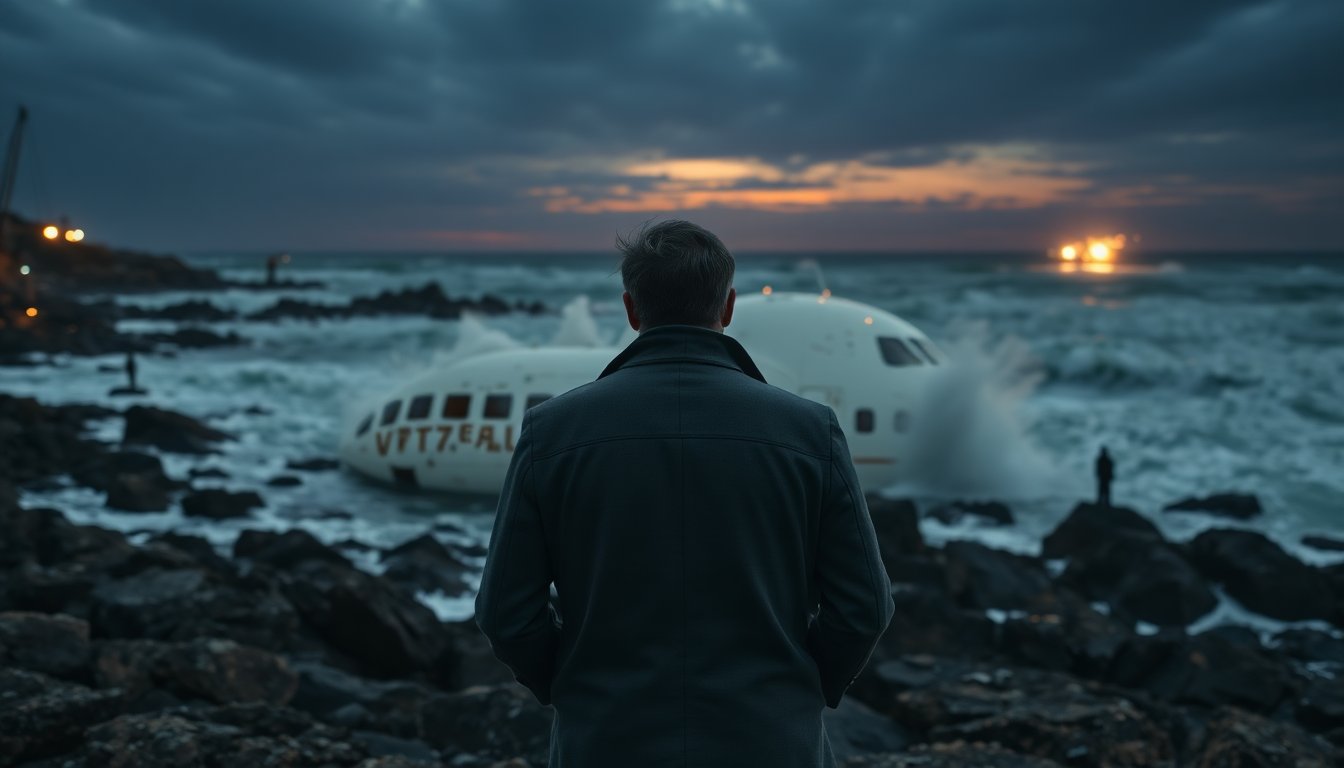
The movie begins aboard an intercontinental flight from Los Angeles to Shanghai, where the cast of characters is introduced before the calamity. Aaron Eckhart plays the downcast first officer, carrying personal baggage that shades his decisions; Ben Kingsley is the retiring captain, memorably seen attempting karaoke with ‘Fly Me to the Moon’ as a bit of offbeat character color. A passenger named Dan, played by Angus Sampson, brings a conspicuous red plastic suitcase that ignites in the cargo hold, creating a chain reaction: fire, an explosion, a breach in the fuselage and an engine aflame. The aircraft is forced down into the ocean, leaving roughly 257 passengers aboard and only about 30 survivors after the initial disaster. The remaining wreckage — mostly the cockpit and a mangled section of fuselage — becomes fragmented floating shelter with exposed wires and improvised life rafts.
Staging the crash
Harlin stages the descent and impact with the kind of visual bravado that defined his earlier career: flying debris, ruptured cabins and bodies sucked into the sea are rendered in a showy fashion. The film treats the broken fuselage and cockpit as islands of drama, and there is an ongoing procedural question about whether the correct distress signal has been broadcast — a device used to stretch tension between crashes and rescues. In practical terms, the set-piece craftsmanship is visible: the crash sequence is slickly choreographed and designed to unsettle even when the emotional content lacks nuance.
Sharks, gore and the oscillation between fear and spectacle
Once the scene shifts from wreckage to waiting, the threat becomes aquatic: the survivors face repeated assaults by mako sharks. Visually the predators recall the archetypal great white of Jaws, but Harlin’s approach emphasizes on-screen brutality rather than the power of suggestion that made the earlier film terrifying. Where suspense relies on anticipation, Deep Water delivers visceral, often graphic sequences — severed limbs, sudden consumption and bloody aftermaths — that read more like death porn than psychological dread. The suspense is constant but blunt; the recurring question is not ‘what will happen’ but ‘how will they stage the next attack.’
Why it feels familiar
That familiarity is part of the movie’s intent and its pitfall: audiences who enjoyed the shock-and-awe mechanics of late-20th-century exploitation thrillers will find the formula comfortably predictable. The film chooses to replicate old thrills — animal menace, confined survivors, calculated cruelty — rather than reinvent the emotional stakes. This makes Deep Water easy to slot into a long history of disaster yarns, where human drama provides a skeletal frame for a parade of spectacular deaths.
Characters, performances and final take
Performances are serviceable within the constraints of the script. Eckhart’s weary but dependable presence anchors a protagonist whose backstory nudges him toward paternal instincts, especially in his interactions with Cora, the orphaned child played by Molly Belle Wright. Ben Kingsley offers texture as the crusted captain with a sand-brown goatee, while Angus Sampson’s Dan is written as an abrasive, self-centered catalyst whose actions set key events in motion. Despite competent actors, the roles are thinly drawn; Harlin has a knack for spectacle that can flatten emotional arcs, turning performers into functional pieces in a mechanical survival puzzle. The film is not without craft — its crash and attack sequences are staged with flair — but as an overall statement it prioritizes visceral impact over deep characterization.
Conclusion
In the end, Deep Water is exactly what it aims to be: a large-scale disaster picture that trades subtlety for constant movement and shock. It mines nostalgia for the old exploitation playbook, repackaging predator-based horror within a maritime-plane-crash concept. For viewers seeking refined tension and layered human stakes, the film will likely disappoint; for those who enjoy relentless on-screen peril and set-piece design, it delivers. The movie arrives May 1 and will find its audience among fans of high-concept, effects-driven disaster cinema.


