
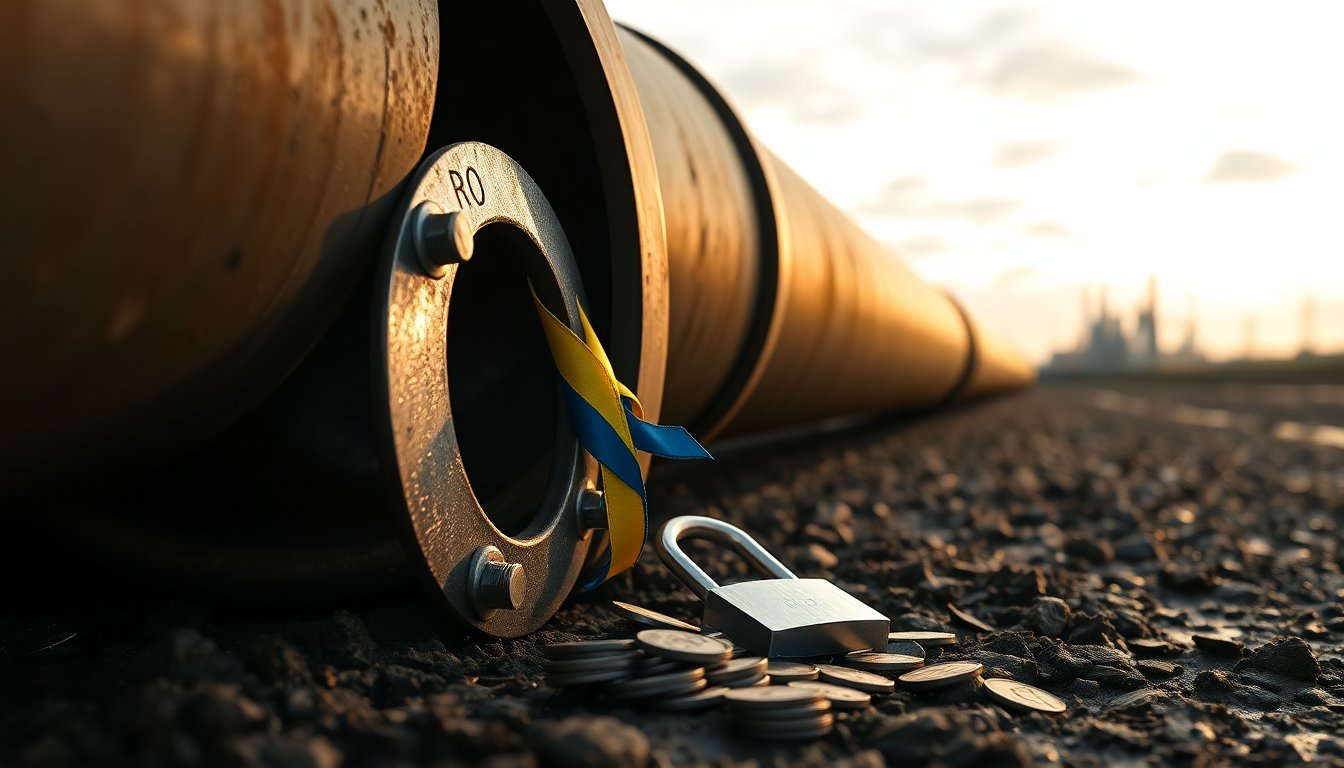
On April 21, Ukrainian President Volodymyr Zelensky announced that specialists had completed repair work on a section of the Druzhba pipeline that Kyiv says was hit during a Russian military strike. The pipeline, a Soviet-era artery that moves Russian crude through Ukraine toward Central Europe, has been offline since January after what Kyiv described as a drone attack. Zelensky said the line can resume operation, while acknowledging that no guarantee exists against future damage. This declaration immediately tied into a broader political dispute in Brussels over a previously approved 90-billion-euro loan to Ukraine that had been blocked by Hungary.
Repair work and the operational picture
Ukrainian teams say they have restored the essential components needed to bring the Druzhba pipeline back into service, including sections of the physical pipe and related pumping equipment. Kyiv also noted that security and monitoring measures were strengthened after the incident; nevertheless, the president stressed the potential for renewed attacks remains. The pipeline’s shutdown forced consumers in Hungary and Slovakia to shift to alternative supply routes, including shipments through the Adriatic and other pipelines, and led to higher logistical costs for regional refiners. The Ukrainian explanation for the outage — a Russian drone strike — contrasts with accusations from Budapest and Bratislava that Ukraine had delayed repairs for political leverage.
Political consequences: EU funding and Budapest’s veto
The operational update has immediate diplomatic consequences because Hungary used the pipeline disruption as leverage to block the European Council-endorsed 90-billion-euro loan package. That loan, agreed by EU leaders in December, was vetoed by outgoing Hungarian Prime Minister Viktor Orbán in February after oil flows were interrupted. Zelensky linked the completion of repairs to the unblocking of the EU support package and expressed expectation that EU institutions would move forward. Meanwhile, Hungary’s incoming leadership signalled a change: on April 13 Tisza party leader Peter Magyar said the new government would not stand in the way of the EU decision, removing a key political obstacle to disbursement.
Money on the table and conditions
Even if Budapest lifts its hold, the release of funds will follow conditional steps. Part of the package earmarked for 2026 includes an initial allocation of €16.7 billion for financial support and €28.3 billion for military assistance; disbursement depends on Kyiv meeting reform benchmarks. Some member states have negotiated opt-outs: Hungary, Slovakia and the Czech Republic secured exceptions related to the borrowing. Brussels has repeatedly pressed for progress on repairs and offered to provide money and specialists to help inspect and fix the pipeline — an offer that, according to reports, was not fully realized.
Regional energy security and sanctions
The pipeline episode rippled beyond finance into sanctions policy. Hungary and Slovakia have at times used their positions to block new punitive measures targeting Russia, including proposals for further restrictions on maritime services for Russian oil tankers. EU officials argue that sustained pressure through sanctions is essential to raise Russia’s costs for the war, while some member states prefer a more cautious, coalition-led approach. Resuming Druzhba flows would remove one practical excuse for vetoes, but it would not erase the deeper strategic disagreements over how quickly and how far to tighten energy-related penalties on Moscow.
Inspection, trust and next steps
Part of the controversy involved access to the damaged site: Kyiv declined requests in recent weeks to allow independent European Commission inspectors to assess the pipeline, prompting frustration among some EU capitals. Brussels’ offer to finance repairs and send experts aimed to defuse that mistrust but was never fully acted upon. If flows resume and Budapest follows through on pledges to lift its objections, EU ambassadors could clear the final element of the loan package at upcoming meetings. Still, officials say payments will be staggered and tied to ongoing reforms, leaving implementation dependent on both technical restoration and political commitments.
In short, the completion of repair work on the Druzhba pipeline changes the immediate tactical picture: it clears a path toward unblocking a major EU support package and eases short-term supply pressures for Central Europe. Yet the outcome will hinge on a mix of technical certainty, renewed trust among EU members, and the political will to press ahead with sanctions and conditional financing. The repair removes an outward obstacle, but the underlying debates about energy dependence and collective response to Russia’s war remain unresolved.


