
Table of Contents
The Winter Olympics in Italy have ignited significant unrest as various groups mobilize against the event’s financial and environmental implications. Tensions escalated over the weekend when initially peaceful demonstrations turned violent, leading to confrontations with law enforcement.
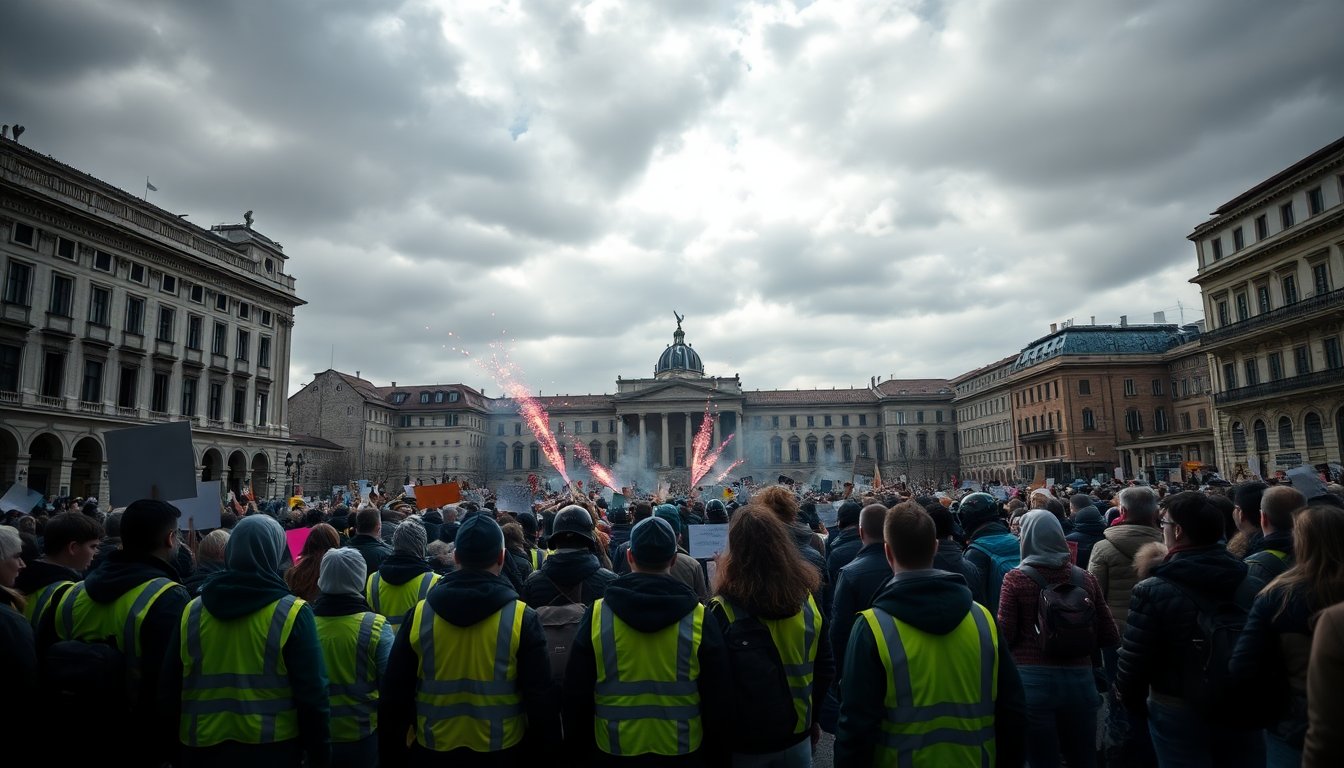
Thousands gathered to raise awareness of pressing issues, but the atmosphere shifted dramatically when some protesters resorted to fireworks and projectiles. Families and students participated in the protests to highlight the broader implications of the Olympics and the presence of U.S. Immigration and Customs Enforcement (ICE) agents in Italy.
Environmental concerns at the forefront
The protests underscored the impact of the Winter Games on the environment, particularly the construction projects initiated to accommodate the event. A notable example is the new bobsled run in Cortina d’Ampezzo, which required the felling of numerous trees. Demonstrators used cardboard cutouts to symbolize these lost trees, effectively drawing attention to the ecological costs associated with hosting the Olympics.
Voices of dissent
At the heart of the protests was a coalition of activists known as the Unsustainable Olympic Committee. They criticized the rapid pace of construction that bypassed standard regulations. Protester Guido Maffioli voiced concerns about the financial burden that might ultimately fall on Italian taxpayers due to the private organization responsible for the Games. The fear is that the debt incurred from these projects could lead to long-term economic repercussions for the local population.
Clashes with law enforcement
As the peaceful march progressed, tensions escalated when a group of masked protesters ignited fireworks and smoke bombs on a nearby bridge, prompting police intervention. Officers deployed tear gas and water cannons to disperse the crowd near the Santagiulia Olympic ice hockey rink, aiming to prevent access to the highway leading to the venue.
Despite the confrontations, there was no reported disruption to athletes’ transportation to their events, which occurred on the outskirts of Milan. The rally coincided with a visit from U.S. Vice President JD Vance, who faced a mixed reception during the opening ceremony, highlighting the intersection of politics and sports.
Opposition to U.S. immigration enforcement
While the protests primarily focused on environmental issues, a significant aspect was the presence of ICE agents in Italy, which many demonstrators vehemently opposed. Their deployment has drawn international criticism due to their controversial role in immigration enforcement in the United States. Activists argued that ICE’s involvement, even in a limited capacity, is unwelcome and reflects broader issues regarding U.S. policy abroad.
Participants carried signs condemning the Games and its sponsors, including fossil fuel companies linked to environmental degradation. A striking image was that of a woman with an artificial tree strapped to her back, emblazoned with the phrase “Infernal Olympics.”
A call for change
The protests at the Winter Olympics in Italy serve as a reminder of the intricate relationship between sporting events, environmental stewardship, and social justice. As activists continue to voice their dissent, the message is clear: the consequences of the Games extend beyond the competition and into the very fabric of society.
The ongoing demonstrations reflect a growing awareness of the need for sustainable practices in hosting large-scale events. As the Winter Olympics unfold, it remains to be seen how these protests will influence future decisions regarding the balance between celebration and responsibility.