
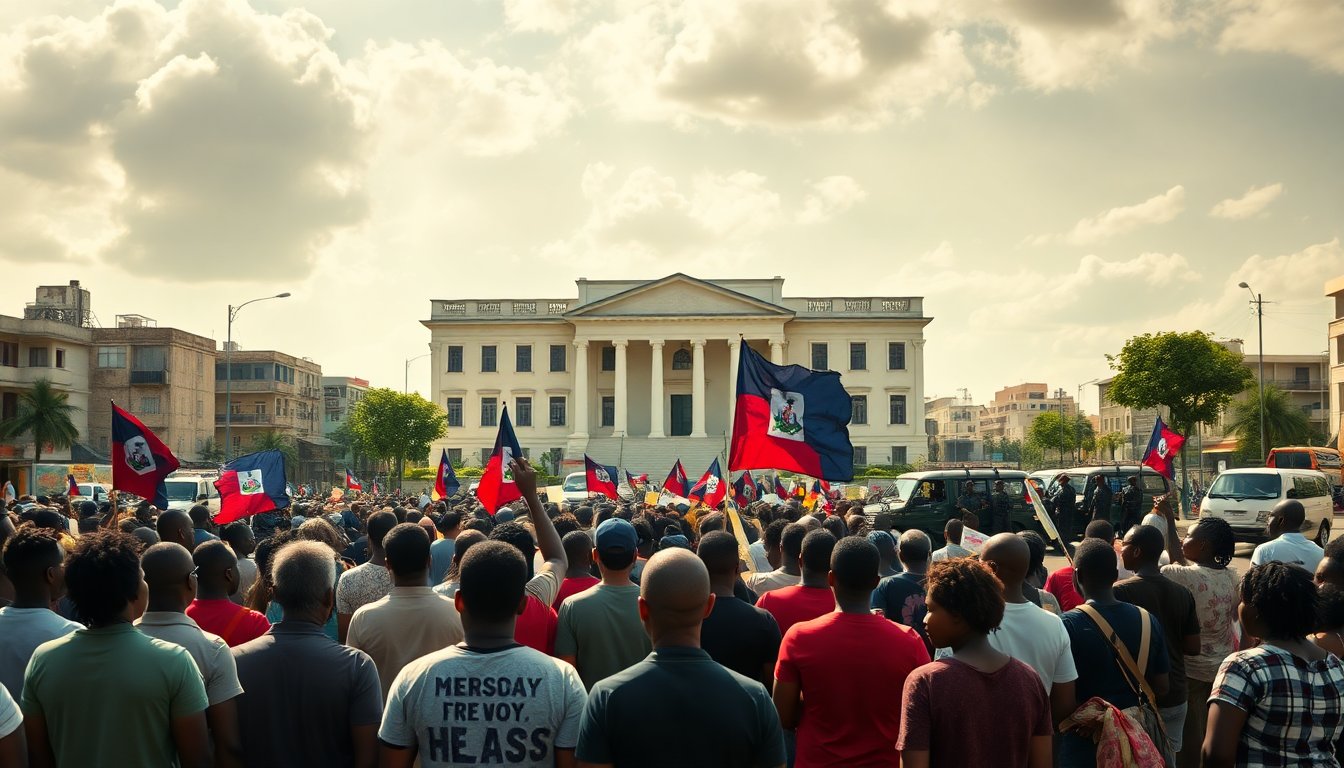
Haiti’s pivotal moment as power shifts
Haiti is at a critical juncture following the official dissolution of the Transitional Presidential Council (CPT), with authority now transferred to Prime Minister Alix Didier Fils-Aime. This transition unfolds against a backdrop of escalating gang violence and persistent political unrest that has plagued the nation for years. The implications of this power transfer are significant, affecting both the governance of Haiti and the daily lives of its citizens.
After nearly two years of ineffective governance, the end of the CPT marks a crucial moment. With nearly 90% of Port-au-Prince under gang control, the new prime minister faces formidable challenges as he attempts to restore order and organize the country’s first elections in a decade.
The evidence
Prime Minister Fils-Aime steps into his role amid widespread skepticism, stemming from a tumultuous history marked by political infighting and corruption within the CPT. Established in 2026 as a response to the political crisis following the assassination of President Jovenel Moise, the council was expected to stabilize the country. However, it devolved into dysfunction, failing to address critical issues of gang violence and social unrest.
Key players and U.S. involvement
In late January, tensions escalated as several council members sought to oust Fils-Aime, prompting a swift response from the United States, including visa restrictions on implicated council members. This intervention underscores the significant influence of the U.S. in Haitian affairs, particularly concerning regional stability. U.S. Secretary of State Marco Rubio emphasized the necessity of Fils-Aime’s leadership to combat pervasive gang threats and stabilize the island.
Despite council efforts to remove him, the official ceremony on Saturday granting Fils-Aime power indicates a potential shift in the political landscape, albeit under tight security. As the sole politician wielding executive authority, the new prime minister raises concerns over the viability of governance in a violence-dominated environment.
The reconstruction of security
The state of insecurity in Haiti is alarming, as evidenced by statistics released by the United Nations. In 2026 alone, nearly 6,000 lives were lost to gang-related violence, with over 1.4 million individuals displaced. Gangs have evolved from localized groups into organized coalitions, exerting control over key areas and monopolizing essential services and resources.
The impact of criminal governance
This criminal governance has severe effects on daily life in Haiti, as gangs impose their own rules and taxes on residents, effectively replacing the state in many aspects. The absence of elected officials since has exacerbated the situation, with the CPT’s mandate set to expire without a clear succession plan. Consequently, the timeline for upcoming elections remains uncertain, with many observers doubting that elections will occur this year.
Fils-Aime’s administration must navigate these complexities while fostering international support, particularly as the UN has endorsed an international security force to help restore order. However, with fewer than 1,000 troops currently deployed, the anticipated increase to 5,500 remains an ongoing challenge.
The implications for Haiti’s future
As Fils-Aime begins his leadership tenure, a critical question remains: can he effectively curb gang influence and restore faith in governance? The road ahead is fraught with obstacles, from entrenched gang control to a fractured political landscape. Organizing elections and maintaining security are significant challenges looming over his administration.
Moreover, the international community’s role is crucial, as the U.S. and other nations grapple with the implications of Haiti’s instability on regional security and migration. Balancing support for Haiti’s sovereignty with necessary intervention will be essential in the coming months as the nation seeks to reclaim its future.


