
Table of Contents
The Gulf has seen a new wave of aerial incidents that have directly affected both industrial facilities and diplomatic areas. According to official Omani reports, a drone struck the al-Awahi Industrial Area in the Sohar region, killing two foreign nationals and wounding others, while a second unmanned aircraft came down in an open space without injuring anyone. Separately, a strike on the Salalah port storage area earlier in the week set fuel tanks ablaze, prompting emergency responses and temporary suspensions of port services. Regional authorities and private security firms have described the events as part of a broader uptick in attacks on critical energy infrastructure and maritime hubs.
These incidents come amid an intensifying exchange of strikes and counterstrikes in the region that has already involved multiple states and non-state actors. Gulf governments have emphasised that, despite the damage at some facilities, national fuel supplies and distribution systems remain largely intact for now. At the same time, shipping companies and terminal operators paused or reduced operations in affected ports out of concern for crew safety and insurance liabilities. The unfolding pattern has drawn attention to how quickly conflicts using unmanned systems can threaten civilian infrastructure and commercial routes.
What happened in Oman and immediate consequences
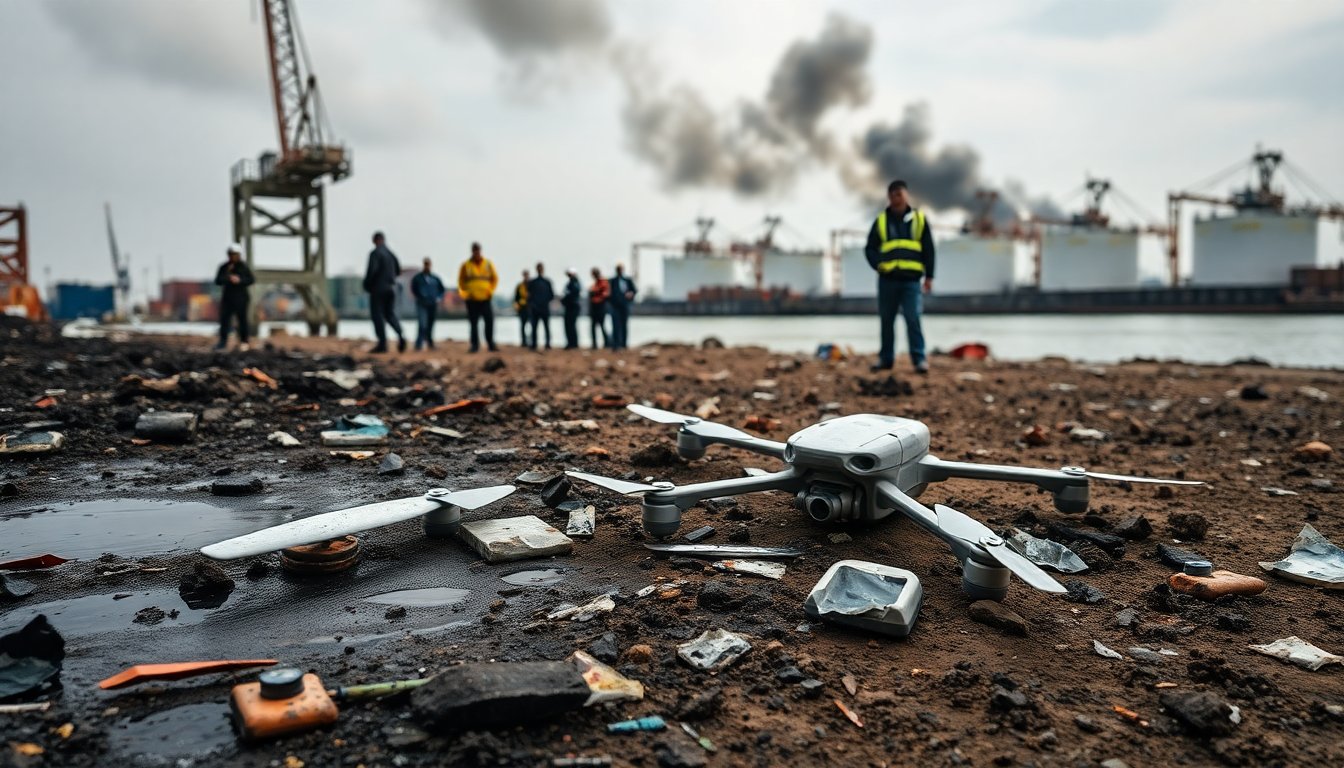
Omani authorities reported that one unmanned aircraft impacted a populated industrial estate, resulting in fatalities among overseas workers and several injuries. The state news agency said a second device fell away from built-up areas, and security forces opened an investigation into the origins and trajectory of the strikes. In the south, footage and eyewitness accounts showed fires at tank farms near Salalah port after drones penetrated local defences on March 11, 2026, igniting large blazes in fuel storage zones. Emergency crews worked to contain the flames while private maritime security operators and some global carriers temporarily suspended operations to reassess risk to vessels and terminals.
Despite visible damage, an Omani energy ministry spokesperson indicated there had been no interruption to the continuity of oil supplies and refined product distribution nationwide. Nonetheless, the strikes have had immediate commercial consequences: terminal operators paused container and bunkering activities, insurers warned of higher premiums, and some shipping lines rerouted or delayed calls at exposed ports. Analysts note that even when physical damage is limited, the psychological and logistical reverberations can disrupt throughput and raise costs across supply chains that rely on the Gulf.
Air-defence responses and wider Gulf interceptions
Across the Gulf, authorities reported multiple interceptions of unmanned aerial vehicles. Saudi air-defence units said they downed a device approaching the capital’s Diplomatic Quarter, which hosts foreign embassies and defence ministries, and destroyed dozens of other hostile drones in central and eastern provinces. The UAE’s defence systems also intercepted an incoming threat that left debris on a Dubai high-rise facade; officials reported no injuries. These countermeasures underline the heavy reliance on layered air defences and rapid-response protocols to protect high-value civilian and diplomatic targets.
Security analysts compiling recent updates observed an intensification of strikes and attempted strikes on March 11–12, with unmanned systems and missiles directed at airports, refineries, military bases and residential areas across several countries. Regional actors have traded accusations and denials: Tehran has denied responsibility for some cross-border incidents and warned of possible false-flag operations designed to shift blame. Meanwhile, defence ministries in affected states continue to publicise intercepts as they seek to reassure domestic audiences and international partners.
Strategic implications for energy and maritime security
Risks to supply chains and markets
Attacks on port storage and logistics facilities threaten to ripple through global energy and shipping networks. The targeting of fuel tanks and bunkering terminals at hubs such as Salalah port raises the prospect of container and tanker diversions, temporary capacity losses, and insurance surcharges for voyages through the region. Energy market watchers caution that repeated strikes on coastal terminals or key choke points would increase volatility in crude and refined product pricing, while shippers might alter routing to avoid hotspots, lengthening transit times and adding cost to international trade.
Drones as a changing instrument of conflict
The recent pattern highlights how inexpensive and proliferating unmanned aerial systems have reshaped the operational landscape. Many devices used in these strikes resemble loitering munitions, a class of weapon that can hover or circle before engaging a target, blending characteristics of a drone and a missile. Their relative affordability, range and evolving guidance capabilities make them hard to detect and intercept, especially when launched in coordinated salvos. Governments and commercial operators now face the dual challenge of hardening facilities and developing new detection and mitigation strategies to counter a threat that extends beyond traditional battlefields.