
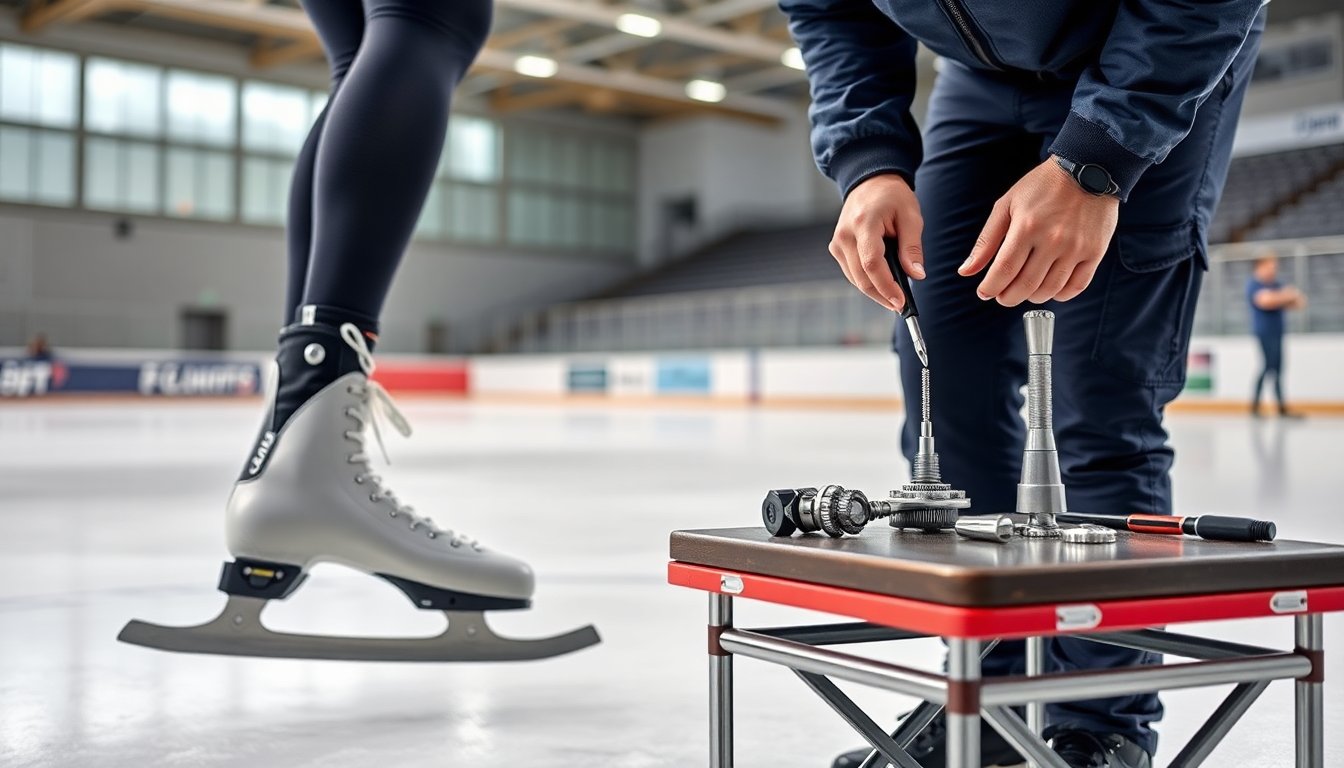
When Stef Reid — a former elite long jumper — laced up skates for a celebrity ice show, she didn’t just try a new hobby. She became a visible spark for a movement: adapting figure skating so athletes with impairments can compete on the Paralympic stage. Her switch from track to ice has offered a vivid demonstration of what’s possible, but behind the headlines there’s a meticulous, multi-layered effort underway. Athletes, prosthetists, coaches, event organisers and tech developers are collaborating to test equipment, refine classification and rethink judging so adaptive skating can be fair, safe and exciting.
Why figure skating makes sense for the Paralympics
Figure skating blends athleticism and artistry. It demands strength, balance, timing and expressive choreography — talents that many athletes with different impairments can cultivate. Early demonstration events, pilot competitions and advocacy work have generated promising early data: adaptive skating can be safe, competitive and compelling for audiences. Yet the path to Paralympic inclusion is technical and institutional. Skating must demonstrate standardized classification, consistent safety evidence, broad international participation and governance aligned with the International Paralympic Committee.
Three problems that keep coming up
1. Classification: The sport needs a system that groups skaters by functional capacity rather than diagnosis. That means designing on-ice tests that assess balance, propulsion, trunk control and other movement qualities specific to skating — not just medical labels.
2. Equipment: Prosthetic interfaces, blade mounts and adaptive supports must be durable, adjustable and repeatable. Athletes benefit most from modular components that allow quick on-ice tuning without rebuilding sockets each time.
3. Judging and scoring: Rules should reward technical difficulty and artistic risk while accounting for adaptive techniques. Integrating objective measurements — where appropriate — can reduce subjective bias and help judges separate execution from impairment-related limitations.
How a campaign usually unfolds
Advocates follow a pragmatic, staged approach: hold pilot competitions and exhibitions, refine equipment and rules based on feedback, and develop a validated classification protocol. The pattern mirrors other parasports: a series of trial events and feasibility studies, followed by judge-training workshops and data collection to support formal adoption.
Stef Reid’s transition: one athlete’s practical lessons
Reid’s journey from runway pits to blades highlights the nitty-gritty challenges of changing surfaces. After losing her right leg at 15, she proved herself on the track; the ice demanded a new toolbox.
- – Prosthetic innovation: Multiple prototypes tweaked socket fit, blade mounting geometry and suspension systems to redistribute pressure and improve lateral stability. Small changes in alignment made a big difference for edges and landings.
- Coaching shifts: Coaches moved the focus from ankle adjustments to hip and core strength, trunk control and single-leg mechanics — fundamentals for carving clean edges and controlling spins.
- Motor learning: Progress came through repeated, task-specific drills that isolated approach control, edge work and landing mechanics. It wasn’t just strength training; it was relearning movement patterns for a slippery surface.
Benefits and trade-offs
The upside is real. Opening skating to adaptive athletes creates fresh competitive pathways, unlocks new funding and sparks creative choreography and technical solutions. Objective tools — sensors, video analysis and force measurement — can enhance safety and scoring consistency.
But there are costs. Custom prosthetics and lab time are expensive. Establishing fair classification adds administrative overhead that can slow momentum. Artistic judging risks retaining subjective bias unless rubrics are carefully redesigned. And proprietary technology could create uneven playing fields unless equipment standards are enforced.
Practical training and testing strategies
Successful programs blend sport-specific training with rigorous biomechanical testing and iterative prosthetic development. Typical elements include:
- – Staged training that builds transferable capacities: spatial awareness, approach control and single-leg power.
- Biomechanical assessment using video analysis, force plates and inertial sensors to quantify balance, push-off and landing forces.
- Iterative prosthetic cycles that prioritize modular blade interfaces for faster adjustments and reduced downtime.
- Pilot competitions judged by calibrated panels to collect data needed for classification and scoring refinement.
Inclusive Skating and rule reform
Inclusive Skating, one of the leading organisations pushing this agenda, has reframed rules to prioritise functional ability and creative expression. Their approach emphasizes:
- – Functional classification groups rather than diagnosis-based categories.
- Judge rubrics that distinguish execution errors from restrictions related to impairment.
- Equipment standards and safety checklists that promote repeatable, consistent setups.
After implementing these reforms, they observed higher routine complexity and increased participation — a sign that thoughtful rule design can expand access without sacrificing competitive integrity.
Why figure skating makes sense for the Paralympics
Figure skating blends athleticism and artistry. It demands strength, balance, timing and expressive choreography — talents that many athletes with different impairments can cultivate. Early demonstration events, pilot competitions and advocacy work have generated promising early data: adaptive skating can be safe, competitive and compelling for audiences. Yet the path to Paralympic inclusion is technical and institutional. Skating must demonstrate standardized classification, consistent safety evidence, broad international participation and governance aligned with the International Paralympic Committee.0