
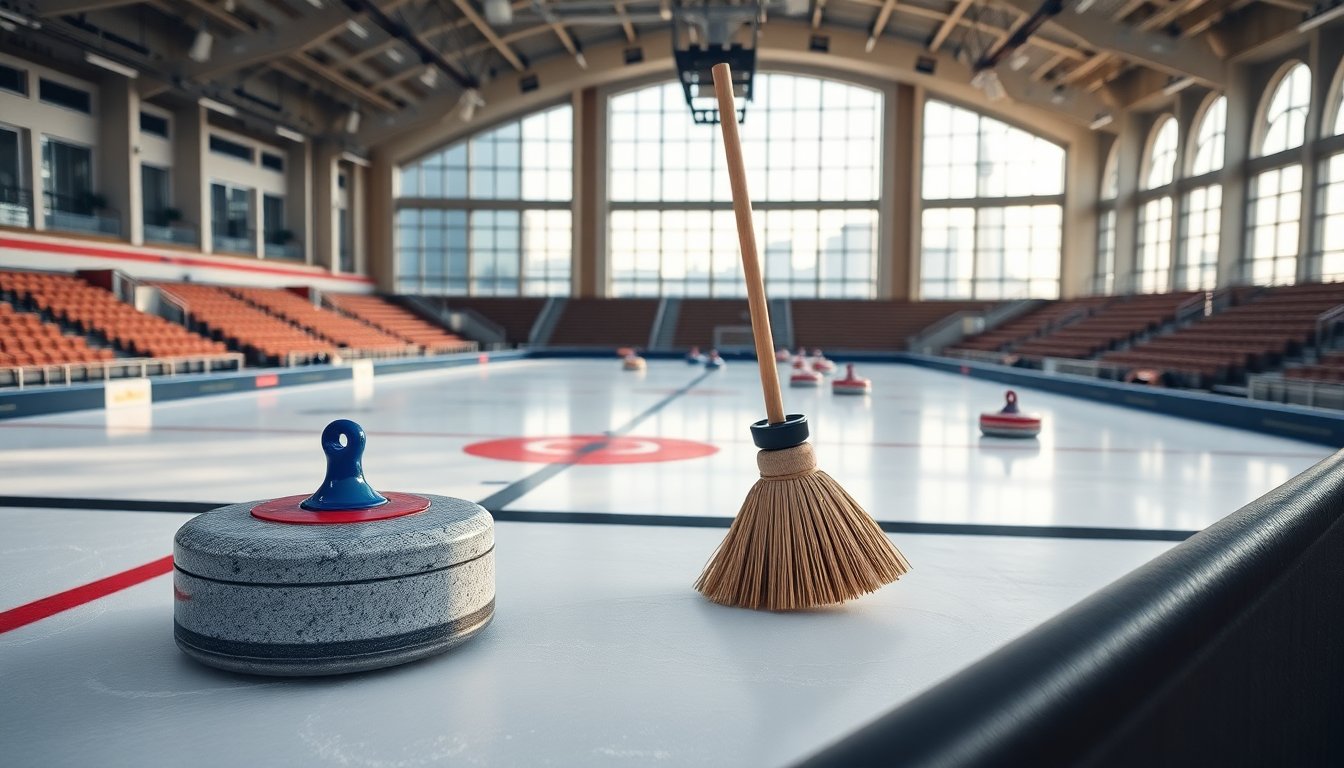
The Rock League opened play at the Mattamy Athletic Centre in Toronto with a format designed to shake up traditional curling. Built around six franchises that mix five men and five women from different countries, the league borrows competitive ideas from golf’s Ryder Cup and past curling events while placing teams in head-to-head, multi-sheet matches. The event features elite names such as Brad Jacobs, Rachel Homan and Kerri Einarson alongside international skips like Niklas Edin and Anna Hasselborg, creating matchups that pair familiar rivals as teammates.
Beyond star power, the tournament carries serious money: a total purse of US$250,000 with $100,000 earmarked for the winning franchise. Matches are staged across three ice sheets simultaneously, where franchises compete in men’s and women’s four-player games and in mixed doubles. General managers control player deployment across sheets and may move between games during play, while each squad also names a team captain to guide in-game strategy.
How the competition is structured
The Rock League’s design emphasizes variety and tactical choices. Each franchise fields separate men’s and women’s four-player games plus a mixed doubles matchup; a team wins a head-to-head showdown by taking two of the three simultaneous matches. The format includes a dedicated mixed fours day and a playoff bracket that advances the top four franchises to the final day. Rosters intentionally blend nationalities so that teammates represent a mix of curling traditions and styles, which shifts the usual national-team dynamic to a club-style competition.
Franchise management adds a strategic layer: each team’s general manager decides when and where players appear and can traverse sheets during games to influence tactics. The blend of sexes, countries and coaching choices results in an unpredictable tactical landscape where shot-calling and lineup decisions can be as decisive as the shots themselves. Television and streaming schedules have been set to showcase the three-sheet format and the league’s fast-paced approach.
Opening matches and notable results
In the opening round Shield Curling Club, led on-ice by two-time Olympic champion Brad Jacobs, took a 2-1 victory over Alpine. Jacobs produced a 9-4 win in the men’s four-player match, while a Swiss mixed doubles pairing of Carole Howald and Benoît Schwarz-van Berkel secured a 6-4 triumph in the doubles sheet. Alpine’s lone victory came in the women’s game, where Switzerland’s Alina Paetz skipped an 8-4 win over Shield’s Kerri Einarson skipped crew.
Typhoon Curling Club, which includes celebrated Swedish skips Niklas Edin and Anna Hasselborg, overcame Frontier by a 2-1 margin. Typhoon’s men’s side prevailed 7-3 and their mixed doubles pairing produced a dominant 10-3 score, while Frontier’s women, skipped by Switzerland’s Silvana Tirinzoni, posted a 7-3 victory to keep their franchise competitive. Later in the evening, Northern, captained by Scotland’s Bruce Mouat, edged Maple United 2-1, winning the men’s encounter 8-4 and the mixed doubles 5-4, while Maple’s women, skipped by Rachel Homan, claimed a 9-4 result.
What the early results suggest
These opening-day outcomes highlight the parity and drama the format aims to produce: teams can trade wins across disciplines, and success often hinges on which sheets a franchise prioritizes. The presence of international stars in mixed lineups makes scouting opponents more complex, since teams will face unfamiliar partner combinations and tactical tendencies. Early victories by squads led by decorated Olympic winners underline how experience still matters, even when chemistry is newly formed.
Rules, broadcast and stakes
The Rock League uses condensed timing and rules to keep matches brisk: four-player games are played over seven ends with a 21-minute clock for play, and each squad receives three one-minute timeouts. A special scoring element awards a two-point bonus to a team that successfully executes a drawing the pin in the seventh end, incentivizing aggressive finishing shots. Those adjustments are intended to accelerate action for live and streaming audiences while preserving core curling strategy.
Where to watch and what’s on the line
Matches stream on digital platforms including CBC digital services and RockChannel.com, with national television coverage scheduled for the playoffs and final. With US$250,000 in total prize money and a six-franchise format, the Rock League combines entertainment and high stakes, offering both fans and players a fresh way to experience elite-level curling. As the event progresses, lineup decisions, on-ice chemistry and time-management will shape which franchises reach the weekend’s decisive rounds.


