
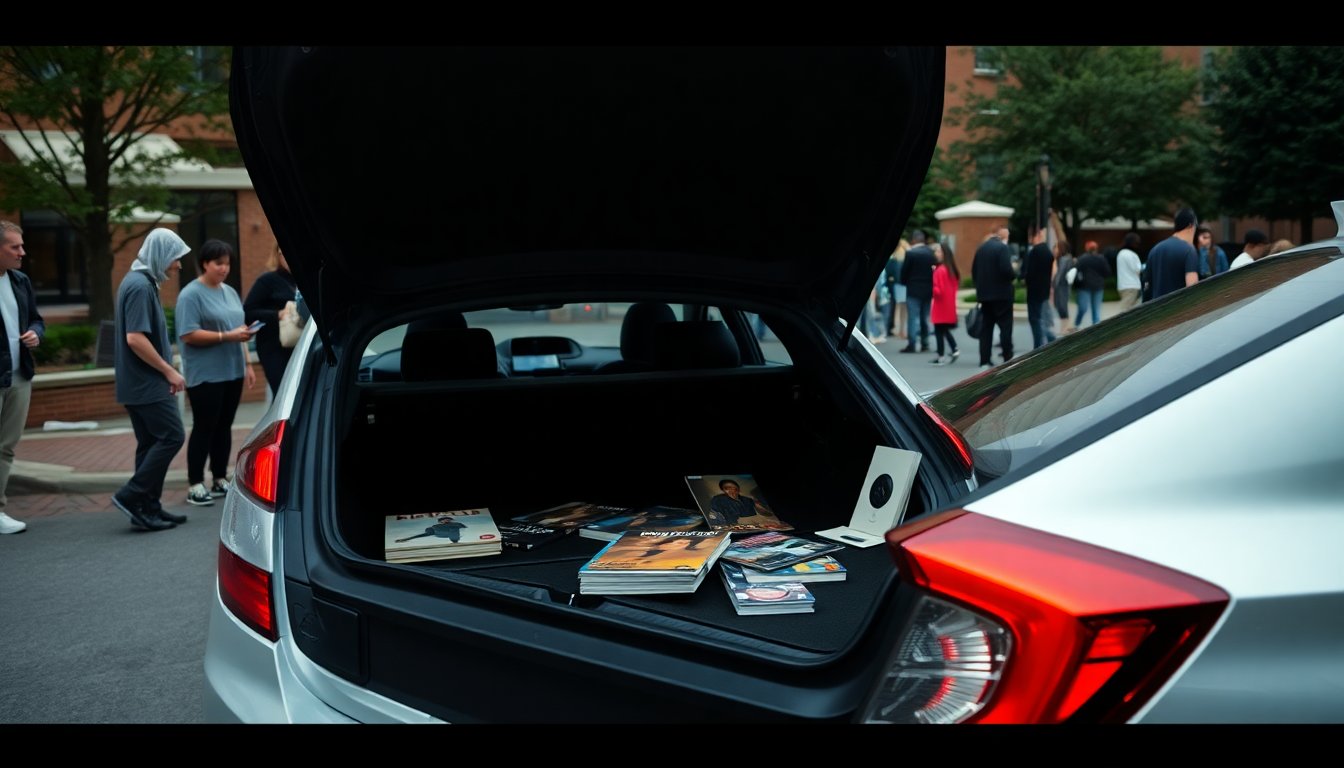
J. Cole has skipped the usual arena spectacle for a decidedly low-key rollout of The Fall Off, an album he’s described as his final studio record. Instead of stadium dates and mall signings, he’s been selling physical copies out of a refurbished Honda Civic, staging small listening sessions and turning everyday places — parking lots, campus quads, public squares — into moments of close-up connection. The result reads less like a tour and more like a hands-on experiment in how music travels when you strip away the polish.
A grassroots route
Cole’s “Trunk Sale Tour” launched in North Carolina and threaded through college towns and the DMV. Announced on X just after the album’s Feb. 6 release, within a day he posted photos of the Civic packed with CDs. Stops included Chapel Hill, North Carolina A&T, Atlanta and Howard University, where coordinated campus meetups let him greet hundreds of students in controlled, organized settings. Events have mixed merch drops, quick meet-and-greets and listening sessions — modest in scale, but engineered for shareable, social-media-ready moments.
Why the trunk works
Using a car trunk as a point of sale is both symbolic and practical. It references the mixtape hustle — the era when artists moved music by hand — while keeping overhead low and interactions direct. Fans leave with something tangible: boxed CDs that feel collectible in a streaming-first world. Those tactile, in-person exchanges create urgency and produce organically postable scenes without the need for elaborate staging.
Listening sessions and Silver Spring car rides
Beyond curbside sales, Cole has hosted intimate listening sessions that strip away the distance between performer and audience. In Silver Spring, Maryland, he invited a handful of fans into the Civic for invitation-only rides where the album played in sequence. Attendees described the experience as conversational and quietly memorable: lyric talk, questions about influences, and a sense of being part of the creative moment rather than merely observing it. Short clips and screenshots from these micro-events have amplified their reach far beyond the room or car.
Fan response and local ripple effects
Reaction has been intense and personal. Fans report emotional exchanges, tears and gratitude; social feeds lit up after many stops, turning private interactions into public buzz. The tour also drew political attention — reports say Maryland governor Wes Moore extended an invitation to Cole to visit Annapolis — underscoring how a small-scale approach can still generate big headlines.
What this signals for music marketing
Cole’s campaign suggests a deliberate recalibration. For artists and labels weighing how to reach Gen Z and younger listeners, the playbook now looks hybrid: use digital platforms to summon audiences, then meet them in lived spaces where collectible, analog moments happen. Marketers watching the rollout note that low-capacity, high-intimacy events can yield richer qualitative feedback than mass broadcasts and create content that feels authentic to share. The tactic also provides a narrower, more controllable form of storytelling — one that can be measured not just by streams but by attendance, engagement and social resonance.
The farewell framing
Presenting The Fall Off as a possible final album adds another layer to the rollout. Selling physical copies and prioritizing face-to-face encounters reads as both a farewell gesture and a cultural argument: that hip-hop’s old rituals — hand-to-hand distribution, community gatherings, personal exchange — still carry value. Whether this approach becomes a template for legacy acts or a niche strategy for artists with established followings remains to be seen.
What comes next
Expect more experiments that pair small, curated activations with digital amplification. Labels and independent artists may test invitation-only sessions, pop-ups and campus collaborations that trade scale for intimacy. The measurable takeaway for promoters is straightforward: design moments that can be repeated and tracked, but keep the human element front and center — it’s what turns a trunk sale into a story people want to share.