
Table of Contents
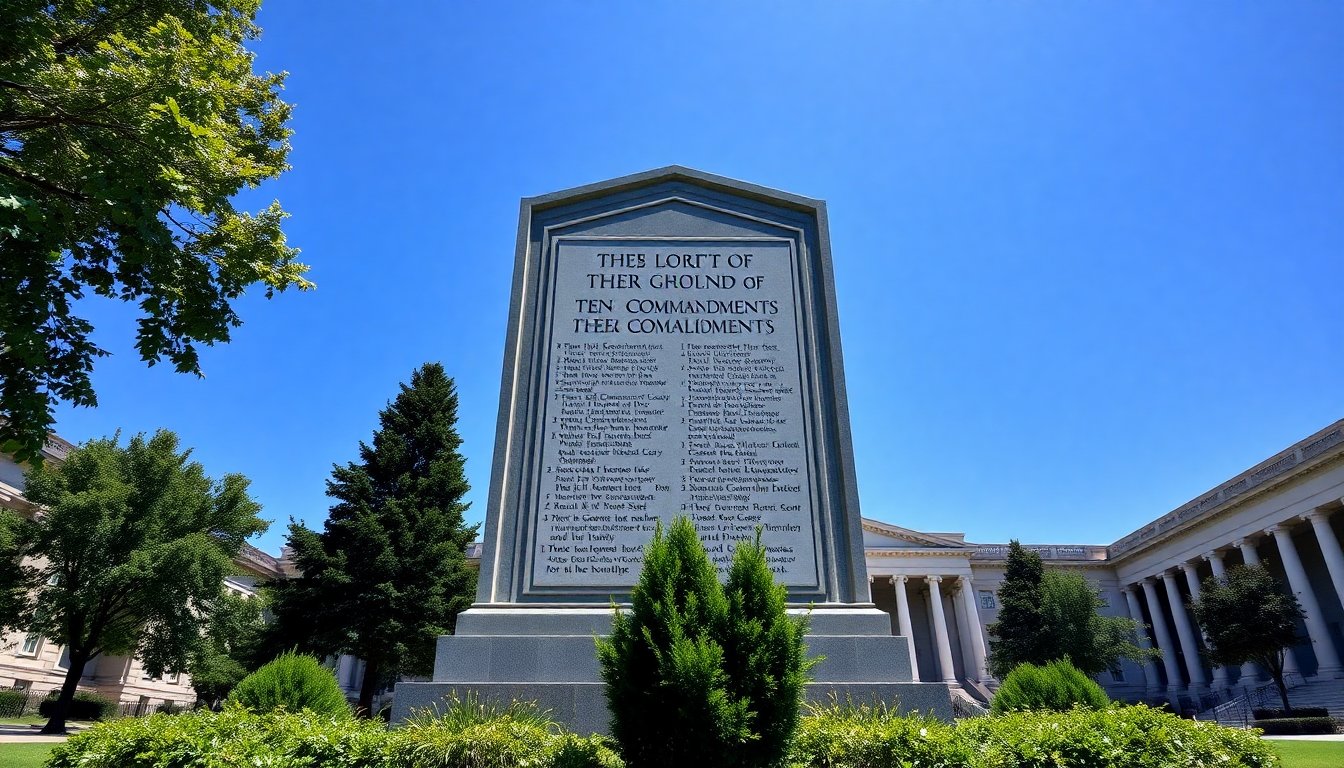
A significant development has unfolded at Kentucky’s state Capitol with the restoration of a long-lost Ten Commandments monument. This granite structure, representing the historical and cultural significance of the Commonwealth, has returned to its original location after more than four decades. The monument’s reinstatement occurred this week, following the passage of House Joint Resolution 15. This legislative action culminated from efforts that began earlier this year, resulting in successful votes in both the House and Senate.
Historical context of the monument’s removal
The Ten Commandments monument was donated to Kentucky in 1971 by the Fraternal Order of Eagles. It remained on the Capitol grounds until its removal in the early 1980s due to construction activities. Since then, the monument has been stored out of public view, prompting questions about its future. Efforts to reinstate it faced several legal hurdles. A significant turning point occurred in 2000 when the American Civil Liberties Union (ACLU) filed a lawsuit. This led a federal court to rule that displaying the monument violated the Establishment Clause, referencing the now-overturned Lemon test.
Legal battles and recent Supreme Court developments
Advocates for the monument have faced significant challenges in their efforts for reinstatement. A pivotal moment occurred when the Supreme Court ruled in the case of Kennedy v. Bremerton School District. This decision marked a departure from the Lemon test, leading the court to evaluate the Establishment Clause based on historical practices and understandings. This change established a new legal framework for religious displays on public property, facilitating the monument’s potential return.
Support and opposition among lawmakers
While the reinstatement of the monument has generated enthusiasm, it has also raised significant concerns among some legislators. State Representative Joshua Watkins expressed apprehension about the potential implications for the separation of church and state. He warned that this decision might lead to additional legal challenges or pressure for similar displays from other religious groups.
State Senator Keturah Herron raised questions about the reasoning behind the decision to reinstate only the Ten Commandments. She argued for the inclusion of a broader array of religious symbols to better reflect the diverse beliefs within the community.
Reactions from supporters
Supporters of the monument, including Representative Shane Baker, who sponsored HJR 15, highlighted its historical importance. He stated, “The Ten Commandments hold profound historical significance for both Kentucky and the United States as a whole.” Additionally, Roger Byron, senior counsel for First Liberty Institute, which represented the Fraternal Order of Eagles, praised the monument’s reinstatement. He noted, “This monument is a testament to the rich tradition of public monuments acknowledging the Ten Commandments’ critical role in our legal and moral frameworks.”
Community impact and future implications
The return of the Ten Commandments monument represents a significant moment for its supporters and highlights ongoing debates about religious expression in public spaces. Vic Jeffries, a trustee of the Fraternal Order of Eagles Aerie 3423, expressed his excitement over the monument’s reinstatement, noting the organization’s longstanding commitment to similar displays nationwide. He remarked, “Having our monument back where it belongs is a significant achievement for us.”
Broader discussions about religious displays
The reinstatement of the Ten Commandments monument at the Kentucky Capitol has reignited discussions about religious displays in public spaces. Advocates for pluralism argue that if one faith is officially recognized, others should also be represented. This approach aims to ensure that the Capitol reflects the diverse beliefs of its constituents.
This ongoing dialogue could significantly influence how such monuments are treated in the future, potentially shaping policy decisions across various levels of government. The Kentucky Capitol’s actions may set a precedent for similar discussions in other states, highlighting the complex relationship between religion and public life.
As the Ten Commandments monument takes its place again, it serves not only as a historical symbol but also as a catalyst for vital conversations about religious expression and representation in society.