The first warm weekend of the year often brings invitations, cushions on chairs, and a last-minute sweep. But many people stop at visible surface cleaning and miss the less obvious jobs that determine whether an outdoor gathering feels spotless or neglected. This guide focuses on five frequently overlooked maintenance tasks that make a big difference: removing cobwebs, cleaning the underside of furniture, treating mildew and algae, washing soft furnishings, and checking drainage and fixtures. Each section explains why the task matters, how to do it efficiently, and which tools or cleaners will reduce effort.
Start at the top: remove cobwebs and nests
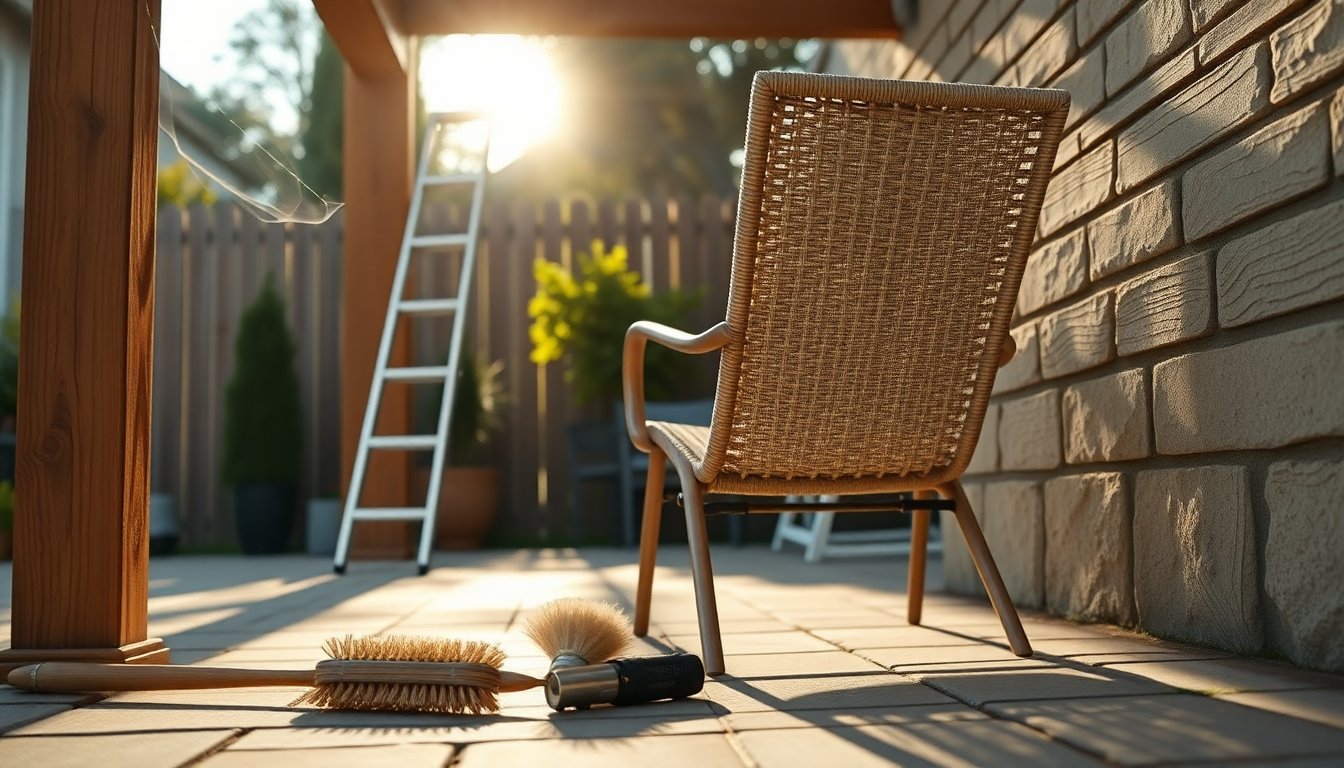
Before you rearrange furniture or unroll an outdoor rug, take a look upward. Cobwebs and insect nests collect in eaves, pergola corners, light fixtures, and the rafters where guests will notice them instantly. Those tangled silk threads often hide egg sacs or debris that you do not want near your party. The easiest strategy is to work from the highest point down, sweeping webs into a dustpan or directing them to the ground to hose away. An extendable cobweb duster eliminates the need for a ladder and lets you reach different heights safely. Finish by rinsing nearby surfaces so any remaining residue doesn’t attract new pests.
Quick technique
Use slow, deliberate strokes that pull the web intact rather than shredding it. If a duster head is washable, rinse it after use to remove sticky matter and insects. A dry day with low wind is ideal because moisture and breezes make webs harder to gather. Treat this as the first task: removing overhead clutter sets the tone for a tidy patio before you tackle ground-level cleaning.
Flip and scrub: clean the underside of outdoor furniture
People clean the tops of chairs and tables but rarely lift them to inspect frames, fastenings, or hollow tubing where moisture and grime build up. The underside is a favorite spot for mold, moss, and insect activity, and neglect here leads to faster deterioration and an unpleasant surprise when cushions are removed. Remove cushions, tip furniture carefully, and treat joints and crevices. A powered brush, like an electric spin scrubber, reaches awkward angles, loosens embedded dirt, and keeps you from prolonged bending or kneeling. Use warm water and dish soap for general grime, then switch to a dedicated mold and mildew cleaner where staining is visible.
Product tip
Choose a cordless scrubber with waterproof rating for hassle-free rinsing. A rotating brush head excels on wicker and slatted frames where a rag cannot reach. Rinse thoroughly and let sunlight dry the furniture fully to discourage fresh microbial growth.
Treat concrete, pavers, and decking for mildew and algae
Dark discoloration on pavers, green streaks on deck boards, and slimy patches are common in shaded or poorly drained areas. Aggressive options—such as undiluted bleach or an incorrectly set pressure washer—can damage surfaces and harm nearby plants. Instead, use a targeted mildewcide or a ready-to-use outdoor cleaner formulated for algae and mildew, spray according to label instructions, and allow the product to dwell so it breaks down biological growth. For stubborn spots, a stiff broom or a mechanical brush provides extra agitation without etching stone. Rinse gently and let the surface dry completely before placing rugs or furniture to avoid trapping moisture underfoot.
Safety and results
Wear gloves and eye protection when handling concentrated cleaners, and protect delicate landscaping with plastic sheeting or a gentle rinse sequence. Many modern formulas are biodegradable and plant-safe when used as directed, delivering a clean surface while minimizing environmental impact.
Refresh textiles and cushions
Outdoor cushions, pillows, and rugs absorb seasonal grime, pollen, and moisture. A quick wipe rarely removes embedded dust and odors, so inspect labels for washing guidance and treat stains with a gentle upholstery cleaner. Removable covers can often be machine washed; nonremovable cushions benefit from spot cleaning, a light detergent solution, and thorough drying in the sun. Hoses with a low-pressure spray help rinse soap from woven materials without forcing water into seams. Store cushions in a ventilated bin or cover them during wet weather to extend fabric life and prevent mold from redeveloping between uses.
Final sweep: inspect drainage, lighting, and small repairs
Before you call guests over, glance at drains, gutters, and the grill area for clogs or debris that will cause problems when more people are present. Clear leaves from gutters and pavers, test outdoor lighting, and tighten any loose screws on railings or furniture. Small maintenance tasks prevent embarrassing failures—sagging lights or blocked drains—during a gathering. A final walk-through after cleaning ensures pathways are clear and surfaces are dry and safe.
When you follow these steps—top-to-bottom cobweb removal, flipping and deep-cleaning furniture, treating mildew, laundering textiles, and checking drainage—you create a patio that looks cared for and is ready for guests. Consider investing in a few key cleaning tools to make the work faster and more effective. Note: some links or product suggestions may be affiliate-supported; when you purchase via those links we may earn a commission at no extra cost to you.