
Table of Contents
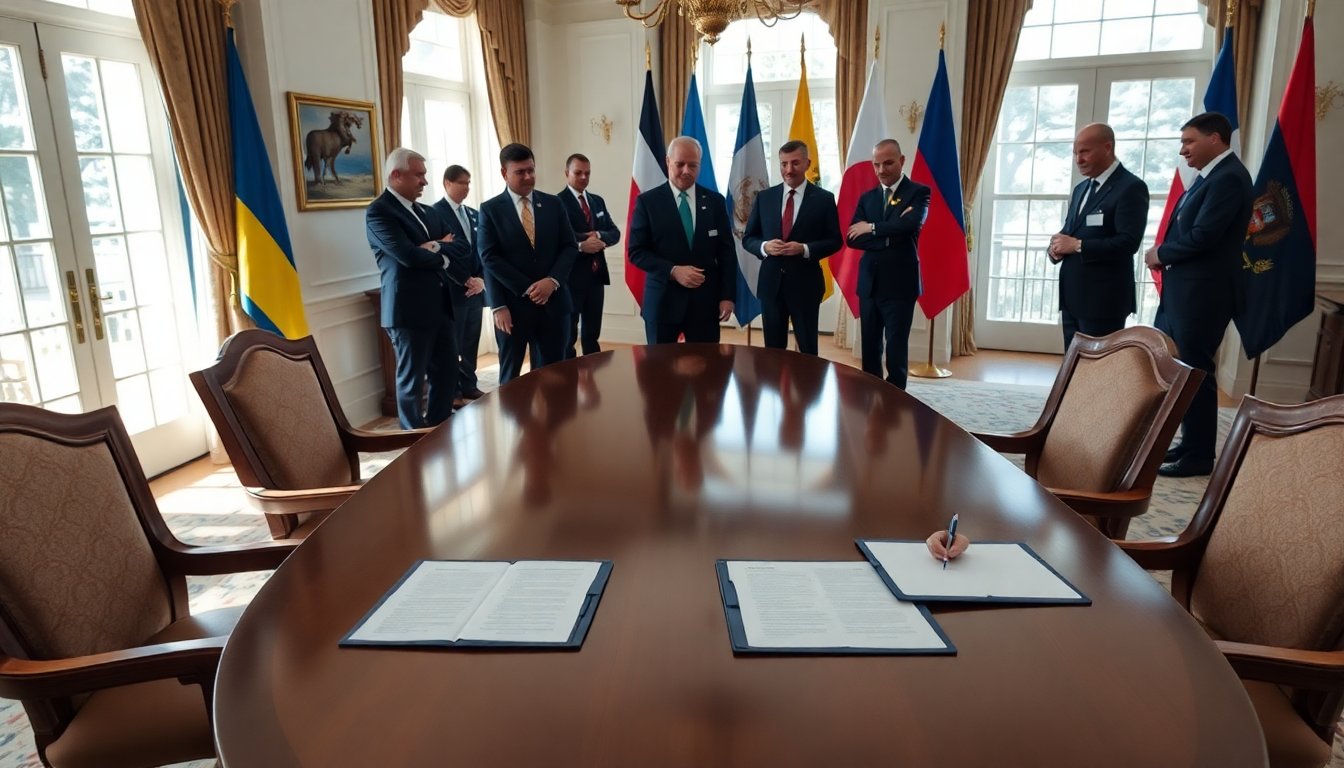
Meetings in Florida involving representatives from the United States, Ukraine, and Europe have sparked optimism about resolving the ongoing conflict in Ukraine. U.S. Special Envoy Steve Witkoff reported that these discussions have made significant progress toward a comprehensive peace framework. The participation of high-ranking officials from Ukraine, such as Rustem Umerov, Secretary of the National Security and Defense Council, and Lieutenant General Andriy Hnatov, Chief of the General Staff of the Armed Forces, highlighted the seriousness of these negotiations.
Key developments in negotiations
The negotiations, lasting three days, were characterized as productive and constructive by Witkoff. He highlighted that the discussions centered on four vital documents aimed at improving Ukraine’s security and economic stability. These documents included the ongoing development of a 20-point plan, strategies for multilateral security guarantees, and enhancements to a U.S. security guarantee framework for Ukraine.
Commitment to sustainable peace
Witkoff reaffirmed Ukraine’s steadfast commitment to achieving peace that is both just and sustainable. He stated that the primary objectives of these negotiations are to end the violence, ensure security, and establish a foundation for Ukraine’s recovery and long-term stability. This peace must go beyond merely ceasing hostilities; it should create a dignified basis for a secure future.
International support and pressure on Russia
Finnish President Alexander Stubb expressed optimism regarding peace negotiations, noting they are closer than ever to an agreement. He credited U.S. diplomatic efforts and the impact of sanctions on Russia’s economy for this progress. Stubb emphasized the importance of unity among Western allies, particularly following discussions in Berlin that reinforced their collective commitment to achieving lasting peace.
Challenges ahead
However, Stubb warned that significant challenges remain in the negotiations. He explained that while Russia’s approach may seem more flexible in private discussions, public statements from President Vladimir Putin indicate a persistent intention to undermine Ukraine’s sovereignty.
Economic sanctions as a strategic tool
Stubb noted that the economic sanctions imposed on key Russian oil companies, including Lukoil and Rosneft, are starting to show results. He stated that if Russia were to reject a peace framework agreed upon by Ukraine, Europe, and the U.S., this would justify an escalation of these sanctions. The Finnish President’s comments indicate a growing belief that ongoing economic pressure could affect Russia’s willingness to pursue meaningful negotiations.
While notable progress has been made towards a peace agreement, the complexities of the situation suggest that the road to resolution is still challenging. The international community’s involvement, particularly through economic sanctions and diplomatic efforts, will be crucial in determining Ukraine’s future and its pursuit of a secure and prosperous existence.