
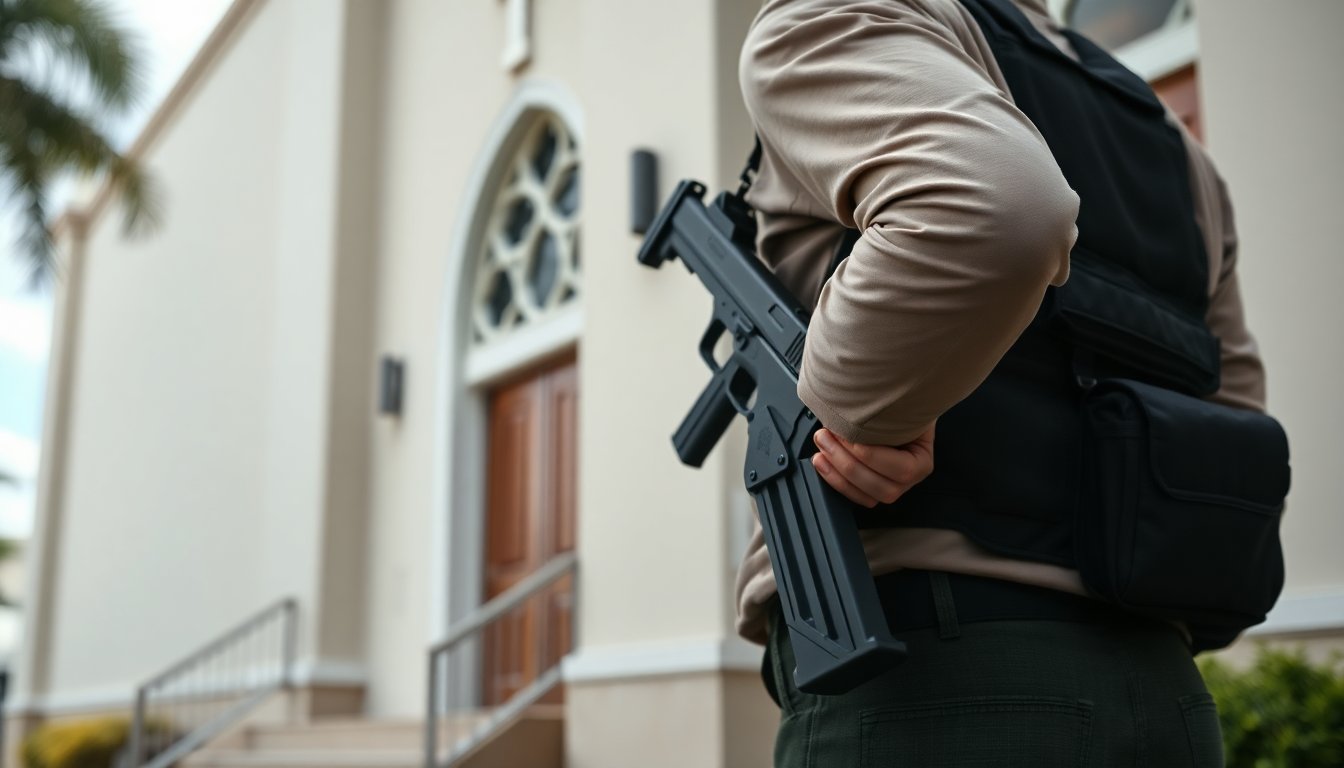
Florida Senate approves bill letting houses of worship use armed volunteers
What happened
The Florida Senate voted unanimously earlier this month to approve Senate Bill 52, a measure that would let churches, synagogues, mosques and other religious institutions rely on trained, armed volunteers for on-site security without requiring a professional security-license. If the House agrees and the governor signs it, the change would apply statewide.
Why supporters back it
Sponsors and backers — including Sen. Don Gaetz — frame the bill as a practical answer to two pressing problems: rising safety concerns and tight congregational budgets. Their argument is straightforward: smaller houses of worship sometimes cannot afford licensed guards for short services or occasional events, and a well-trained volunteer already on-site can respond faster than a guard who must travel to the building. Supporters say allowing volunteers would reduce operating costs and let congregations tailor training to their needs.
What opponents worry about
Critics — safety trainers, public-safety professionals and some faith leaders — warn that removing the licensing requirement risks uneven training, unclear oversight and higher liability. Licensed guards follow standardized training, certification and reporting procedures; volunteers operating without the same structure could complicate coordination with police, increase insurance exposure and raise questions about accountability after use-of-force incidents.
Key debates and operational questions
The bill leaves several practical details unresolved. Who certifies volunteer competence, and how often must they retrain? What documentation and incident-reporting rules will apply? Who bears legal responsibility when force is used? These operational questions will shape whether the policy improves response times or widens safety gaps.
Trainers point to three main risks:
– Skill degradation: de-escalation, threat assessment and safe weapons handling require frequent practice. – Fragmented standards: without statewide requirements, training could vary widely from congregation to congregation. – Weakened coordination: unclear chains of command and recordkeeping can hinder investigations and make it harder for first responders to work with volunteer teams.
Local context and national backdrop
Supporters cite recent violent incidents at houses of worship nationwide to justify swift action; opponents say those tragedies reinforce the need for rigorous oversight, not shortcuts. Some data on security-technology adoption shows nontraditional, rapid deployments can proliferate quickly — often prompting follow-up questions about supervision and outcomes.
In Florida, pastors and security consultants are divided. Some congregations welcome an on-site volunteer presence for reassurance and speed; others worry about accidental shootings, escalation, or the message an armed volunteer community sends to worshippers who may feel safer without visible weapons.
Path forward in the Legislature
The bill now moves to the Florida House, where lawmakers are expected to consider amendments and hear testimony from faith communities, insurers, training providers and civil-society organizations. If the House passes the measure, it would go to Governor Ron DeSantis; supporters say the change would take effect in July if signed.
Practical fixes lawmakers may consider
Observers and experts suggest several measures that could reduce risks while preserving faster, lower-cost security options:
– Minimum training hours and mandatory refresher courses; – Standardized certification and background checks; – Clear incident-reporting requirements and recordkeeping; – Defined chains of command and written use-of-force policies; – Formal communication protocols with local law enforcement; – Clarification of insurance and liability responsibilities. The House debate will show whether lawmakers can turn broad goals into precise rules that balance rapid response with consistent standards — or whether the patchwork approach critics fear will take root.