
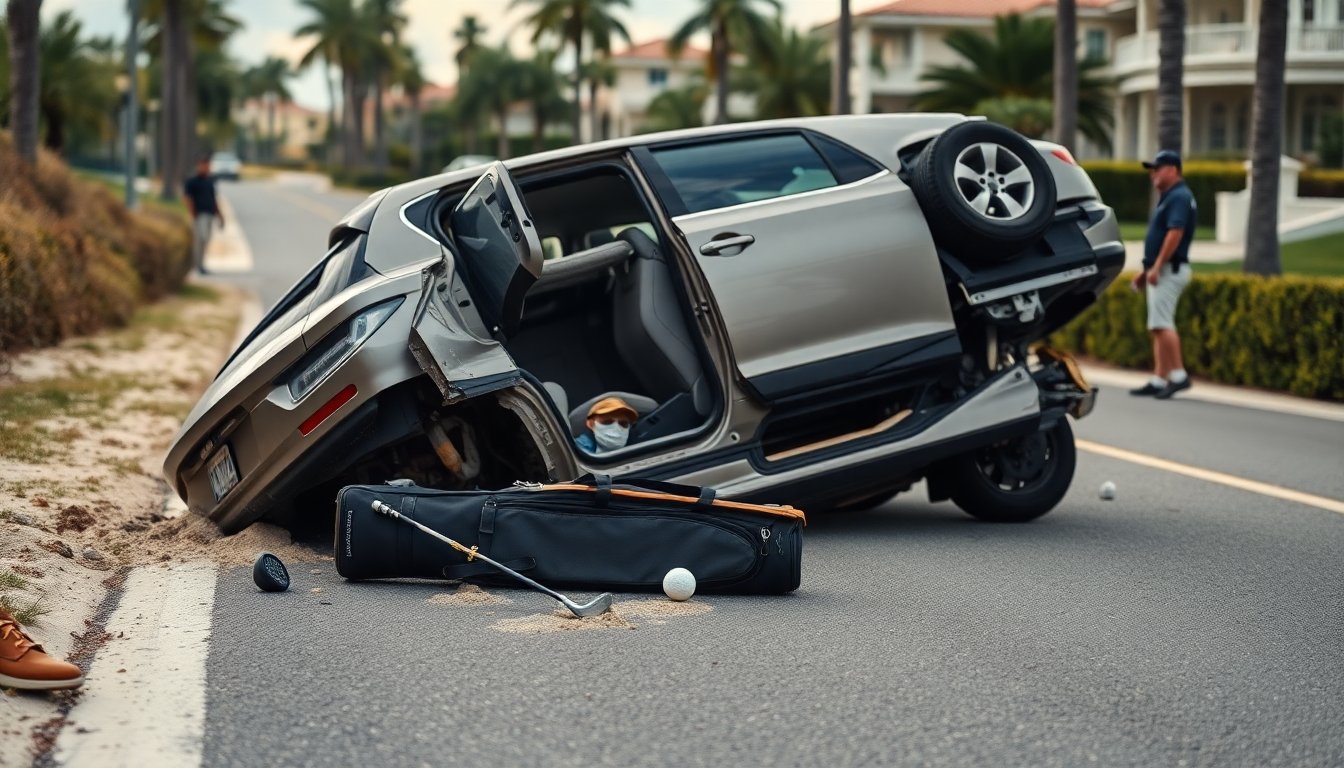
The golfing icon Tiger Woods confirmed he will take time away from professional play to pursue treatment following a car accident and arrest on March 27, 2026. The incident, which occurred on Jupiter Island near the golfer’s residence, resulted in a rollover of his Land Rover and an immediate law-enforcement response. Authorities said Woods displayed signs of impairment at the scene; he completed a breath test that registered no alcohol yet declined a urine test, leading to charges that include DUI with property damage and refusal to submit to a lawful test.
This development arrives amid a period of intense public attention to Woods’ health and playing schedule. He had recently returned to competitive play in the TGL finals on March 24, 2026, after missing the 2026 PGA Tour season for surgeries to repair a ruptured Achilles tendon in March and a disc-replacement procedure in October. Woods said he would be absent “for a period of time” as he seeks help, a decision that adds fresh uncertainty to plans that included a hoped-for appearance at the Masters tournament in April.
Crash details and immediate response
Local law enforcement said the accident happened shortly after 2 p.m. on the 200 block of South Beach Road. Martin County Sheriff John Budensiek described a scenario in which Woods’ Land Rover attempted to pass a northbound pressure-cleaner truck and clipped the trailer, causing the vehicle to slide and roll onto its driver’s side. The crash site is a short distance from Woods’ home in the 400 block of South Beach Road, where he has lived since 2007. Both drivers emerged without physical injuries, and Woods reportedly crawled out of the vehicle.
Scene findings and testing
At the scene, deputies said Woods showed signs of impairment; he agreed to a breathalyzer that showed no alcohol. He refused a urine test at the station, a decision with legal consequences under Florida law. Per sheriff’s office procedure and state custody rules, Woods remained in Martin County Jail for the statutorily required period before posting bail and leaving the facility shortly after 11 p.m. on March 27. Officials booked him on two misdemeanors: suspicion of DUI resulting in property damage and refusal to submit to a drug test.
Legal context and potential consequences
Legal experts point to a recent change in Florida statute that has increased penalties for test refusal. Florida House Bill 687, known as Trenton’s Law, made first refusal of a urine test a punishable offense; the measure took effect on Oct. 1, 2026. Under this law, declining a chemical test can be charged as a second-degree misdemeanor, carrying possible jail time and administrative penalties including a license suspension. Authorities have indicated that the new statute could affect how this case is handled as it moves through the criminal process.
Charges, custody and release
Sheriff Budensiek said both charges filed against Woods are misdemeanors. After his arrest on March 27, statute required a holding period before release; Woods was released on bail later that night and was photographed leaving the jail as a passenger in an unidentified vehicle. The charges — DUI with property damage and refusal to submit to a lawful test — will determine any court appearances and potential administrative actions such as a driver’s license suspension under the state’s updated rules.
Background, career implications and past incidents
This episode joins a list of earlier high-profile events in Woods’ life. He was arrested on a DUI-related matter in 2017 in Jupiter, when police found him asleep at the wheel; toxicology showed prescription medications rather than alcohol, and he later pleaded guilty to reckless driving. In February 2026, Woods suffered severe leg and ankle injuries after a separate single-vehicle crash in California that required major orthopedic surgery; doctors discussed amputation at one point. He also was involved in a 2009 single-car incident near Orlando that caused facial lacerations and a careless-driving citation. Those precedents are likely to be part of public and legal conversations now.
The announcement that Woods will step away from golf to seek treatment raises questions about his near-term competitive future, including the possibility of missing major events and any leadership roles he had been considering. The PGA and related organizations will monitor the situation as legal proceedings and medical plans develop. For now, Woods’ focus, he says, will be on addressing the issues that led to this event and on following the legal process while prioritizing recovery and care.


