
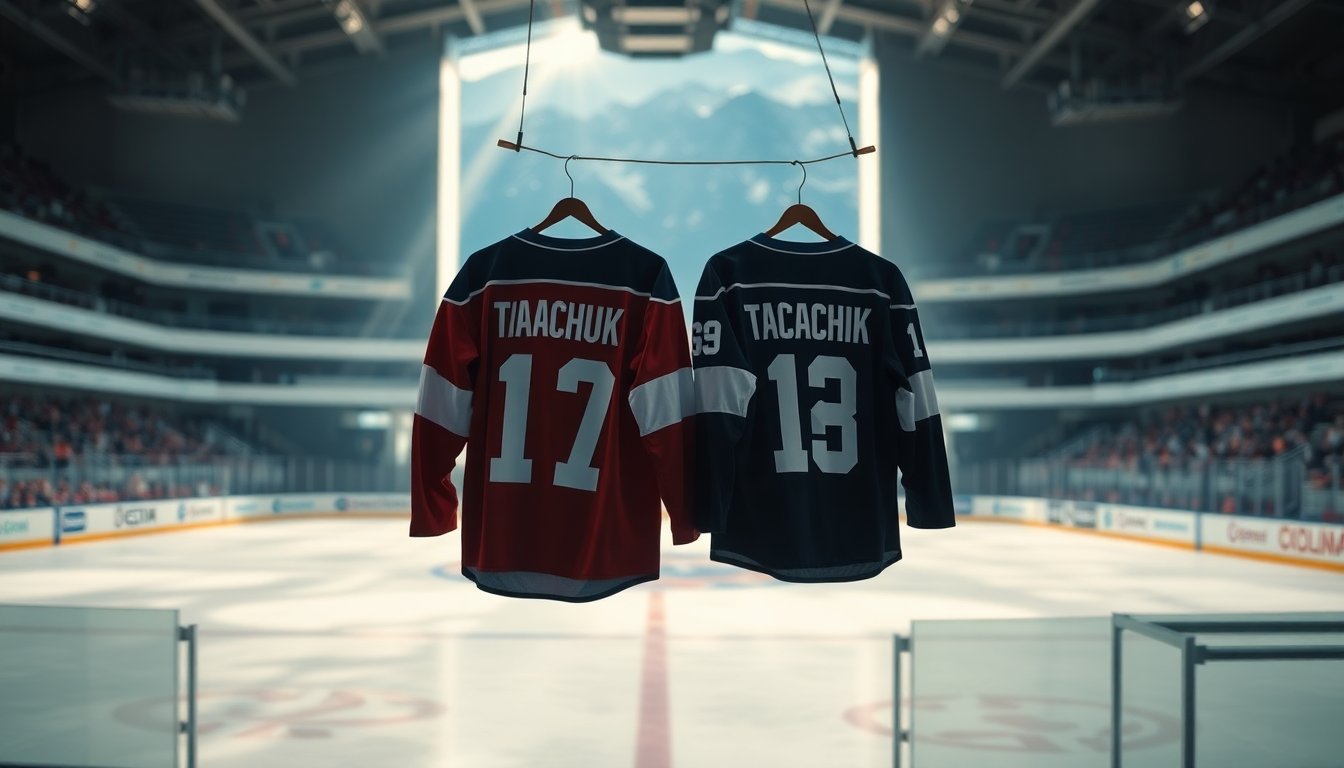
Team USA is bringing the Tkachuk brothers — Matthew and Brady — to Milano Cortina for the Winter Olympics, and their presence has quickly become one of the tournament’s most talked-about storylines. Both have built reputations for scoring, physical play and a talent for getting under opponents’ skin. For a single-elimination competition, those traits can be decisive; for rival fans, seeing two polarizing personalities share a national jersey is irresistible drama.
Why the brothers matter Matthew and Brady aren’t your typical top-line Swiss-army-knife forwards. Think of them as impact players built for short, decisive stretches. Matthew offers playmaking and a persistent net-front presence that creates chaos for goalies and defensemen alike. Brady combines keen goal-scoring instincts with a rougher, galvanizing style that can rally teammates and tilt momentum.
Coaches plan to use those abilities deliberately: heavy forechecking shifts, fierce puck battles along the boards, and matchups designed to disrupt opponents’ top lines. The aim isn’t constant heroics but carefully timed bursts — force a turnover, draw a penalty, open a lane for a sniper, or deliver a hit that swings a building crowd and the scoreboard. Their sibling chemistry also speeds on-ice communication — an intuitive shorthand that can be exploited in tight moments.
Tournament format raises the stakes Milano Cortina’s structure rewards depth while elevating the value of game-changing flashes. With 12 teams split into three groups of four, only the three group winners plus the single best second-place team move straight to the quarterfinals; everyone else must survive a qualification round. That setup makes every pool game meaningful and gives players who can flip a match with one shift oversized influence.
Coaching staffs will respond by carving specialist roles: shutdown pairs to smother threats, energy trios to lift the bench, and matchup units tailored to opponents. Expect the Tkachuks to be deployed in exactly those scenarios — chasing a tying goal, protecting a slim lead, or turning the tide against a favored foe. Opponents, in turn, will have to plan for their bursts, balancing the risk of taking penalties against the danger of letting them run free.
Seeding, groups and tactical ripple effects How teams are grouped can alter the path to medals dramatically. Seeding — largely derived from IIHF rankings and host allocations — shapes not only who you play but when you travel, rest and perform. The U.S. draws Latvia, Germany and Denmark in pool play, a slate that might seem manageable on paper but carries pitfalls. Germany, especially, has the depth to spring a surprise and make a single “swing” game that reshuffles expectations.
Teams facing a likely qualification round often adopt conservative early strategies: preserve energy, avoid needless risks, and live to fight later. That approach can condense marquee rivalries into the knockout phase, where everything is on the line and tempers — not to mention tactics — flare.
Fan loyalties and the emotional undercurrent The Olympics amplify a perennial truth of international hockey: club grudges don’t disappear just because the flag changes. Many supporters still carry the scars of regular-season snipes and playoff vendettas. Some will cheer for country no matter what; others will struggle when a player who haunted their NHL team shows up in another jersey. That split can make for electric atmospheres — and tricky narrative choices for broadcasters and federations trying to connect with a fragmented audience.
Smart production teams will lean into those tensions, scheduling storytelling beats around marquee matchups and highlighting the personal arcs that complicate easy fandom. Expect feature segments about rivalries turned teammates, the psychology of forced unity, and the small rituals that help unfamiliar rosters gel.
Turning combustible histories into cohesion One of the toughest jobs for any Olympic coach is welding together a roster of stars who, in other settings, have been opponents. Locker-room chemistry doesn’t come automatically because players share a nationality. It is built — sometimes awkwardly — through routines, clear role definitions and culture-setting leadership. That is where the Tkachuks could be assets beyond points and hits: their presence and personalities can shape lines, set the tone for physical commitment, and model how to redirect friction into a competitive edge.
Why the brothers matter Matthew and Brady aren’t your typical top-line Swiss-army-knife forwards. Think of them as impact players built for short, decisive stretches. Matthew offers playmaking and a persistent net-front presence that creates chaos for goalies and defensemen alike. Brady combines keen goal-scoring instincts with a rougher, galvanizing style that can rally teammates and tilt momentum.0
Why the brothers matter Matthew and Brady aren’t your typical top-line Swiss-army-knife forwards. Think of them as impact players built for short, decisive stretches. Matthew offers playmaking and a persistent net-front presence that creates chaos for goalies and defensemen alike. Brady combines keen goal-scoring instincts with a rougher, galvanizing style that can rally teammates and tilt momentum.1
Why the brothers matter Matthew and Brady aren’t your typical top-line Swiss-army-knife forwards. Think of them as impact players built for short, decisive stretches. Matthew offers playmaking and a persistent net-front presence that creates chaos for goalies and defensemen alike. Brady combines keen goal-scoring instincts with a rougher, galvanizing style that can rally teammates and tilt momentum.2