
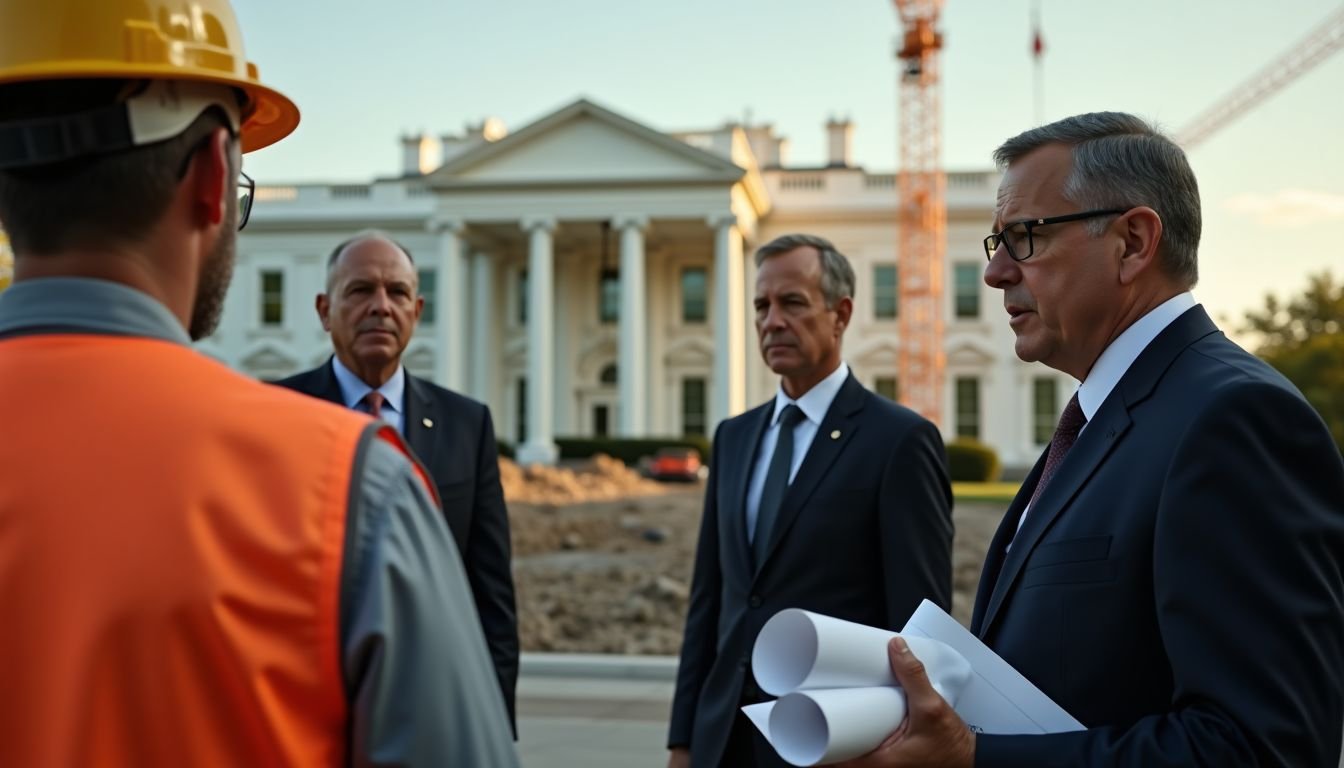
The White House has turned to an appeals court after a federal judge ordered a temporary stop to construction on a planned White House ballroom, arguing that the pause itself poses a security risk to the President and those who live and work in the executive mansion. In a motion filed on April 3, lawyers for the National Park Service asked a higher court to allow building to continue, saying the judiciary’s suspension jeopardizes critical protective measures already in progress.
The administration emphasizes that nearly $400 million in private support has been committed or spent on the project and on specialized materials, and that leaving an exposed construction site next to the White House creates a present hazard. The filing describes the planned addition as essential for continuity of operations and the personal safety of the President, his family and staff, and asks the appeals court to stay the lower court’s order while appeals proceed.
Administration rationale: why construction must continue
In its emergency motion the government framed the ballroom not as a luxury but as a defensive improvement, listing military-grade elements and hardened systems slated for installation. The filing highlights protective design such as missile-resistant steel, drone-proof roofing, and ballistic and blast-resistant glass, and says prepared facilities include a medical area, bomb shelters and secure communications structures. Lawyers argued that these features are interdependent and that pausing work would leave partial systems exposed and incomplete, which they portray as creating immediate national-security vulnerabilities.
Security components described in filings
The brief submitted to the appeals court details a range of items already bought or en route: specialized structural steel, advanced glazing, and ventilation with biohazard safeguards. The motion insists that many of those elements are either being installed or are staged for installation and that time-sensitive logistics are at stake. Repeatedly, the administration used the phrase “time is of the essence” to underscore the urgency of uninterrupted progress and to justify a pause on the lower court’s injunction while legal review continues.
Judicial response and preservationist challenge
The construction pause resulted from a decision by U.S. District Judge Richard Leon, who granted a preliminary injunction sought by the National Trust for Historic Preservation. The trust’s lawsuit argues that the project moved forward without required statutory authorization and that work — including demolition of the existing East Wing — transformed the White House grounds in ways that require Congressional sign-off. Judge Leon wrote that the President is the steward of the White House for future generations but is not its owner, concluding that the plaintiffs are likely to succeed on the merits unless Congress authorizes the changes.
Court weighing security claims against legal process
Judge Leon acknowledged government assertions about safety but found the administration’s national-security argument insufficient to justify bypassing the law. He allowed an exception permitting construction work that is expressly necessary to secure the White House, while ordering the broader project halted until the legal questions are resolved. The judge also temporarily delayed enforcement of the injunction for a limited period so that the administration could seek emergency relief from an appeals court.
Public reaction, commissions and political stakes
Public scrutiny has been intense: commissions with oversight responsibilities have issued approvals even as preservation groups and citizens voiced objections. The National Capital Planning Commission received more than 32,000 written comments — reportedly mostly opposed — before voting 8-1 to approve the plan. Other bodies, including the Commission of Fine Arts, have also voted in favor. Critics warn that a nearly 90,000-square-foot annex funded by private donations raises ethical questions about influence and alters the historic symmetry of the presidential campus.
Meanwhile, the President has publicly defended the project as privately funded and praised its projected quality and pace. With appeals pending and competing claims about national security and legal authority, the dispute has become a focal point of debate over presidential power, historic stewardship and the procedural route required for major changes to the White House. The appeals court’s decision on the emergency motion will determine whether construction proceeds while the underlying litigation continues.


