
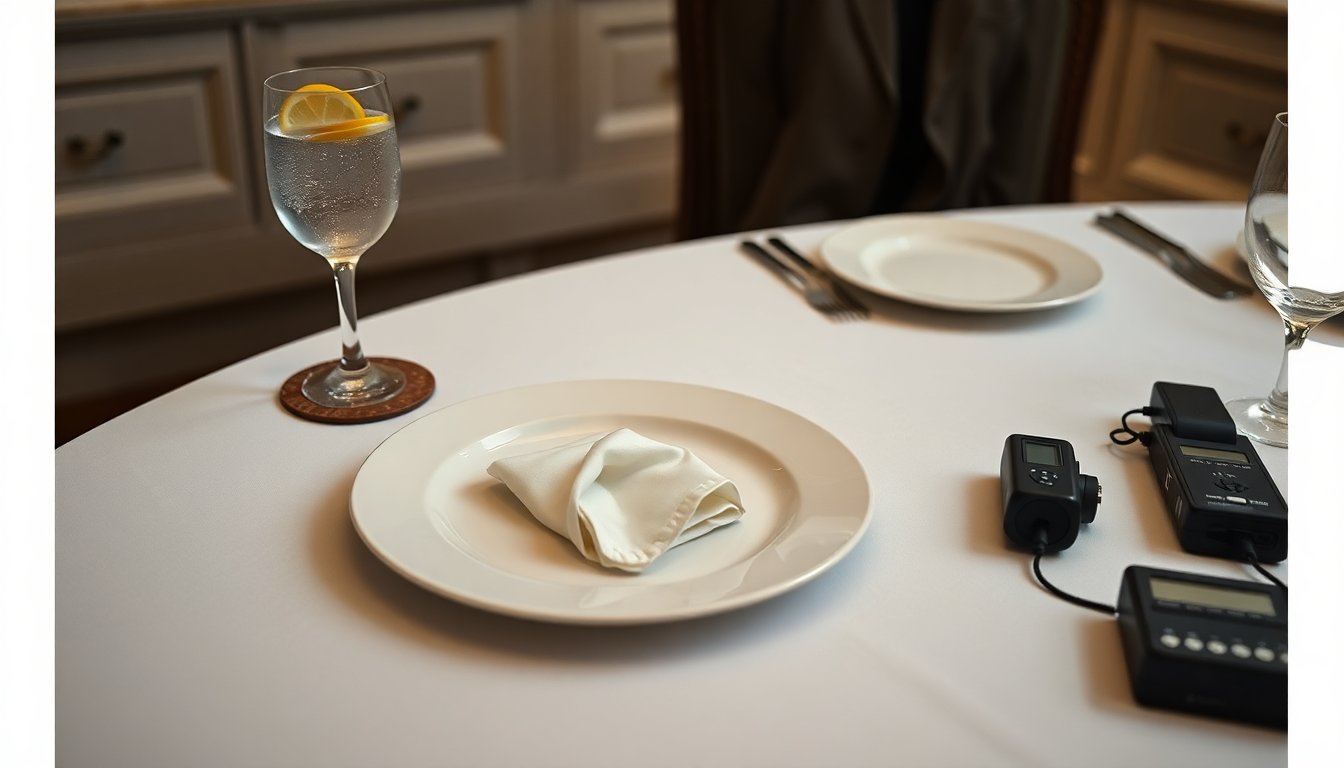
They met privately at the White House, and within hours the conversation had spilled into the public arena.
According to the former president’s post, the dinner with comedian and TV host Bill Maher was a disappointment — a short, awkward encounter in which Maher allegedly arrived nervous, ordered a vodka tonic, and left little impression beyond what the post called continued hostility. The former president used the account to question Maher’s authenticity and to scold the host for resuming his critical tone on television, even branding him with the phrase “Trump Derangement Syndrome.”
Maher’s response has been blunt and unyielding. On his show and in interviews he insisted the meal changed nothing about his editorial stance. He told viewers a shared dinner does not buy silence, pointed to subsequent episodes that continued to critique the former president, and dismissed people who judged his integrity on optics alone as “idiots.” In short: the handshake didn’t equal a truce.
What remains unclear is what, exactly, happened behind closed doors. This account relies largely on the former president’s social post; there’s no independent confirmation of Maher’s state of mind at the table or any clear evidence that the meeting altered his programming. Media logs show no abrupt change in tone that can be directly tied to the dinner. Put simply: each side has its version, and outside verification is scarce.
Still, the dispute has taken on a life of its own. Both men amplified their narratives across social platforms and broadcast segments, turning a private moment into a public spectacle. Supporters parsed it as proof of each side’s archetype — one painting the meeting as evidence of ingrained hostility, the other insisting that personal encounters don’t mute principled critique. Opponents seized on it to underscore concerns about access, influence and press independence.
This is not just a duel of personalities. It’s a snapshot of how modern media churns: private interactions are quickly reframed into public dramas, and the race to control the narrative often matters more than the underlying facts. Analysts note that these spats frequently serve as shorthand for wider debates — about whether journalists and entertainers can—or should—be swayed by proximity to power, and how audiences judge credibility when optics and access collide.
Practically speaking, both principals kept doing what they do. Maher continued to host and criticize; the former president continued public appearances and policy commentary. Each used the exchange to reinforce an existing image: one as combative toward critics, the other as defiantly independent. That mutual reinforcement is part of why the story persists.
What’s next: expect more posts, interviews and punditry. The episode will likely be referenced in future conversations about media trust and political influence, especially as outlets and commentators parse whether private meetings should change public commentary. For now, the basic truth is simple but unsatisfying: a private dinner happened; both men walked away with different stories; independent confirmation is limited; the argument has become a mirror reflecting larger tensions between celebrity, access and accountability.