
Table of Contents
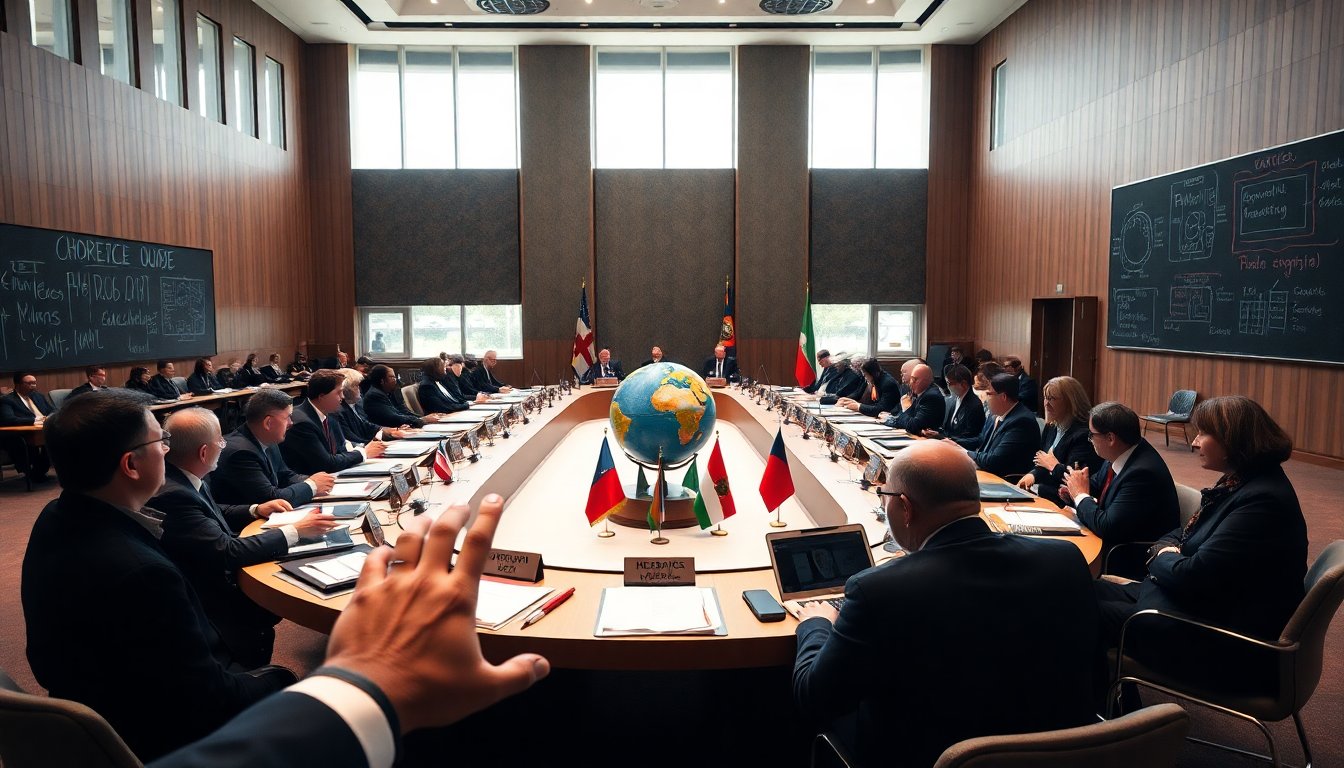
In the wake of recent discussions at Davos, President Donald Trump is proposing a radical shift in global governance with the introduction of a Board of Peace. This initiative aims to redefine international relations and could potentially replace established institutions such as the United Nations. However, the implications of such a move raise significant concerns about the future of global cooperation.
Invitations to join this new council were sent out with grand rhetoric, yet critics view it as a veiled attempt to undermine existing frameworks. The unveiling at Davos is more than just a diplomatic gathering; it represents a pivotal moment that could alter the landscape of international relations.
The Board of Peace: A new framework?
At its core, the Board of Peace is designed to oversee the implementation of Trump’s peace plan for the Gaza Strip, aligning with the recent UN Security Council Resolution 2803, adopted on November 17, which responds to a ceasefire agreement in the region. Notably, the conditions and limitations set by the UN seem to be absent from Trump’s proposal.
While the UN resolution grants a two-year mandate for the council, Trump’s charter lacks temporal boundaries and notably omits explicit references to Gaza. Instead, it encourages nations to diverge from traditional methods and organizations that have historically faltered, implicitly criticizing the UN’s shortcomings.
Concerns from global leaders
The response from global leaders has been mixed, with notable resistance from France. President Emmanuel Macron declined the invitation, indicating a clear rejection of the proposed council’s authority. This refusal has led to tensions, including Trump’s threats to impose tariffs on French wines and champagne, highlighting the transactional nature of his diplomacy.
French Foreign Minister Jean-Noël Barrot expressed concerns in Parliament, stating, “We say ‘no’ to the creation of an organization that would replace the United Nations.” This sentiment reflects a broader unease among nations regarding a unilateral approach to global governance.
A pay-to-play structure?
Trump’s proposal introduces a troubling element of financial influence into international diplomacy. Reports suggest that nations willing to contribute a billion dollars would secure permanent seats on the Board, while others might be limited to three-year terms. This structure raises questions about the integrity of the council and the motivations behind participation.
This arrangement resembles a Security Council where seats appear to be for sale, with Trump positioned as the ultimate authority. Such a scenario could lead to a highly unequal distribution of power, prioritizing financial contributions over diplomatic merit.
The global implications
Amid this backdrop, only a handful of countries have confirmed their participation, including Morocco, Argentina under President Javier Milei, Hungary, and Vietnam. Other nations express hesitance, fearing repercussions from Trump’s administration should they voice dissent.
Historically, China has faced accusations of establishing parallel institutions to the UN, such as the BRICS coalition and the Shanghai Cooperation Organization. Under Trump’s leadership, the United States appears poised to leverage its influence to create a similar structure that would operate under its dominion, challenging the established order.
Invitations to join this new council were sent out with grand rhetoric, yet critics view it as a veiled attempt to undermine existing frameworks. The unveiling at Davos is more than just a diplomatic gathering; it represents a pivotal moment that could alter the landscape of international relations.0
Invitations to join this new council were sent out with grand rhetoric, yet critics view it as a veiled attempt to undermine existing frameworks. The unveiling at Davos is more than just a diplomatic gathering; it represents a pivotal moment that could alter the landscape of international relations.1