
Table of Contents
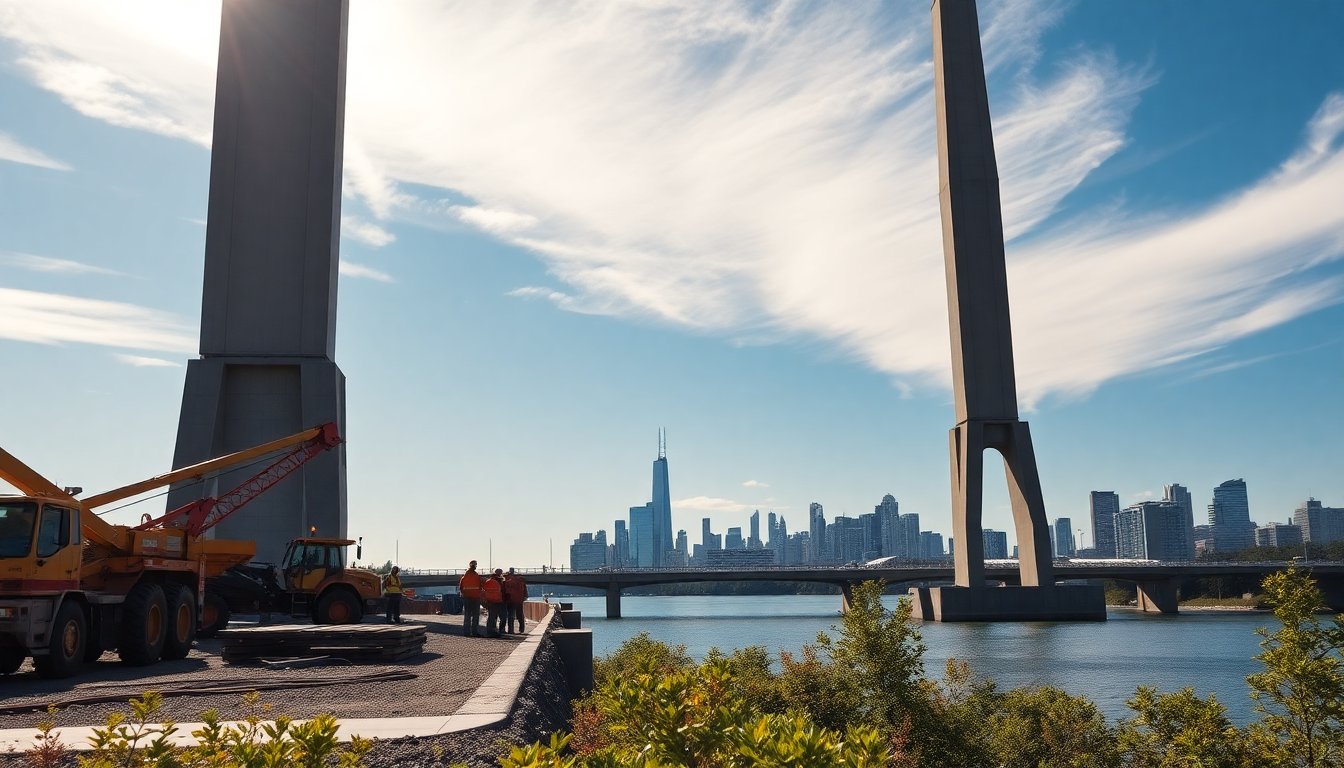
The Gordie Howe International Bridge, designed to connect Windsor, Ontario, and Detroit, Michigan, is nearing completion after nearly a decade of construction. However, recent comments from U.S. President Donald Trump have cast doubt on the project’s future. Trump has issued an ultimatum, demanding that the United States receive full compensation for its contributions and improved treatment from Canada.
As the bridge approaches its anticipated opening in early 2026, Trump’s remarks have rekindled discussions about U.S.-Canada relations and their implications for trade and cooperation.
Trump’s demands and their implications
In a social media post, Trump expressed dissatisfaction with Canada, alleging that the U.S. has been treated unfairly for decades. He asserted that the Gordie Howe Bridge was built with minimal American content, claiming that the U.S. should have a significant ownership stake. According to Trump, given the investments made, the U.S. should control at least half of this new asset.
The total cost of the Gordie Howe Bridge is estimated at $6.4 billion, fully funded by the Canadian federal government. Despite this, the bridge is intended to be co-owned by Canada and Michigan. This financial arrangement raises questions about the validity of Trump’s claims, particularly since U.S. materials were used in its construction.
Reactions from local officials
Local officials in Windsor have reacted swiftly and critically to Trump’s comments. Mayor Drew Dilkens described Trump’s remarks as “insane,” insisting that claims regarding U.S. content in the bridge’s construction are factually incorrect. He highlighted the involvement of U.S. steel in building the structure from the Michigan side.
Michigan Governor Gretchen Whitmer defended the bridge, stating that it represents a crucial economic link and supports job creation for workers on both sides of the border. According to her press secretary, the Gordie Howe Bridge symbolizes a partnership that benefits both the state of Michigan and its workforce.
Political undercurrents and economic repercussions
Trump’s threats occur amid ongoing negotiations over the Canada-United States-Mexico Agreement (CUSMA), with his recent actions perceived as exacerbating tensions between the two countries. U.S. Senator Elissa Slotkin criticized Trump’s stance, suggesting that his threats to halt the bridge’s opening could harm Michigan’s economy.
Slotkin’s comments reflect concerns among Michigan lawmakers that such a drastic action could undermine local jobs and the broader economic relationship with Canada. She emphasized that Canada is a vital ally, and Trump’s aggressive rhetoric could drive a wedge between the two nations.
Historical context and future prospects
The Gordie Howe Bridge has faced legal disputes, particularly from the Moroun family, owners of the Ambassador Bridge, the existing crossing between Detroit and Windsor. They have claimed that the new bridge infringes on their exclusive rights to toll collection. Ironically, Trump endorsed the project as a necessary infrastructure improvement during his presidency in 2017, emphasizing its importance to the economies of both countries.
Despite political maneuvering, the Windsor-Detroit Bridge Authority reported that major construction is complete, with only final testing and inspections remaining. This bridge is expected to significantly enhance border efficiency, reducing wait times for commercial vehicles and saving approximately 850,000 hours each year.
As the bridge approaches its anticipated opening in early 2026, Trump’s remarks have rekindled discussions about U.S.-Canada relations and their implications for trade and cooperation.0