
Table of Contents
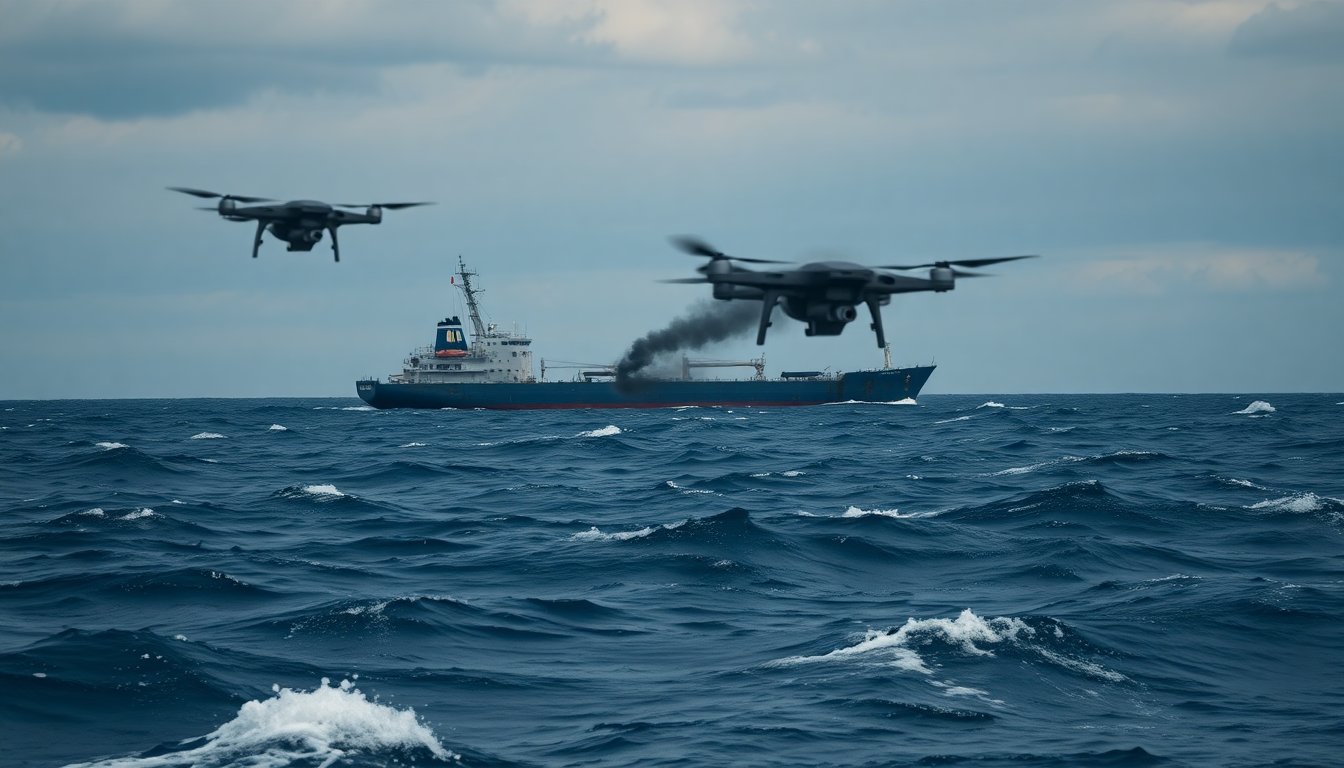
Ukrainian forces have engaged a Russian tanker operating in the Mediterranean Sea. This strike, executed using aerial drones, marks a significant shift in Ukraine’s military strategy. It extends beyond its borders to target assets believed to support Russia’s war efforts. The Security Service of Ukraine (SBU) reported that the operation involved the tanker Qendil, which allegedly functions as part of Russia’s shadow fleet.
Details of the drone strike
Officials from the SBU reported that a drone strike caused significant damage to an Oman-flagged tanker located over 2,000 kilometers from Ukrainian territory. At the time of the attack, the vessel was empty, which mitigated any immediate environmental risks. The SBU highlighted that this operation represented not only a tactical success but also a clear message: Ukraine will target Russian maritime assets regardless of their location.
Legal justification and implications
The Ukrainian authorities claim that the Qendil was used to circumvent international sanctions against Russia. They argue that the tanker constituted a legitimate military target under international law and the established rules of war. A representative from the Security Service of Ukraine (SBU) stated, “The Russian Federation employed this tanker to evade sanctions and generate revenue that funded its military activities against Ukraine. Thus, it was entirely justified to strike it.” This action underscores Ukraine’s commitment to holding accountable those entities that facilitate Russia’s ongoing aggression.
Broader context of the conflict
This military action coincided with Russian President Vladimir Putin’s annual press conference, where he addressed the ongoing conflict in Ukraine. During the conference, Putin expressed a desire for peace while reiterating the Kremlin’s narrative regarding the conflict’s origins. This narrative includes claims about Ukraine’s NATO ambitions and alleged extremist elements within its government. Such statements underscore the significant divide in perspectives between Moscow and Kyiv.
Escalation of military operations
The drone strike on Qendil marks a significant development in military operations. Days earlier, the Security Service of Ukraine (SBU) reported the destruction of a Russian submarine in the port of Novorossiysk. This operation utilized advanced Sub Sea Baby drones, highlighting the increasing sophistication and range of Ukraine’s military capabilities. These ongoing actions indicate a strategic shift for Ukraine, aiming to enhance its defensive posture beyond its borders.
The role of international sanctions
Since the beginning of the conflict, Ukraine has emphasized the need for strong international sanctions against Russia. The concept of shadow fleets—referring to vessels that operate secretly to bypass sanctions—has emerged as a key topic in discussions on effectively countering Russian military funding. Reports suggest that Russia has developed a network of hundreds of tankers that transport oil, generating significant revenue for the Kremlin despite these sanctions.
Future implications
The implications of Ukraine’s recent military actions extend beyond immediate gains. The ability to strike a Russian tanker in neutral waters signals to both allies and adversaries Ukraine’s resolve and operational capacity far from its borders. Analysts indicate that such operations could change the dynamics of naval engagements in the region, potentially heightening tensions on the high seas.
This drone strike also raises critical questions regarding international maritime law and the enforcement of sanctions. As nations navigate the complexities of modern warfare and unconventional tactics, the precedent set by Ukraine may encourage similar responses from other nations facing threats from adversarial states.
Ukraine’s attack on the Qendil tanker signifies a crucial development in its ongoing conflict with Russia. This action underscores Ukraine’s resolve to uphold its sovereignty and respond to those aiding Russia’s military efforts. As the situation continues to evolve, the international community will closely monitor how these events influence the wider geopolitical landscape.