
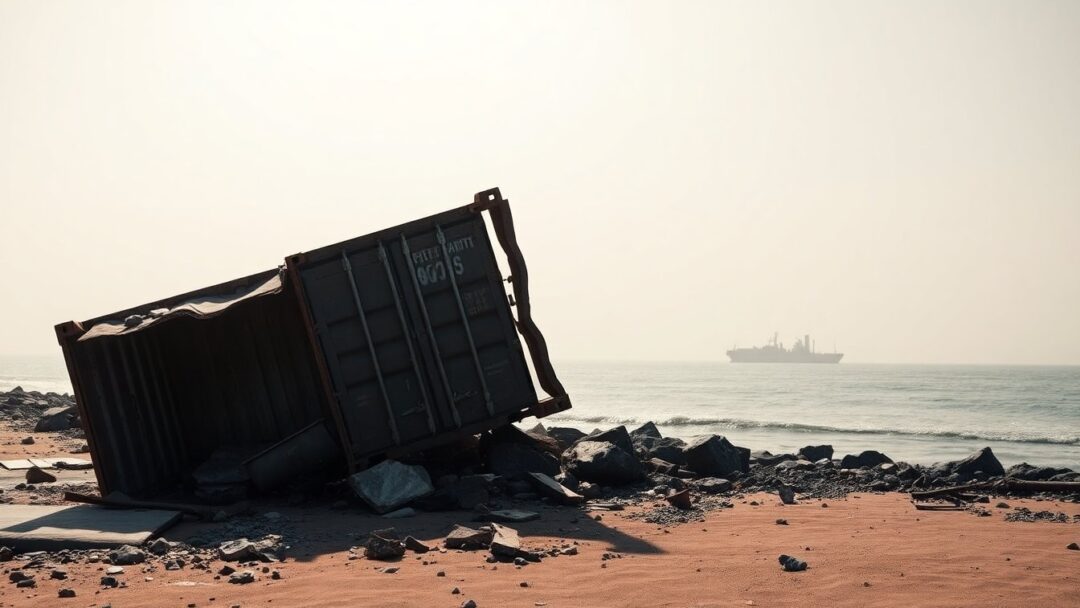
The Strait of Hormuz, a critical waterway for global oil and natural gas supplies, has become the epicenter of a volatile standoff between the United States and Iran. On July 12, 2026, the U.S. military conducted a series of airstrikes targeting Iranian military infrastructure in response to Tehran’s attack on a Cyprus-flagged container ship. This escalation raises serious concerns about the stability of the region and the future of diplomatic efforts to end the conflict.
The recent exchange of strikes comes amidst a fragile 60-day interim deal aimed at achieving a permanent ceasefire. With the midpoint of this period approaching, the future of the negotiations hangs in the balance. The Strait of Hormuz, which accounts for approximately one-fifth of global oil and natural gas trade, has emerged as the primary point of contention in these discussions.
U.S. Military Response and Iranian Retaliation
The U.S. Central Command reported that it targeted around 140 Iranian military sites, including missile and drone launch sites, ammunition dumps, and communication equipment. President Donald Trump emphasized the severity of the strikes, stating, “We bombed the hell out of them last night.” The U.S. military asserted that these attacks were intended to weaken Iran’s ability to threaten shipping in the region.
In response, Iran launched retaliatory strikes against several countries hosting U.S. military forces, including Bahrain, Kuwait, Qatar, Jordan, and Oman. Iranian officials insisted that Tehran alone should control the Strait of Hormuz and potentially charge vessels for passage. Mohammad Bagher Qalibaf, the speaker of Iran’s parliament, declared, “The era of one-sided deals is OVER. We told you: keep your word or pay the price.”
Diplomatic Efforts and Regional Reactions
Diplomatic efforts to resolve the crisis have faced significant challenges. Oman, which shares the Strait of Hormuz with Iran, summoned the Iranian ambassador to protest the attacks, describing Iran’s actions as “irresponsible.” Qatar’s military intercepted incoming Iranian fire, resulting in injuries from shrapnel. Bahrain, home to the U.S. Navy’s 5th Fleet, also sounded missile alerts, as did Kuwait and the United Arab Emirates.
The Omani state news agency reported that drones struck sites near the Strait of Hormuz, prompting shelter-in-place warnings for residents in the region. These attacks occurred just a day after Oman and Iran held talks on managing the strait. Despite these discussions, Iran has not agreed to open the strait to all vessels, a key demand of the Trump administration.
Humanitarian Impact and Future Prospects
The Iranian attack on the container ship resulted in significant damage to the vessel’s engine room. Oman’s maritime authority rescued 23 crew members, but one remains missing. India’s Ministry of External Affairs confirmed that the missing crew member is an Indian national and is working with Oman to locate him.
Iran’s new Supreme Leader, Mojtaba Khamenei, vowed revenge for the killing of his father, Ayatollah Ali Khamenei, in the war’s opening strikes on February 28. He stated, “Such revenge is the will of our nation and must certainly be carried out.” This rhetoric, combined with the recent military escalation, raises concerns about the potential for further conflict in the region.
As the situation in the Strait of Hormuz continues to evolve, the international community watches closely. The outcome of the current standoff will have significant implications for global energy markets and regional stability. Diplomatic efforts must intensify to prevent further escalation and find a lasting solution to the crisis.


