
Table of Contents
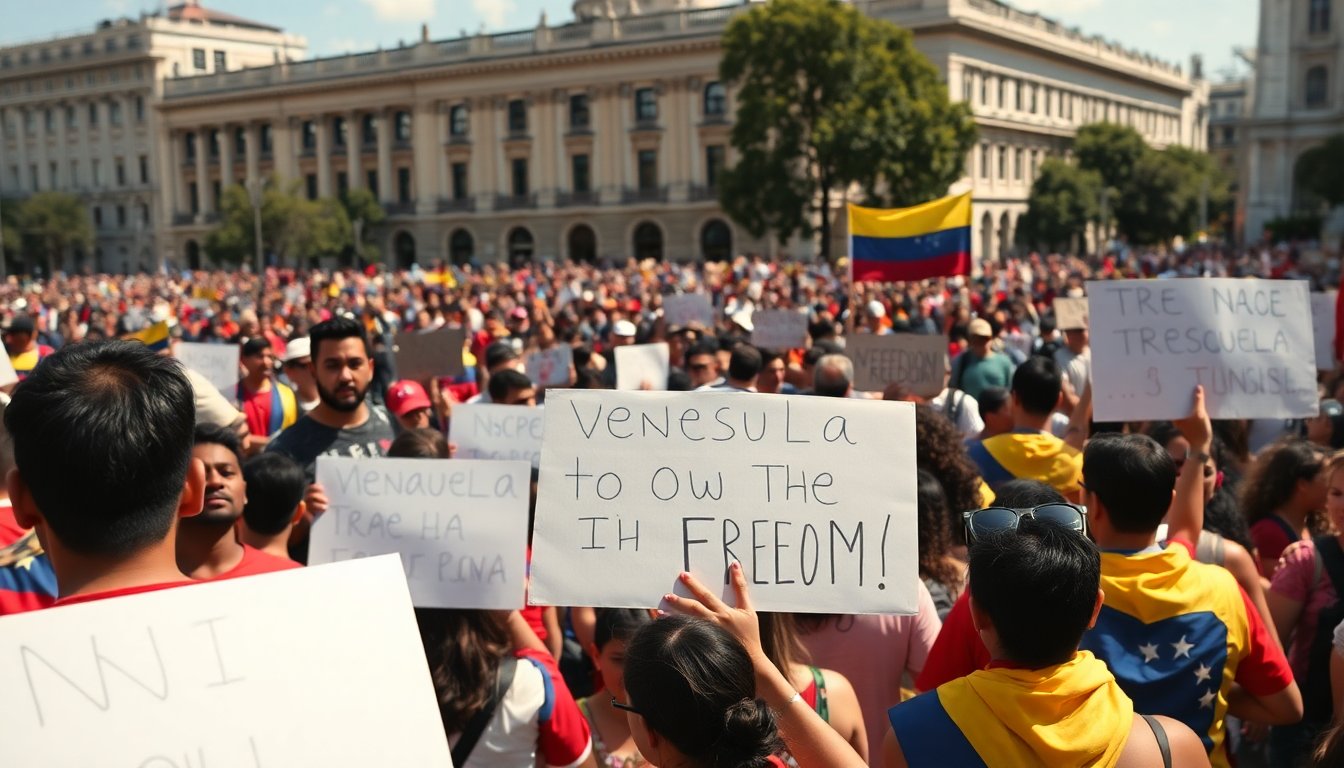
In a powerful display of unity, thousands of Venezuelans converged in the streets of Caracas to demand the liberation of their detained president, Nicolas Maduro, and his wife, Cilia Flores. This march, known as the Gran Marcha (The Great March), marks one month since a controversial U.S. military operation resulted in the couple’s abduction during a night raid.
Demonstrators chanted slogans such as, “Venezuela needs Nicolas!” Many attendees waved signs expressing their anger and sorrow, including one that boldly declared, “The empire kidnapped them. We want them back.” This sentiment resonated deeply among the crowd, symbolizing their demand for justice and sovereignty.
The backdrop of the protests
On January 3, U.S. forces executed a daring operation in Caracas, leading to the capture of Maduro and Flores. Their son, Nicolas Maduro Guerra, who serves in Venezuela’s National Assembly, addressed the gathered crowd, labeling the U.S. military incursion as a violation of their homeland. He stated, “Our homeland’s soil was desecrated by a foreign army,” highlighting the emotional scars left by the event.
The march was organized by the Venezuelan government and included public sector employees, showcasing solidarity among various groups. The atmosphere was charged with energy as trucks played music, creating a festive yet determined environment for the protesters.
International solidarity and support
According to local reports from Venezuela News, the Caracas demonstration was part of a wider global day of action. Supporters around the world echoed the call for freedom under banners proclaiming phrases like, “Bring them back” and “Hands off Venezuela.” This international solidarity reflects a common stance against perceived injustices and a call for respect for national sovereignty.
Many participants, including 58-year-old municipal worker Jose Perdomo, expressed a mix of emotions during the rally, stating, “We feel confused, sad, angry. There are a lot of emotions.” Perdomo also voiced his support for interim leader Delcy Rodriguez, who has been navigating a complex political landscape since taking over the presidency.
Delcy Rodriguez’s leadership and reforms
Since Maduro’s abduction, Rodriguez has found herself in a precarious position, attempting to balance the demands of both the government and external pressures from the U.S. Under the previous administration, there were indications of a willingness to engage with Rodriguez, contingent on compliance with U.S. interests, particularly concerning Venezuela’s substantial oil reserves.
In an attempt to revitalize the economy, Rodriguez recently enacted a law that opens Venezuela’s oil sector to privatization. This legislative change marks a significant departure from the socialist policies that have defined the nation for over two decades. The reform aims to attract foreign investment, crucial for the recovery of the oil industry, which has suffered under previous administrations due to mismanagement and corruption.
The amnesty bill and its implications
Alongside these economic reforms, Rodriguez also proposed an amnesty bill that could lead to the release of numerous political prisoners. This legislation aims to address grievances stemming from political confrontations in the country and may serve as a stepping stone toward national reconciliation.
Rodriguez emphasized the need for healing in the nation, stating, “May this law serve to heal the wounds left by the political confrontation fueled by violence and extremism.” However, critics, including opposition leader María Corina Machado, argue that these concessions are reactions to external pressures, particularly from the United States.
Demonstrators chanted slogans such as, “Venezuela needs Nicolas!” Many attendees waved signs expressing their anger and sorrow, including one that boldly declared, “The empire kidnapped them. We want them back.” This sentiment resonated deeply among the crowd, symbolizing their demand for justice and sovereignty.0