
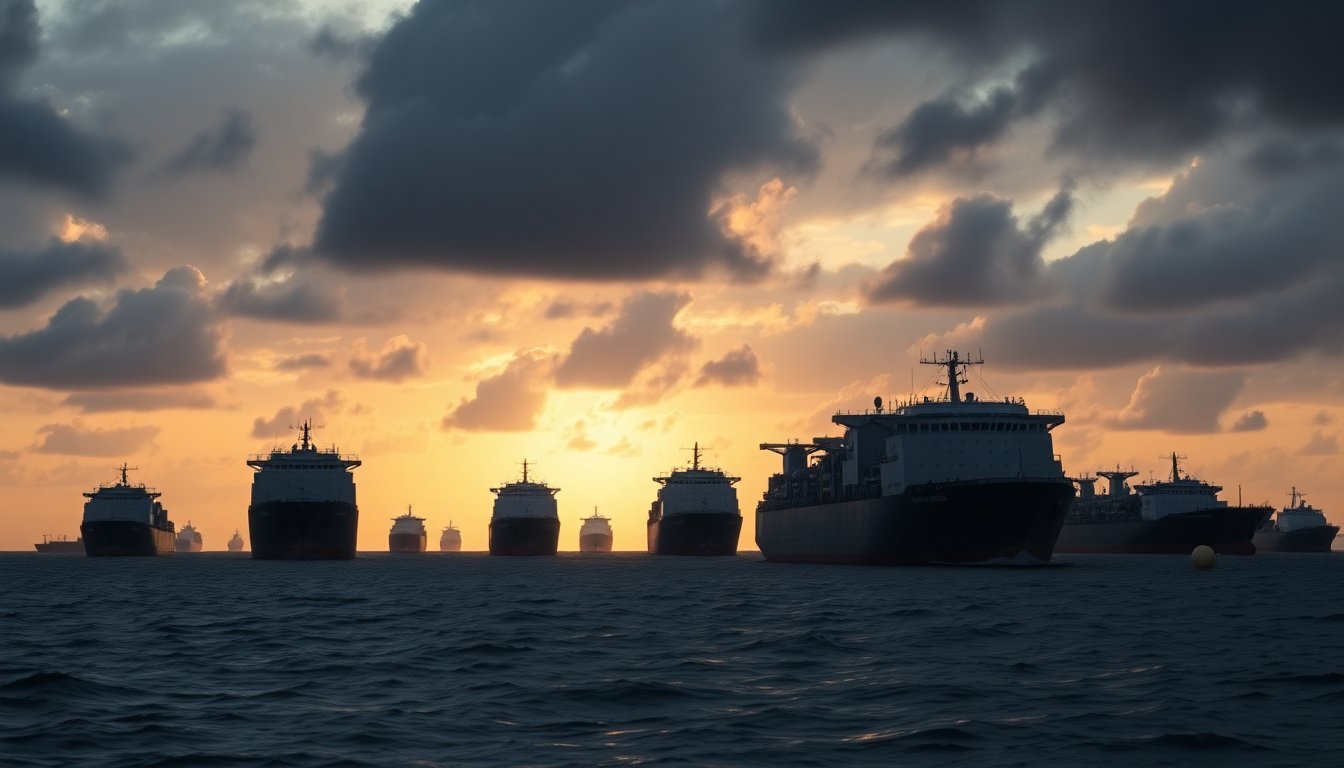
The political landscape in Venezuela is undergoing significant upheaval following the arrest of Nicolás Maduro. Recent satellite imagery indicates that several oil tankers, currently under U.S. sanctions, are circumventing the blockade and heading into international waters. This defiance poses critical questions regarding the future of Venezuela’s oil industry and the shifting political dynamics within the country.
Political context following Maduro’s arrest
The recent capture of Nicolás Maduro, the former President of Venezuela, has created a significant power vacuum, raising questions about the country’s future leadership. President Donald Trump characterized this development as a critical turning point, suggesting that Vice President Delcy Rodríguez is set to assume leadership responsibilities. According to Venezuela’s constitution, her role as acting president was confirmed by the nation’s highest court. However, the unfolding situation remains complex and uncertain.
Power struggles within the government
In a recent appearance on state television, Delcy Rodríguez reaffirmed Nicolás Maduro’s status as the legitimate leader of Venezuela. She was joined by key figures of the regime, including her brother, Jorge Rodríguez, and other influential military and interior ministers. This show of solidarity among Maduro’s allies indicates that the regime is not weakening but instead adapting to new challenges.
The political tension escalated when Donald Trump rejected the idea of collaborating with Maria Corina Machado, a prominent opposition figure and Nobel laureate, citing her lack of support among Venezuelan citizens. Following her exclusion from the upcoming elections, her proxy candidate reportedly achieved a significant victory, raising questions about the government’s claims of electoral legitimacy.
The complex nature of Venezuelan power
The power dynamics in Venezuela involve more than just political positions. For over a decade, real authority has resided with a small group of senior officials. This coalition operates within a system marked by corruption, extensive surveillance, and a network of loyalty that reinforces the regime’s grip on power.
Military influence and control
The power dynamics in this structure reveal a complex interplay between civilian leaders and military officials. Delcy Rodríguez and her brother embody the civilian authority, while figures such as Diosdado Cabello and Vladimir Padrino Lopez illustrate the military’s significant influence. This intertwining of factions complicates any attempts to dismantle the government; simply removing Maduro is insufficient.
Analysts assert that dismantling the regime necessitates the removal of several key players across various levels of government. The role of Cabello is particularly concerning, as he oversees considerable military and intelligence resources linked to severe human rights violations. His control over security agencies has fostered widespread oppression and fear among the population.
Implications for Venezuela’s oil industry
The sanctions imposed by the United States have significantly affected Venezuela’s oil sector, which is crucial to its economy. Despite these challenges, satellite imagery reveals numerous tankers operating in the Caribbean and beyond, suggesting a degree of resilience within the oil transport industry. In response, the U.S. military has increased its presence in the region to enforce sanctions and combat illicit oil trading.
Reports indicate that the Venezuelan military plays a critical role in controlling oil distribution, with senior officers holding substantial interests in both legal and illegal markets. Analysts estimate that the removal of approximately 20 to 50 military officials would be necessary to destabilize the current regime.
Notably, some military officials seem to be considering defection, looking to negotiate with U.S. authorities for protection and possible immunity from prosecution. However, sources close to Diosdado Cabello, a key figure in the Venezuelan government, suggest that he remains firmly opposed to any conciliatory efforts.
The resilience of Venezuelan oil tankers navigating U.S. sanctions highlights the intricate political and economic landscape in the country. Domestic power struggles and international pressures will significantly influence the future of Venezuela and its oil industry.


