
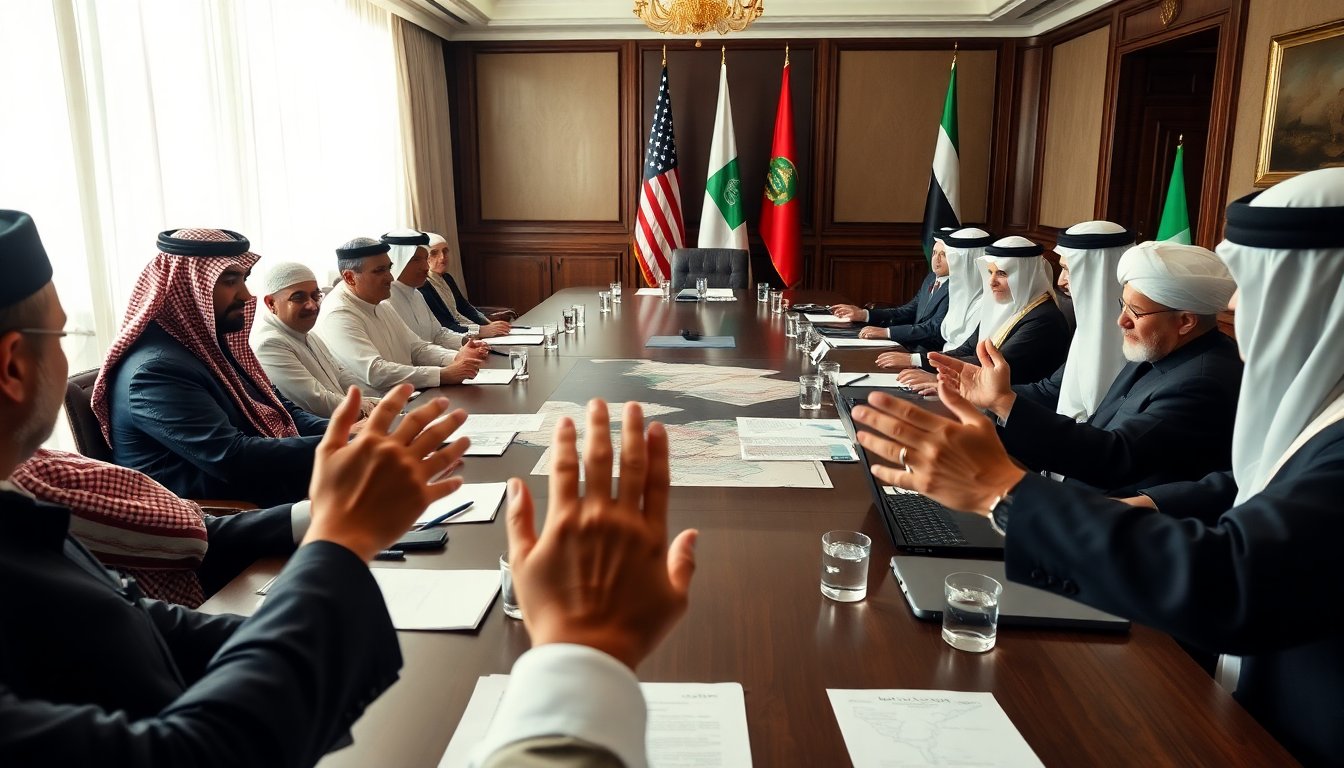
The recent unveiling of the United States‘ 20-point plan to address the ongoing conflict in Gaza has generated significant controversy, particularly among a coalition of Arab and Muslim nations. Pakistan’s Foreign Minister, Ishaq Dar, has publicly criticized the plan, asserting that it deviates markedly from the original draft that had been collaboratively developed.
Dar emphasized that the changes made to the plan do not align with the intentions of the Arab nations involved. He stated, “The 20 points that President Donald Trump made public are not ours.” His remarks, reported by the media, shed light on the disconnect between the US’s version and the one initially discussed.
Key components of the US plan
Launched with considerable fanfare, the plan outlines several critical elements aimed at achieving peace in Gaza. Among these are a proposed ceasefire, the return of captives, the disarmament of Hamas, and the establishment of a new political framework for the region. Notably, this framework excludes Hamas, a significant player in the ongoing conflict.
The timing of the announcement was particularly significant, coinciding with a press conference where Trump and Israeli Prime Minister Benjamin Netanyahu appeared together. Trump issued an ultimatum to Hamas: accept the proposal within 72 hours. He indicated that Hamas had a window of three to four days to respond, escalating the pressure further.
Responses from Hamas and Arab nations
In reaction to the US plan, Hamas’s political bureau member, Mohammad Nazzal, articulated the group’s stance during an interview with Al Jazeera. He mentioned that they were considering the proposal but were not inclined to yield to pressure, stating, “We are not dealing [with the plan] under the logic that time is a sword pointed at our neck.” This statement underscores the tension surrounding the negotiations.
The US document was initially framed as a collaborative effort involving the US and Israel, along with several Arab nations. However, details of the discussions that took place at the recent United Nations General Assembly remain largely undisclosed. Reports suggest substantial alterations were made at the request of Netanyahu during a lengthy six-hour meeting with Trump’s son-in-law, Jared Kushner, and US Special Envoy Steve Witkoff.
Concerns over the revised plan
A significant concern expressed by Arab leaders is the stipulation that links Israel’s withdrawal from Gaza to the disarmament of Hamas. This controversial clause may present a formidable challenge, especially given Hamas’s long-standing refusal to disarm, viewing itself as a legitimate resistance force.
Moreover, the proposal alludes to future reforms that could pave the way for a Palestinian state, although it refrains from recognizing this as a right, instead framing it as the “aspiration of the Palestinian people.” This vagueness raises questions about the feasibility of such reforms and their actual implications for Gaza’s governance.
International perspectives and next steps
In a joint statement, a coalition of eight Arab and Muslim countries, including Pakistan, Qatar, and Saudi Arabia, cautiously welcomed Trump’s announcement. Qatar’s Prime Minister acknowledged the plan’s objectives, emphasizing the need for further dialogue on its specifics. He stated, “If we speak of the main objectives, there are objectives that it [the US plan] achieves,” while also calling for necessary clarifications and negotiations.
Similarly, Egypt’s Foreign Minister, Badr Abdelatty, noted that additional discussions are essential to address gaps in the plan, particularly regarding governance and security arrangements. The US proposal suggests that an international body, under Trump’s oversight, would monitor the situation while a technocratic Palestinian committee manages civilian affairs until the Palestinian Authority undergoes reforms.
Dar emphasized that the changes made to the plan do not align with the intentions of the Arab nations involved. He stated, “The 20 points that President Donald Trump made public are not ours.” His remarks, reported by the media, shed light on the disconnect between the US’s version and the one initially discussed.0


