
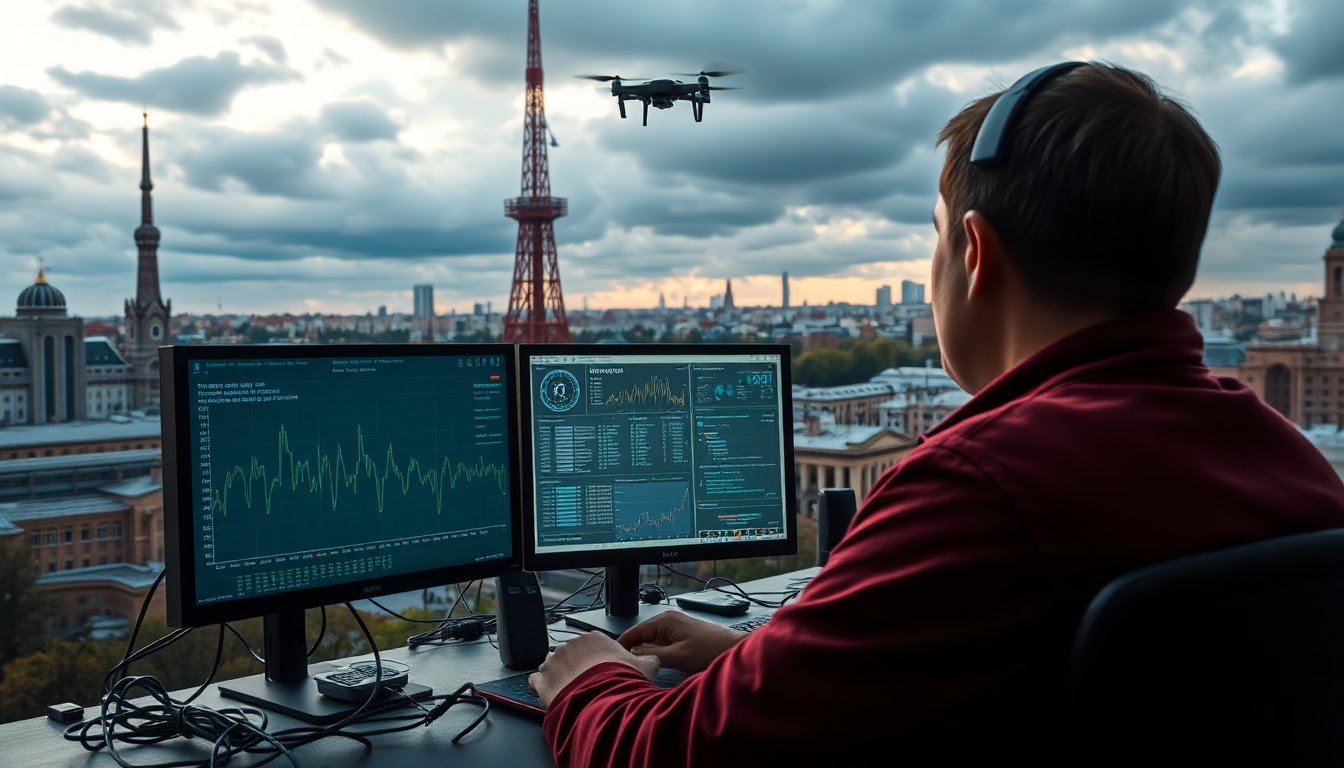
In an effort to combat drone threats, particularly from Ukraine, Russia has implemented a novel approach known as SIM card cooling. This strategy, initiated on November 10, involves temporarily disabling mobile internet access for SIM cards that have either roamed on foreign networks or have been offline for an extended period. The official rationale suggests this tactic aims to thwart Ukrainian drones equipped with LTE modems from accessing Russian networks during engagements, but the practical implications of this policy remain contentious.
The concept behind this cooling mechanism is fairly straightforward. Following its enactment, mobile operators in Russia are required to block internet connectivity for SIM cards that have recently connected to foreign networks while roaming, as well as those inactive for over 72 hours. Although users can regain access by completing a CAPTCHA challenge sent by their provider, this system is not universally implemented across all mobile operators. Furthermore, the CAPTCHA solution is not available on devices lacking the required interface, complicating access for many users.
Assessing the military effectiveness of SIM card cooling
While the intent behind the SIM card blocking initiative is to restrict Ukrainian drone capabilities, it is essential to understand that most military drones operating in the conflict zone do not rely on mobile networks for their control. Instead, these drones are primarily managed through direct radio communication or, in some instances, through fiber-optic cables. Recent developments show an increase in the deployment of drones featuring LTE modems, particularly in the Ukrainian theater, but their overall numbers remain limited.
Understanding the reliance on navigation systems
Long-range drones typically use a combination of an inertial navigation system, which is resistant to electronic disruptions, and a satellite navigation system that can be interfered with. Electronic warfare measures often target these satellite signals, jamming them or substituting them with false signals to reduce the accuracy of enemy ordnance. Thus, the challenge lies in enhancing the complexity of the receiver systems to counteract these jamming techniques.
For instance, the Russian Shahed/Geran drones are equipped with advanced navigation systems featuring multiple satellite signal receivers. These systems allow onboard computers to filter out erroneous signals and maintain operational integrity. Despite frequent claims from both sides regarding the challenges posed by jamming, many issues can often be rectified through simple updates to hardware or software.
The limitations of mobile networks in military contexts
While there is potential for mobile networks to assist in overcoming navigation challenges, their reliability is questionable in combat scenarios. Mobile networks can be entirely disabled, making them less dependable than satellite systems. Consequently, both Russian and Ukrainian forces predominantly utilize mobile connectivity as an ancillary tool, with most long-range drone operations proceeding without it.
Exploring the role of mobile communication in drone operations
Interestingly, although mobile modems are present in some downed drones, their primary function is to send telemetry back to command centers. This capability can enhance strategic planning by identifying areas with significant electronic jamming or robust air defenses. However, such zones are often beyond the reach of standard radio communications.
Additionally, there are instances where drones equipped with cameras use mobile modems to transmit video feeds. However, due to latency issues, these feeds are impractical for targeting moving subjects. Instead, they are primarily useful for striking static targets with predefined coordinates, where real-time video is not crucial.
Future implications and countermeasures
Ukraine’s military is not remaining passive in response to these challenges. Reports indicate that Ukrainian operatives have developed methods to disable SIM cards on enemy drones during flight. This capability, although not fully understood, suggests a potential to target SIM cards that are in motion between cell towers.
While the SIM card cooling strategy may introduce complications for certain military operations, it is unlikely to provide a comprehensive solution to the ongoing drone warfare. The feasibility of Ukrainian forces acquiring multiple Russian SIM cards and circumventing this temporary block poses an ongoing challenge for Russian security agencies. As technological advancements continue to shape the battlefield, both sides are compelled to adapt and innovate in their strategies.


