
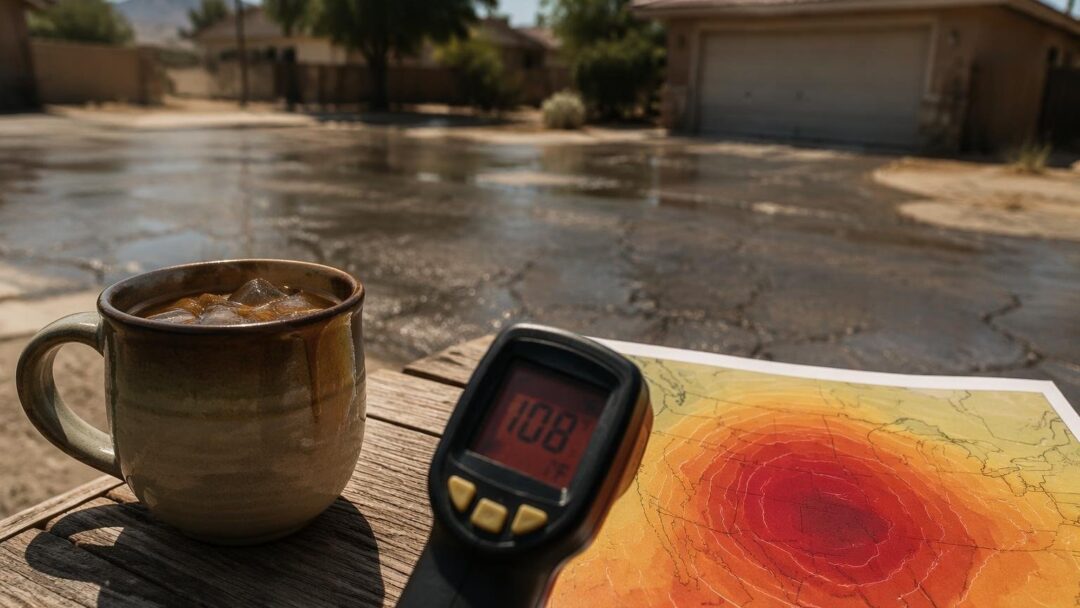
The central and southern United States are in the grip of a severe heatwave, with at least 40 million people under extreme heat warnings. This intense weather pattern, marked by high temperatures and severe humidity, has persisted for a second consecutive day, showing no signs of immediate relief.
The heatwave, driven by a heat dome has stretched from Minnesota to Mississippi and extends westward into southern California and Nevada. The National Weather Service reports that some areas in the southwest could experience highs of 120F (49C) while heat indexes well above 100F (38C) are widespread.
Understanding the Heat Dome Phenomenon
A heat dome occurs when atmospheric conditions trap heat, intensifying and prolonging high temperatures. This weather phenomenon has led to dangerous conditions, with Pete Miller, an outreach manager for the homeless services network Threshold CoC, describing the situation in Omaha, Nebraska, as “extraordinarily hot.”
“The humidity is insane,” Miller noted. “You stand outside for 30 seconds and you get drenched. And it’s going to be like that all night.” The relentless heat has caused widespread exhaustion and poses significant health risks, particularly for vulnerable populations.
Record-Breaking Temperatures and Canceled Events
Rapid City, South Dakota, recorded an all-time high of 112F (44C) on Saturday, highlighting the severity of the heatwave. The extreme conditions have led to the cancellation of events, such as a horse race planned at Canterbury Park in Shakopee, Minnesota, on Sunday.
Bob Oravec, an NWS meteorologist, explained that the core of the heat is currently affecting a large portion of the central US and is expected to shift southward by early next week. The heat dome is also contributing to other volatile weather conditions, including severe thunderstorms, flash flooding, and hail around the Great Lakes.
Health Risks and Safety Measures
Authorities have issued warnings about the heightened risk of heat stroke and other serious conditions, particularly for children, older adults, and individuals with certain medical conditions. Experts recommend seeking air-conditioned environments, staying hydrated, and limiting exposure to direct sunlight.
The extreme heat events are exacerbated by the climate crisis which results from the burning of fossil fuels such as gasoline, oil, and coal. The continental US has already experienced the second-hottest first half of the year on record in 2026, according to the National Centers for Environmental Information.
The Broader Impact of the Heatwave
About 70 million people in the US are set to face excessive heat advisories as dangerously hot temperatures scorch much of the country’s southern and central states. This is the third major “heat dome” event to hit the US in the past month, spanning a vast area from the Gulf of Mexico coast to the Great Plains and the Midwest.
Temperatures of 95-105F (35-40C) are expected, with some areas of the southwestern US desert potentially reaching 120F (48C). The elevated heat is expected to linger into the coming week, held in place by the heat dome, which acts as a sort of lid, trapping heat over a region for days or even weeks.
While heatwaves are a common occurrence in American summers, their regularity and severity are worsening due to the human-caused climate crisis. The release of heat-trapping gases from the burning of fossil fuels has caused global temperatures to escalate beyond anything previously experienced during human civilization.
This summer has already been sweltering for many in the US, with a huge heat dome event in early July causing some Independence Day events to be canceled in the east of the country. Another heatwave hit further west, causing 115F (46C) heat in Montana and temperature records to tumble.
Global Context and Future Outlook
The latest heat dome event could potentially break records in the Denver area, while the National Weather Service has issued an extreme heat warning for western Nebraska, where weekend temperatures are forecast to reach 108F (42C).
Heat is the deadliest weather phenomenon in the US, with elevated temperatures throughout the nighttime and high humidity in the latest heatwave set to provide no respite for people affected. Older people, pregnant people, young children, and people with existing health conditions are particularly vulnerable to extreme heat.
Dangerously hot conditions are also currently gripping much of Europe, with 250,000 people fleeing wildfires in Spain and France. A separate June heatwave resulted in an estimated 5,700 deaths in France, officials have estimated.
Parts of the UK are also burning in the wake of hot, dry conditions that have primed the landscape for fire. Across the US, 88 fires are presently being tackled by firefighters.
“We are experiencing exactly what the climate models in the 1990s said we should experience now,” said Andy Pershing, chief program officer at Climate Central, a climate change communications non-profit. “That is, more frequent, more severe heatwaves, bigger temperature anomalies, more humidity, higher overnight temperatures. These are all part and parcel of the climate story.”


