
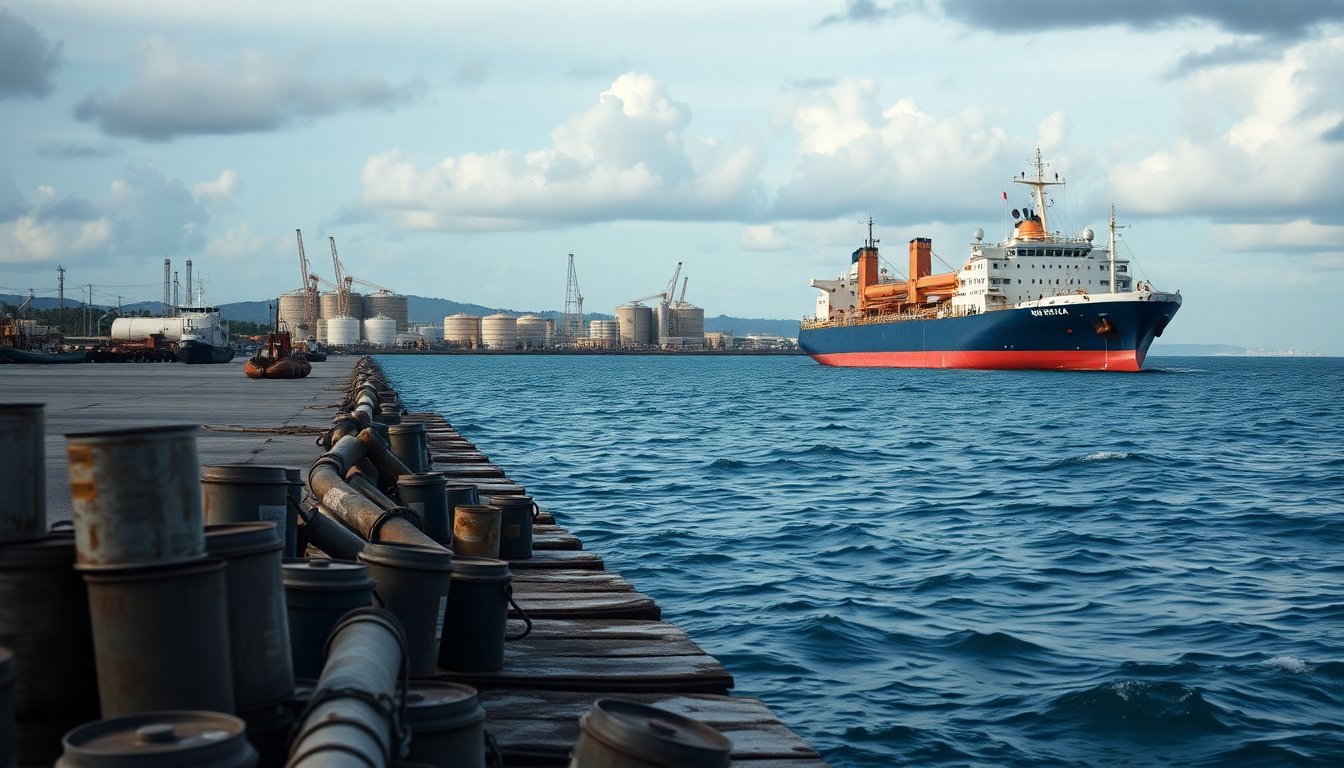
The island of Cuba is contending with an acute energy squeeze that has rippled through transport, hospitals and homes. After months without regular imports, the arrival of the Russian tanker Anatoly Kolodkin — carrying about 730,000 barrels of crude — has become a focal point for both hope and anxiety. Tracking data showed the vessel off Cuba’s eastern tip before a projected approach to the port of Matanzas, and reports indicate the US Coast Guard allowed the ship to proceed. Cuban leaders face immediate choices about how to allocate any refined product from that cargo, and residents are adjusting to more frequent blackouts and steeply rising prices.
Daily life on the island has tightened around stopping points and backup plans as households and public services cope with intermittent power and scarce fuel. Two nationwide outages struck in mid-March, including the well-documented event on March 21, 2026, the second in six days, and a fire at a Communist Party office in Morón captured on March 14, 2026 circulated widely online. Citizens have responded with nighttime cacerolazos — the rhythmic banging of pots and pans — while some assistance has arrived via humanitarian convoys carrying medicine and solar panels. For many, the question is whether the incoming cargo will soften the crisis long enough to prevent deeper social and economic shocks.
What the tanker means at sea and on land
At a technical level, the Anatoly Kolodkin’s crude will require processing before it becomes usable fuel. Analysts estimate that the shipment could be refined into around 250,000 barrels of diesel, which would cover roughly 12.5 days of current national demand if allocated to transport and power generation. Shipping trackers and open-source monitoring showed the vessel’s course and speed as it neared Cuban waters, and news reporting cited a U.S. decision not to interdict the ship despite a broader policy that has constrained oil flows to the island. For Cuban authorities, that material calculus — whether to prioritize electricity generation, public transportation or agricultural machinery — is urgent and fraught with political consequences.
Why one shipment cannot fix systemic shortages
Even if fully converted and distributed, a single delivery provides only temporary relief. Cuba’s energy deficit stems from years of underinvestment in aging plants and infrastructure, a collapse of regional supply ties and tightened external pressure. The current restrictions amount to a de facto oil blockade that has led to strict fuel rationing, curtailed public transport and airline suspensions that hurt tourism revenues. Experts warn that without sustained, predictable imports and infrastructure upgrades, short shipments will be consumed quickly and leave the country vulnerable to another wave of outages.
How shortages are reshaping everyday life
Across Havana and surrounding towns, residents describe living by sudden power returns and the scramble to use electricity when it appears. Many wake in the middle of the night to cook when lights flicker back on, or queue longer for scarce gasoline. Households report paying more for staples like cooking oil and chicken as logistics tighten. Protest actions have surfaced in different forms: beyond street demonstrations, the nightly cacerolazos have become a visible expression of frustration. Yet fear remains: some Cubans decline to speak openly about economic difficulties, worried that criticism could be interpreted as political dissent and provoke reprisals.
Voices from the island
People who lived through past crises point to differences and similarities with the present moment. Veterans of the 1990s Special Period note that earlier shortages shut down most vehicular traffic entirely and produced widespread malnutrition; today there are still buses and trucks running, but unpredictability and uncertainty about when systems will fail adds a new psychological strain. Journalists and opposition figures recount detentions and harassment, while civic actors call for calm, truth-telling and structural reform. Some intellectuals argue for a path of reconciliation modeled on international transitional approaches, emphasizing healing rather than punitive upheaval.
Diplomacy, sanctions and the choices ahead
International politics is tightly wound into the energy story: Washington’s pressure has tightened supply channels even as Havana seeks new partners. U.S. political figures have publicly urged systemic change in Cuba’s governance, while the Trump administration’s stance produced a near-total curb on shipments until the recent decision to let the Russian tanker proceed. Cuban officials, including President Miguel Díaz-Canel, have confirmed the lack of imports in recent months and face the delicate task of balancing public needs with long-term policy responses. Former president Raúl Castro has reportedly been involved in preliminary talks, and analysts caution that coercive measures that worsen shortages risk prompting more instability rather than orderly transition.
In the short term, the arrival of crude at Matanzas may blunt the worst immediate effects, but it will not substitute for a sustained solution: investments in generation capacity, clearer import channels and dialogue over governance are required to move beyond crisis management. For now, Cubans continue to adapt, protest and debate, holding out hope that a mix of international diplomacy and domestic reform will produce a more stable future amid the uncertainty.


