
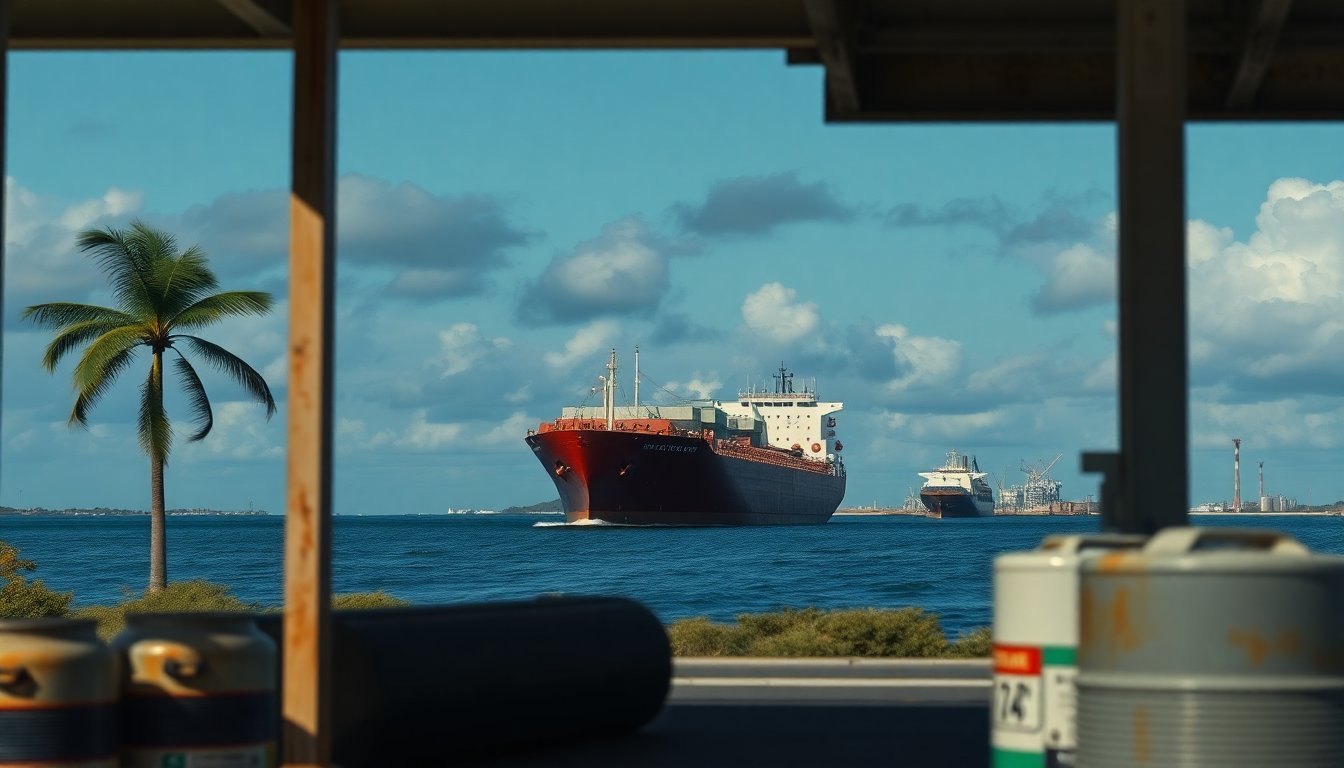
The United States has signaled it will permit a Russian-flagged vessel, the Anatoly Kolodkin, to sail to Cuba with a large cargo of crude oil, a shift that has immediate implications for an island suffering severe fuel shortages. Tracking services indicate the ship departed from Primorsk and was reported near Cuba’s eastern tip while en route to potential docking at Matanzas. U.S. statements framed the allowance as driven in part by humanitarian concerns, with officials noting they do not object to shipments if they alleviate urgent needs — a choice that sits at the intersection of compassion and strategy. The decision has renewed debate over the balance between sanctions policy and immediate civilian relief, and it raises questions about longer-term policy coherence.
Cuba has endured months of scattered and prolonged power outages, strict gasoline rationing and disruptions to public services that many observers link to tightened external restrictions on fuel imports. Historically reliant on discounted oil from allies in the region, Havana’s access to crude narrowed after Washington intensified measures meant to squeeze support networks. Another vessel, the Hong Kong-flagged Sea Horse, reportedly carried a separate cargo destined for Cuba before being redirected to Venezuela, underscoring the fluid and politically charged logistics surrounding energy deliveries. For ordinary Cubans, the practical effects are immediate: reduced transportation, strained hospital services and limits on basic utilities as the country struggles to keep its energy grid functioning.
Why Washington adjusted its approach
Officials say the temporary easing of restrictions on certain Russian oil movements was also motivated by concerns over wider market stability. Disruptions in maritime chokepoints and rising global energy uncertainty prompted a recalculation: allowing specific shipments to proceed could help avert deeper shortages without fully reversing punitive measures. At the same time, U.S. policy toward Cuba continues to emphasize pressure on Havana’s leadership. Recent rhetoric from senior American figures has linked energy controls to a broader objective of applying political pressure, a strategy sometimes described as aimed at regime change. That dual-track approach — limited humanitarian concessions amid continued pressure — reflects a diplomatic compromise that seeks to manage immediate suffering while retaining leverage.
Strategic messaging and economic leverage
Beyond crude flows, the decision carries diplomatic weight. Washington has warned third countries against supplying oil to Cuba in the past, threatening tariffs or penalties on firms and nations seen as undermining sanctions. Critics argue that such measures have amplified hardship for civilians, while proponents contend they are necessary to compel policy shifts from Havana. The recent allowance for a Russian tanker therefore functions as a narrow exception rather than a policy reversal: it signals willingness to mitigate acute distress but not to abandon the broader framework of economic pressure. Observers note this creates a delicate communications challenge, as humanitarian exceptions can be read either as mercy or as tactical softness.
Human costs on the ground
The island’s shortages have had cascading effects on daily life and essential services. Long power outages affect not only households but also water distribution, medical appointments and educational access, with schools shifting to remote formats that are unreliable during blackouts. Municipal services such as garbage collection have been curtailed when fuel for trucks is scarce, and many families report improvising to prepare meals and heat homes. Cuban authorities, including President Miguel Díaz-Canel, have acknowledged persistent fuel shortfalls; for citizens the experience is less abstract than policy debates, characterized instead by immediate choices about health, safety and basic sustenance. Humanitarian advocates warn that without sustained deliveries, short-term relief will not remedy systemic vulnerabilities.
What the shipment could deliver
If the Anatoly Kolodkin unloads its estimated cargo — reported to be on the order of hundreds of thousands of barrels — the arrival could provide measurable breathing room for Cuba’s refineries and public services. Fuel for electricity generation, transport and critical infrastructure could be prioritized to stabilize hospitals and water systems. Yet the scale of relief depends on distribution, port operations and whether subsequent shipments are allowed. A single delivery may blunt immediate crises but will not resolve the structural pressures created by long-standing embargo policies, international sanctions and logistical constraints that have shaped Cuba’s energy resilience for decades.
Historical context and concluding perspective
This episode unfolds against a long history of strained U.S.-Cuba relations and successive rounds of economic restriction that critics describe as a modern-day blockade. For more than half a century, debates over sanctions, diplomacy and human consequences have animated international forums and policy discussions alike. The recent decision to let a Russian tanker reach Cuban shores highlights an enduring tension: the need to address humanitarian suffering without surrendering geopolitical aims. Whether this shipment becomes a one-off lifeline or a prelude to a different approach, it illustrates how energy, diplomacy and daily survival remain tightly interwoven in the region.


