
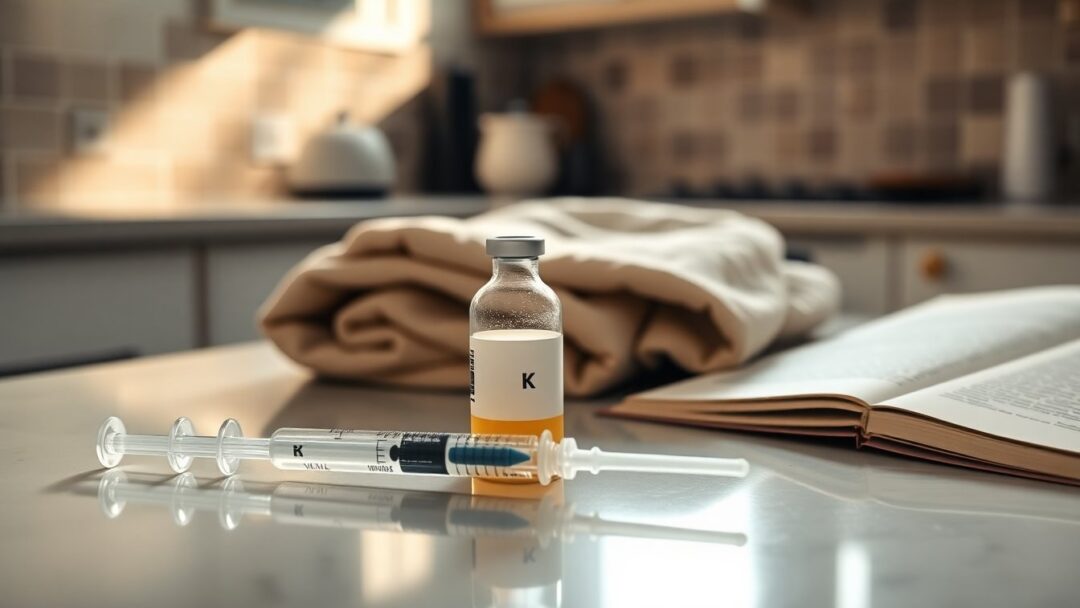
The Centers for Disease Control and Prevention (CDC) is facing pressure from Congress to address a concerning trend: an increasing number of families refusing the vitamin K shot for their newborns. This critical injection, recommended since 1961 by the American Academy of Pediatrics (AAP) helps prevent vitamin K deficiency bleeding a condition that can lead to uncontrollable bleeding and even death in infants.
Rep. Kim Schrier from Washington and Sen. Angela Alsobrooks from Maryland have written a letter to Dr. Jay Bhattacharya, acting director of the CDC, urging immediate action. Their call to action follows a ProPublica investigation that revealed babies have died after families refused the shot, and that federal and state agencies are not tracking vital data on this issue.
Understanding the Vitamin K Shot and Its Importance
The vitamin K shot is a routine and inexpensive injection given at birth to help the blood clot properly. Despite its long-standing recommendation, some families have declined the shot in recent years, influenced by rising mistrust in medical institutions and misinformation spread online. Notably, the shot is not a vaccine, but rather a preventive measure against a potentially life-threatening condition.
Research shows that babies who don’t receive the vitamin K shot are 81 times more likely to develop late vitamin K deficiency bleeding, which can lead to bleeding in the brain. According to the CDC, 1 in every 5 babies with this condition will die. A national study of more than 5 million births found that the rate of babies not receiving the vitamin K shot topped 5% in 2026 with some hospitals reporting refusal rates that have more than doubled in recent years.
The Role of the CDC and HHS in Addressing the Issue
Schrier and Alsobrooks highlighted in their letter that historically, there hasn’t been a need for robust monitoring systems to track cases of vitamin K deficiency bleeding. However, the current lack of data makes it difficult for experts to determine the extent of the problem or develop an effective public health campaign. They emphasized that the CDC has the tools needed to understand and address this crisis.
Sen. Alsobrooks also called on Health and Human Services Secretary Robert F. Kennedy Jr. to publicly voice his support for the shot. She argued that his position carries significant weight and that he has a moral obligation to state clearly that the shot is safe and effective. An HHS spokesperson reiterated the CDC’s recommendation for parents to allow newborns to receive the vitamin K shot within six hours of birth to prevent vitamin K deficiency bleeding. They also noted that uptake of the shot has declined as public trust in healthcare institutions has fallen, particularly during the COVID-19 pandemic.
Expert Opinions and the Need for Action
The American Academy of Pediatrics applauded the lawmakers and ProPublica for bringing attention to this critical issue. Dr. Andrew Racine, AAP’s president, stated that the organization has been concerned about this problem for some time. He emphasized the importance of the CDC providing clinicians and the public with data that will allow them to make informed decisions. For instance, if a sick baby comes into a hospital, doctors should know if they are in an area with a high vitamin K refusal rate so they can quickly diagnose and treat them.
Racine likened the tracking of vitamin K deficiency bleeding to tracking measles cases. He stressed that the CDC’s role is not simply to track the issue but also to communicate its importance. “We depend upon the CDC to let us know about that,” Racine said. “And this is essentially a medical condition that is affecting newborn babies that pediatricians or people who look after children need to be aware of.”
Rep. Schrier emphasized the need for modern-day, accurate information to set the record straight for parents. She noted that once preventive measures are stopped, cases rise. The urgency of the situation underscores the need for immediate action and clear communication from health authorities.


