
Table of Contents
The conflict between Russia and Ukraine has reached a critical juncture, with significant developments unfolding on January 28, 2026. Hostilities continue, resulting in severe humanitarian and geopolitical consequences that affect countless lives. This report summarizes the key events from the ongoing war, focusing on military engagements, energy challenges, and diplomatic initiatives.
Military engagements and casualties
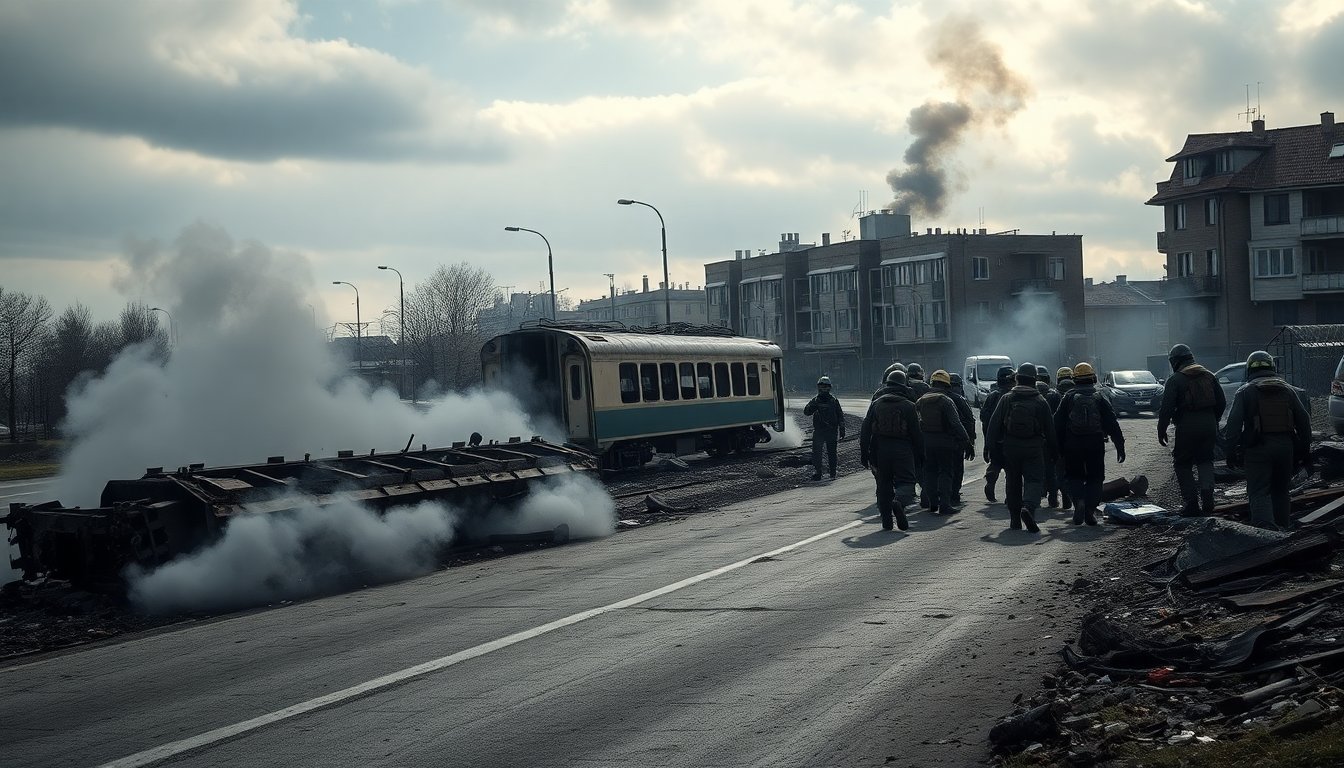
On January 27, a devastating drone strike targeted a passenger train in the Kharkiv region, leading to the tragic loss of at least five lives, as confirmed by Ukrainian President Volodymyr Zelenskyy. The strike occurred during the train’s journey, which had over 200 passengers on board, highlighting the indiscriminate nature of such attacks. Zelenskyy condemned the incident as an act of terrorism, asserting there is no military justification for targeting civilians.
In Odesa, another Russian air assault resulted in three fatalities and injured over 25 others, including vulnerable groups such as children and pregnant women. Oleh Kiper, head of the regional military administration, reported significant damage to residential buildings and public facilities, underscoring the severe impact of these bombardments on civilian life.
Escalation of attacks
The toll of violence escalated further with a missile strike on a kindergarten repurposed as a community center, tragically resulting in one death. Local authorities also confirmed two fatalities in Slovyansk, while another drone strike in Zaporizhzhya killed a 58-year-old man in his home. The relentless nature of these attacks exacerbates the humanitarian crisis in the region.
In a striking assertion, the Russian Defense Ministry claimed to have downed 105 Ukrainian drones within a single day, illustrating the ongoing aerial confrontations. They also reported seizing control of strategic locations such as Novoyakivlivka and Kupiansk-Vuzlovyi, although Ukrainian officials contest these claims, reflecting the chaotic nature of battlefield intelligence.
The energy crisis deepens
As winter grips Ukraine, the energy crisis intensifies, with over 710,000 residents in Kyiv facing power outages due to targeted Russian strikes on critical infrastructure. Minister of Energy Denys Shmyhal highlighted the dire situation, noting that many citizens struggle to maintain basic heating and electricity services amid freezing conditions.
In response to the ongoing power shortages, the European Union has dispatched 447 generators to various regions, including the capital and frontline communities. The urgency of this assistance is critical, as millions grapple with blackouts and heating failures.
Impact on infrastructure
Recent reports indicate that nearly 1.3 million individuals in both Russian-occupied territories and areas of Ukraine have faced electricity disruptions due to ongoing military actions. The Ukrainian state oil and gas company Naftogaz reported an attack on one of its facilities, complicating the energy landscape further. Meanwhile, Russian military leaders claimed substantial territorial gains, although these assertions remain under scrutiny.
Political landscape and diplomatic efforts
As the conflict nears its fourth anniversary, diplomatic efforts continue to evolve. U.S. President Donald Trump has suggested that positive developments are occurring in negotiations aimed at ceasing hostilities. However, the terms of peace remain contentious, particularly regarding territorial integrity. Russian envoy Kirill Dmitriev has proposed that Ukrainian forces withdraw from the Donbas region as a pathway to peace.
This proposition faces significant resistance among the Ukrainian populace, as yielding any territory, especially the industrial heartland of Donbas, is deemed unacceptable. Ongoing discussions highlight the complexity of finding a resolution amid deep-seated animosities.
On January 27, a devastating drone strike targeted a passenger train in the Kharkiv region, leading to the tragic loss of at least five lives, as confirmed by Ukrainian President Volodymyr Zelenskyy. The strike occurred during the train’s journey, which had over 200 passengers on board, highlighting the indiscriminate nature of such attacks. Zelenskyy condemned the incident as an act of terrorism, asserting there is no military justification for targeting civilians.0
On January 27, a devastating drone strike targeted a passenger train in the Kharkiv region, leading to the tragic loss of at least five lives, as confirmed by Ukrainian President Volodymyr Zelenskyy. The strike occurred during the train’s journey, which had over 200 passengers on board, highlighting the indiscriminate nature of such attacks. Zelenskyy condemned the incident as an act of terrorism, asserting there is no military justification for targeting civilians.1