
Theater-makers behind the Streetcar Project have reimagined Tennessee Williams’s enduring play by taking it out of a traditional playhouse and into unconventional venues. Their approach turns each performance into an encounter with place: the production is intentionally stripped-down version, relying on minimal sets and heightened proximity between actors and audience. By using found spaces—sites not originally designed for performance—the company transforms familiar urban infrastructure into landscape and stage. This method places emphasis on the raw emotional pulse of the text, rather than ornate staging, and invites viewers to experience the play in an environment that echoes its themes of desire, displacement and social pressure.
The cast and creative team adapt Williams’s language to suit rooms and corridors that were never meant to host drama. Lighting, sound and movement are choreographed to respond to the quirks of each location, making every run unique. Audiences who encounter this version of A Streetcar Named Desire see how spatial constraints amplify intimacy: a whispered line can feel intrusive, a sudden blackout can hit like a jolt. The production’s mobility—moving across cities and into subterranean or reclaimed spaces—reinforces the notion that theater can be itinerant and elastic rather than fixed to a single venue.
Dupont Underground as a theatrical site
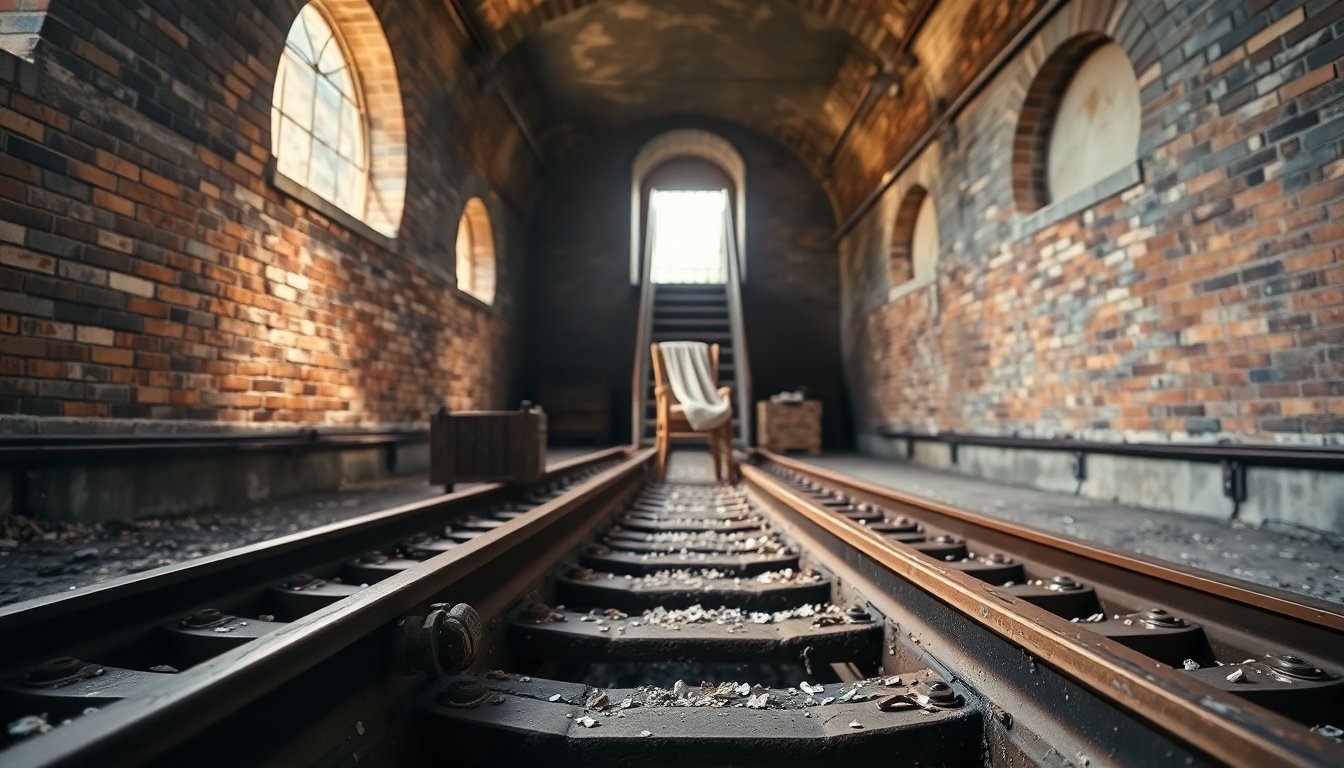
The decision to stage the piece at Dupont Underground is central to this iteration. The subterranean complex, with its industrial architecture and residual transit hardware, offers a concrete backdrop that resonates with the play’s urban anxieties. Rather than reconstructing a New Orleans streetcar line onstage, the company situates performance alongside actual elements of transit history. The echoing vaults and tiled corridors serve as a living set, and the audience is invited to inhabit a space where the past use of the site informs the work’s atmosphere. This encounter between text and place creates a palpable sense that the building itself is a collaborator in the storytelling.
Using real tracks and transit remnants
One of the production’s striking gestures is performing on or near real streetcar tracks within the Dupont Underground. These physical artifacts act as both literal and metaphorical terrain for the play: they ground Blanche’s disorientation and Stanley’s blunt presence in a material world. The creative team treats the tracks as more than prop; they are an axis around which blocking, sound cues and audience flow are organized. By foregrounding these elements, the staging underlines the connection between mobility and memory, suggesting that public infrastructure carries emotional weight as well as practical function. For audiences, the tracks provide a tactile reminder of the world beyond the theater lights.
The Streetcar Project’s touring philosophy
Across its itinerary, the Streetcar Project seeks sites that bring fresh interpretive possibilities to Williams’s script. The troupe intentionally selects found spaces—from warehouses and transit tunnels to repurposed civic spaces—that enable a dialogue between setting and story. This nomadic model challenges conventional production economics and audience expectations: instead of arriving at a hall, theatergoers follow a company to places that often require new modes of co-presence. The result is a compact but potent form of theater-making that prioritizes immediacy, surprises, and the discovery of how architecture can refract dramatic meaning.
What audiences can expect
Attendees should anticipate an intimate, sometimes stark experience in which the play’s most famous confrontations feel amplified by proximity. The stripped-down version highlights character and text, and staging on actual tracks at Dupont Underground adds an element of site-specific authenticity rarely seen in conventional productions. Practical considerations—limited seating, uneven surfaces, and close quarters—are part of the charm and challenge. For those curious about inventive stagings of canonical works, this production demonstrates how recontextualizing a classic can reveal new textures and social resonances. (publication: 13/04/2026 15:00)


