
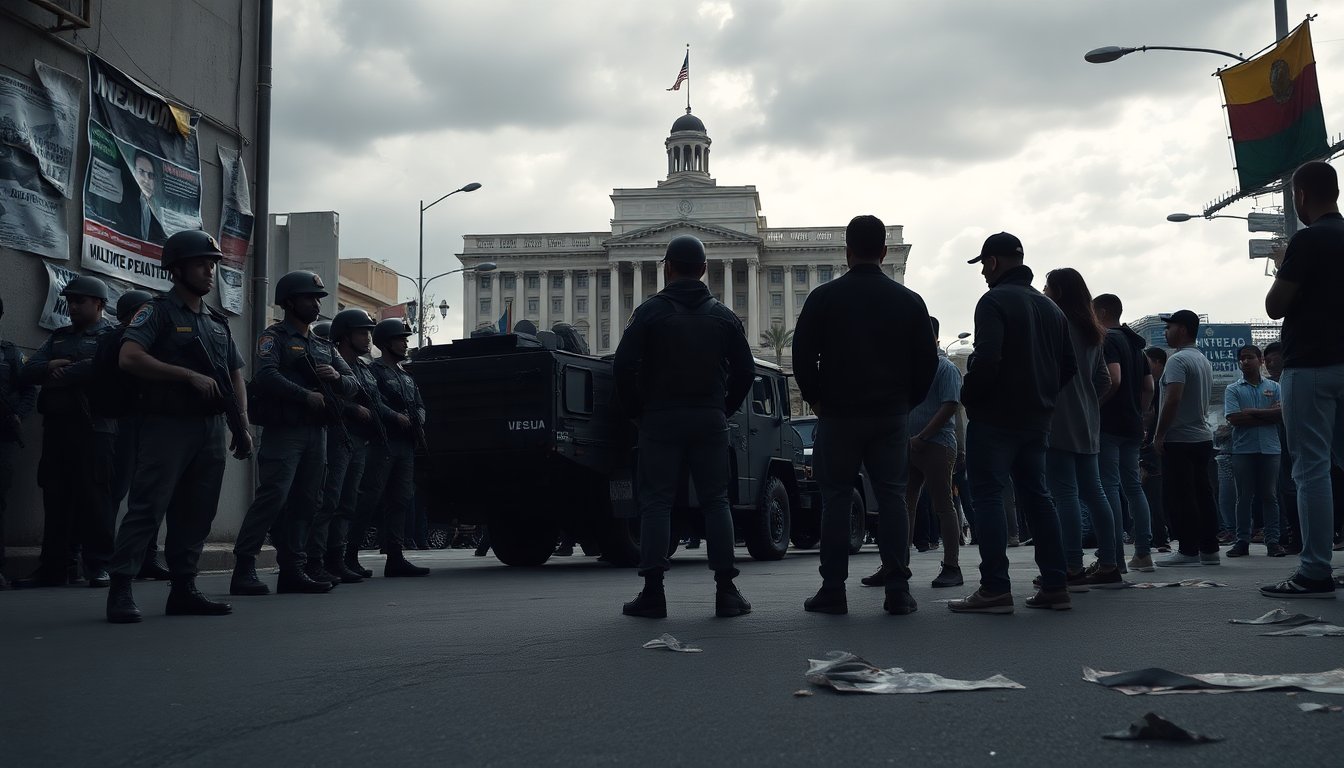
The recent intervention by U.S. forces in Venezuela, which led to the detention of President Nicolás Maduro, raises critical questions about American foreign policy under Donald Trump. This event signifies a potential shift in U.S. involvement in Latin America, prompting discussions about the administration’s intentions and the ramifications for the region.
Understanding the motivations behind such actions is essential, particularly concerning their implications for neighboring countries and political factions within Venezuela.
How it works: understanding the intervention
The abduction of Maduro is not a spontaneous act; it appears to be a calculated maneuver aligning with the Trump administration’s national interests. This operation reflects a significant policy shift, moving from diplomatic engagement to direct intervention. The National Security Strategy emphasizes U.S. interests in the Western Hemisphere, prioritizing stability and control over critical resources.
Venezuela’s ongoing political turmoil and economic collapse present an opportunity for the U.S. to extend its influence. The presence of a narco-dictatorship, mass migration, and the involvement of hostile foreign actors position Venezuela as a focal point for U.S. foreign policy efforts.
Legal implications of unilateral action
While the Trump administration operates outside traditional international law constraints, it seeks to create a legal framework to justify its actions. This approach involves constructing legal narratives to mitigate backlash and maintain diplomatic ties with allies. The operation in Venezuela, framed as a law enforcement initiative, illustrates the administration’s strategy to present unilateral actions under the guise of legality.
This tactic serves multiple purposes: it reassures domestic audiences, placates international allies, and allows the U.S. to maintain a position of moral authority when critiquing similar actions by adversaries like China or Russia. Consequently, the legal rationale becomes less about adherence to international norms and more about managing perceptions of power.
Pros and cons: the return of Realpolitik
The Trump administration appears to embrace a pragmatic approach known as Realpolitik in the context of the Venezuelan crisis. This philosophy prioritizes stability and resource control over democratic principles. The sidelining of Venezuela’s democratic opposition, exemplified by Trump’s dismissal of figures like María Corina Machado, underscores a willingness to engage with the current regime if it aligns with U.S. interests.
As the situation unfolds, Venezuela risks becoming a client state, where its sovereignty is compromised in favor of U.S. strategic objectives. The administration’s engagement with Maduro’s regime suggests that maintaining order and access to oil resources takes precedence over restoring democratic governance.
Practical applications: impacts on regional dynamics
The implications of U.S. intervention extend beyond Venezuela, affecting the entire Latin American region. The response from left-leaning governments has been muted, often failing to condemn Maduro’s regime while criticizing U.S. actions. This inconsistency undermines their credibility and positions them as ineffective actors in an increasingly polarized international landscape.
In contrast, the European Union has adopted a more pragmatic stance, reaffirming its commitment to international law while avoiding direct confrontation with the U.S. This reflects an understanding of its military limitations and a desire to maintain its identity as a normative power. In this context, the EU seeks to foster cooperation among medium and small nations, emphasizing the importance of adhering to established norms and institutions.
Market landscape: a shifting paradigm
Understanding the motivations behind such actions is essential, particularly concerning their implications for neighboring countries and political factions within Venezuela.0
Understanding the motivations behind such actions is essential, particularly concerning their implications for neighboring countries and political factions within Venezuela.1


