
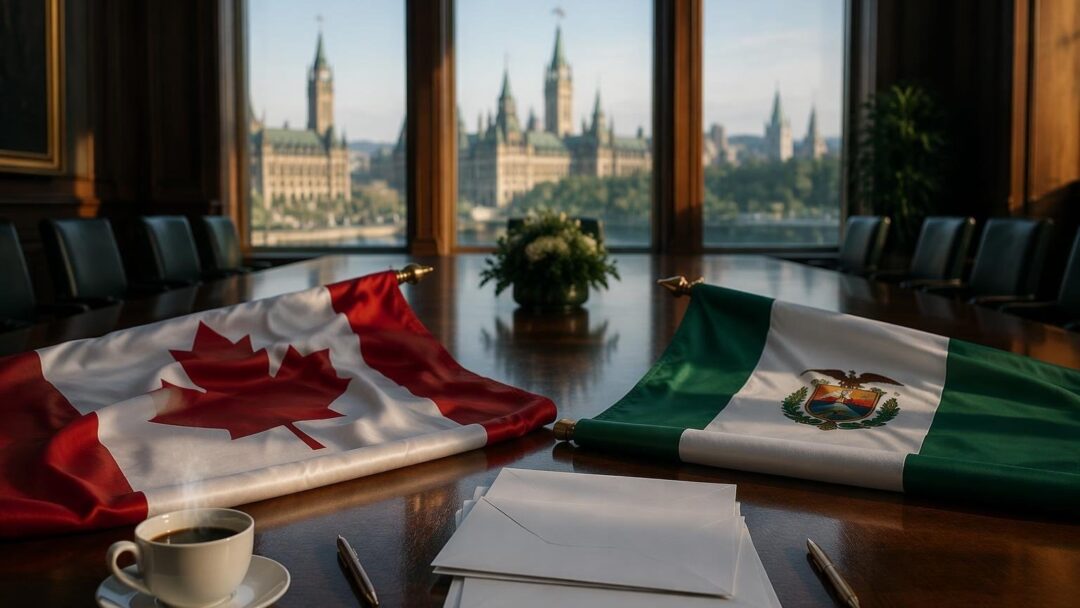
The governments of Canada and Ecuador have taken a significant step in their economic relationship by signing a free trade agreement in Ottawa on July 24, 2026. This agreement, which concluded negotiations in early 2026, aims to eliminate tariffs on all Canadian imports into Ecuador, potentially boosting bilateral trade which reached almost $2.2 billion in 2026.
The signing ceremony, confirmed by Mujtaba Hussain a spokesperson for International Trade Minister Maninder Sidhu was a low-key affair with no public events scheduled. However, the presence of Luis Alberto Jaramillo Ecuador’s minister of production, foreign trade, and investment, underscored the importance of the event.
Key details of the Canada-Ecuador free trade agreement
The proposed deal is expected to have a profound impact on the economic landscape of both countries. By removing tariffs on Canadian imports, Ecuador aims to facilitate greater market access and foster economic growth. This move is part of a broader strategy to strengthen trade ties and enhance economic cooperation between the two nations.
Bilateral trade between Canada and Ecuador has been on an upward trajectory, reaching almost $2.2 billion in 2026. The free trade agreement is anticipated to further bolster this figure by streamlining trade processes and reducing barriers to entry. The agreement is also expected to create new opportunities for Canadian businesses looking to expand into the Ecuadorian market.
Concerns raised by civil society
Despite the potential economic benefits, the Canada-Ecuador free trade agreement has faced criticism from several Canadian organizations and civil society leaders. They warn that the deal could pose significant threats to the environment and exacerbate the human rights crisis in Ecuador. These concerns highlight the delicate balance between economic growth and social responsibility that policymakers must navigate.
The critics argue that the agreement could lead to environmental degradation due to increased industrial activity and resource extraction. They also express apprehension about the potential worsening of human rights conditions in Ecuador, citing past instances of labor exploitation and environmental mismanagement. These concerns underscore the need for robust safeguards and monitoring mechanisms to ensure that the benefits of the agreement are not achieved at the expense of environmental and social well-being.
As the governments of Canada and Ecuador move forward with the implementation of the free trade agreement, it will be crucial to address these concerns and ensure that the deal contributes to sustainable and equitable development for both nations.


