
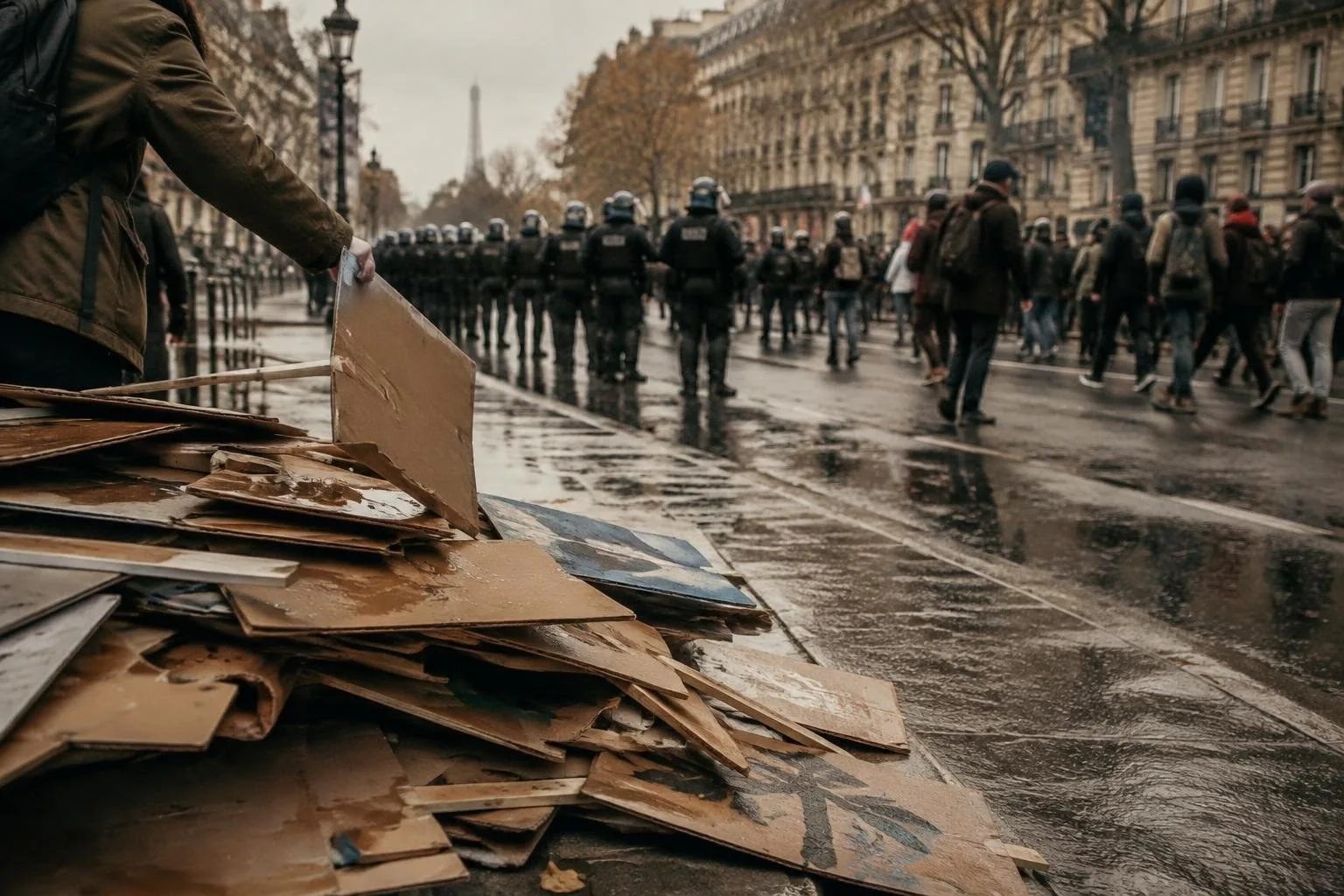
The streets of France have remained a stage for mass mobilisations ever since high-school pupils first abandoned crumbling classrooms in mid-September. What began as isolated sit-ins quickly expanded into a continent-wide outcry over education, housing and the escalating cost of living. Even two months later, the energy of the movement shows few signs of fading, with successive rallies drawing hundreds of thousands of participants across major urban centres.
Authorities report a dip in attendance on the most recent Saturday, yet the numbers remain staggering. The Ministry of the Interior recorded 146,000 demonstrators nationwide, including 46,000 in Paris, while union estimates climbed to 250,000 overall and 75,000 in the capital. Roughly 70,000 security personnel were on the streets, a deployment that followed an earlier surge when an estimated 575,000 people converged on a union-organised march.
Scale and chronology of the French mobilisations
Data compiled by ACLED reveal more than 1,200 protests and riots involving at least a hundred participants each between 15 September and 30 October. The organisation’s chief executive, Clionadh Raleigh, noted on 19 October that the country is averaging 20.5 demonstrations a day over the past five years, but the current wave has leapt to almost 66 a day – a three-fold increase. “During the current protest cycle, that has jumped to almost 66 a day, more than three times the usual rate,” she said.
Typical protest cycles last about 20 days, extending to 36 days for major movements. The French unrest, now in its 45th day, still shows no sign of abating. More striking, however, is the intensity of confrontation: ACLED classified 24.2 percent of events as riots, a stark contrast to the historic median of 1.9 percent. Only the disturbances following the death of Nahel Merzouk in 2023 recorded a higher proportion of violent episodes.
Core grievances behind the demonstrations
The grievances fuelling the protests are multi-dimensional. Initially, students protested the acute shortage of teachers, overcrowded classrooms and dilapidated school infrastructure. These concerns quickly merged with broader economic anxieties – soaring fuel prices, stagnant wages, and a housing market that leaves many unable to afford a roof over their heads. Trade unions and the revived yellow-vest movement have joined forces, widening the scope to include demands for higher wages and more robust social-housing programmes.
From classrooms to streets
By 17 October, government figures tallied half a million participants nationwide, echoing the magnitude of the earlier school-based walk-outs. The protests have since taken on a darker hue, with isolated incidents of looting and property damage. Yet the majority of demonstrators remain focused on systemic reforms: better-funded public services, a fairer cost-of-living framework, and renewed investment in education.
Police tactics and international backlash
Law-enforcement responses have sparked equal controversy. In Paris, police deployed tear-gas canisters and batons against crowds, while in Lyon officers fired tear-gas rounds at hundreds obstructing a central road. A teenager in Lille suffered a gruesome injury when a grenade exploded during a clash, resulting in the loss of a hand. Across the nation, roughly 70,000 uniformed agents have been mobilised to manage the unrest.
Four United Nations experts mandated by the Human Rights Council issued a statement on 28 October condemning the “excessive use of force” by French authorities. They warned that the “scale of the arrests and detention, affecting several thousand people, mainly minors, appears disproportionate and deters demonstrators from exercising their freedoms of expression and peaceful assembly.” The criticism adds to a growing perception that police tactics may be inflaming rather than containing the discontent.
Spill-over across Europe
France is not isolated in its turmoil. ACLED data indicate that, between 15 September and 30 October, more than 1,700 protests and riots involving at least a hundred participants each erupted across Europe. While France dominates the tally with 1,200 events, Spain (173), Italy (160), Germany (70) and Portugal (33) also reported notable unrest. In Spain, tens of thousands rallied after parliament rejected two emergency housing decrees on 2 October, dealing a blow to Prime Minister Pedro Sanchez‘s minority government. Italian streets have seen clashes over the cost-of-living crisis, and Portuguese citizens have marched against low wages and unaffordable housing.
Professor Alberto Alemanno of HEC Paris Business School told Al Jazeera that France serves as the epicentre of a broader European wave, noting that “there are signs now that this is spreading beyond France.” The synchronised nature of these demonstrations underscores a shared frustration with under-funded public services and inflationary pressures that transcend national borders.