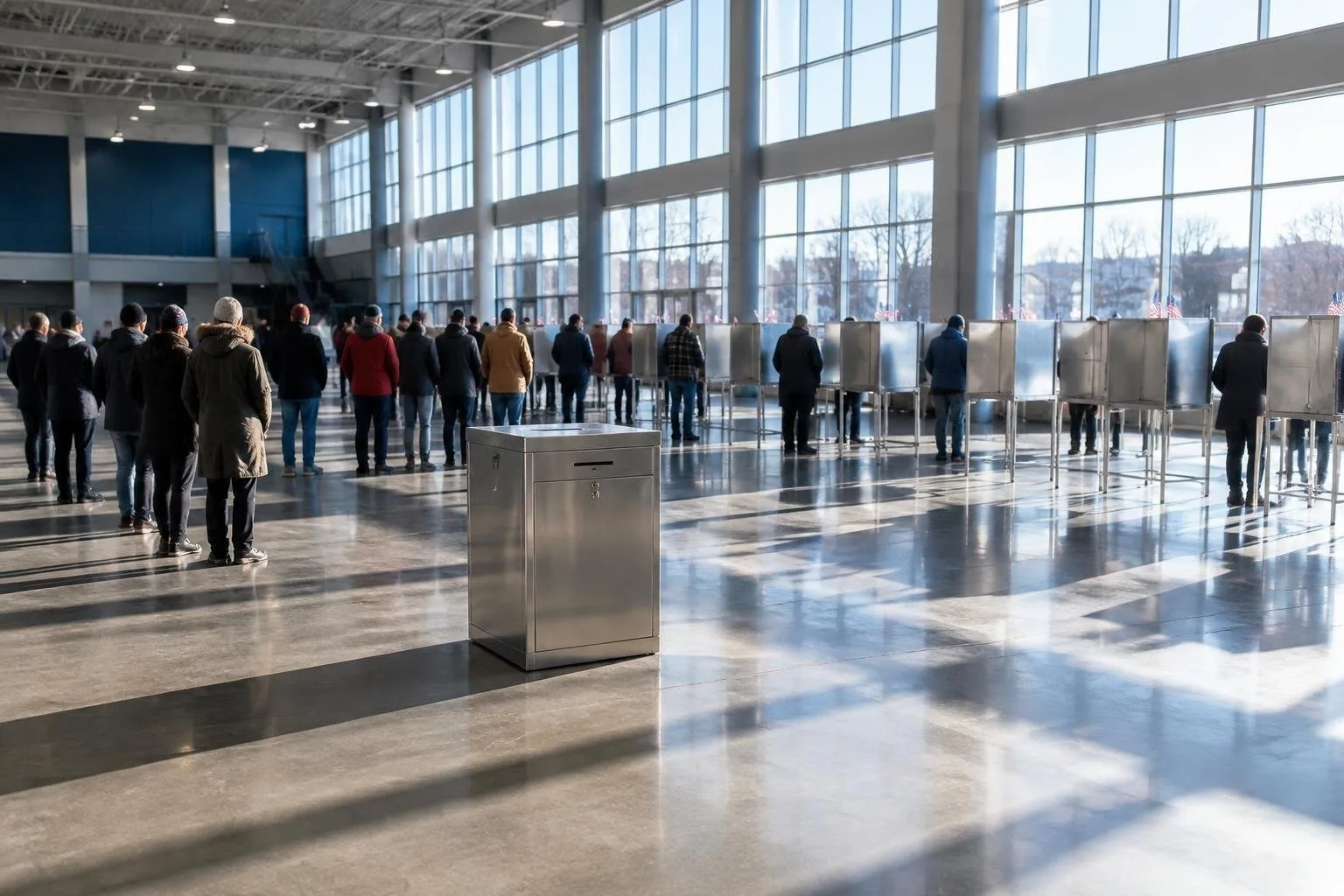

The Tuesday midterm elections handed the Democratic Party overwhelming victories across the nation, ending two years of unified Republican Party control in Washington, DC. Both the House and the Senate will be commanded by Democrats heading into 2027, a shift that many analysts interpret as a broad repudiation of the president’s second term.
Amid this historic swing, Donald trump offered only a brief, almost detached public appearance the following day. Rather than addressing the election outcome, he chose the partially finished East Wing ballroom as his backdrop, commenting on its dimensions, kitchen layout, and the marble flooring he selected. The president also placed his signature on a solitary steel beam, a symbolic gesture that drew little attention away from the larger political reality.
Democratic wave ends Republican control
The Tuesday results were decisive: every contested seat that had leaned Republican in the previous cycle was captured by Democrats, giving the party commanding majorities in both chambers. This outcome dismantles the brief period of single-party dominance that the GOP enjoyed for the past two years, and it positions the Democratic caucus to shape legislation for the next six years.
Trump’s brief public appearance
When reporters asked the president about the vote, his answers centered on the White House construction project rather than the electoral loss. He noted the ballroom’s size, praised the kitchen’s design, and highlighted his choice of marble, while offering one brief acknowledgment of the results: “I think it’s largely true, but at the same time, if I had to do it again, I’d have to do it again.” No claims of electoral fraud appeared, a notable departure from the president’s usual rhetoric.
Advisers and the ‘too big to rig’ assessment
One senior adviser, speaking on condition of anonymity, suggested that challenging the outcome would be futile because the Democratic surge was “too big to rig.” The adviser warned that any legal contest would likely focus on a handful of outlier states, but the scale of the loss made a nationwide challenge improbable.
JD Vance points to Iran war
Vice President JD Vance entered the post-election conversation by attributing the defeat to the ongoing Iran war. In a lengthy social-media post he wrote that voters rejected the conflict, linking it to broader frustrations over cost of living and foreign policy. When asked about Vance’s comments, the president called the vice-president’s take “good” and affirmed that the war was a decision he “knew would impact” the midterms.
Implications and future narratives
Political observers, including commentator Astead Herndon, have described the president’s demeanor as entering the “stages of grief.” In the coming days, multiple versions of Trump’s response are expected to surface as the administration prepares for a Democratic-controlled Congress in January. Meanwhile, policy-level wins for Democrats—such as the potential expansion of Medicaid to over a million low-income Texans—signal tangible shifts that will shape the national agenda regardless of rhetorical posturing.