
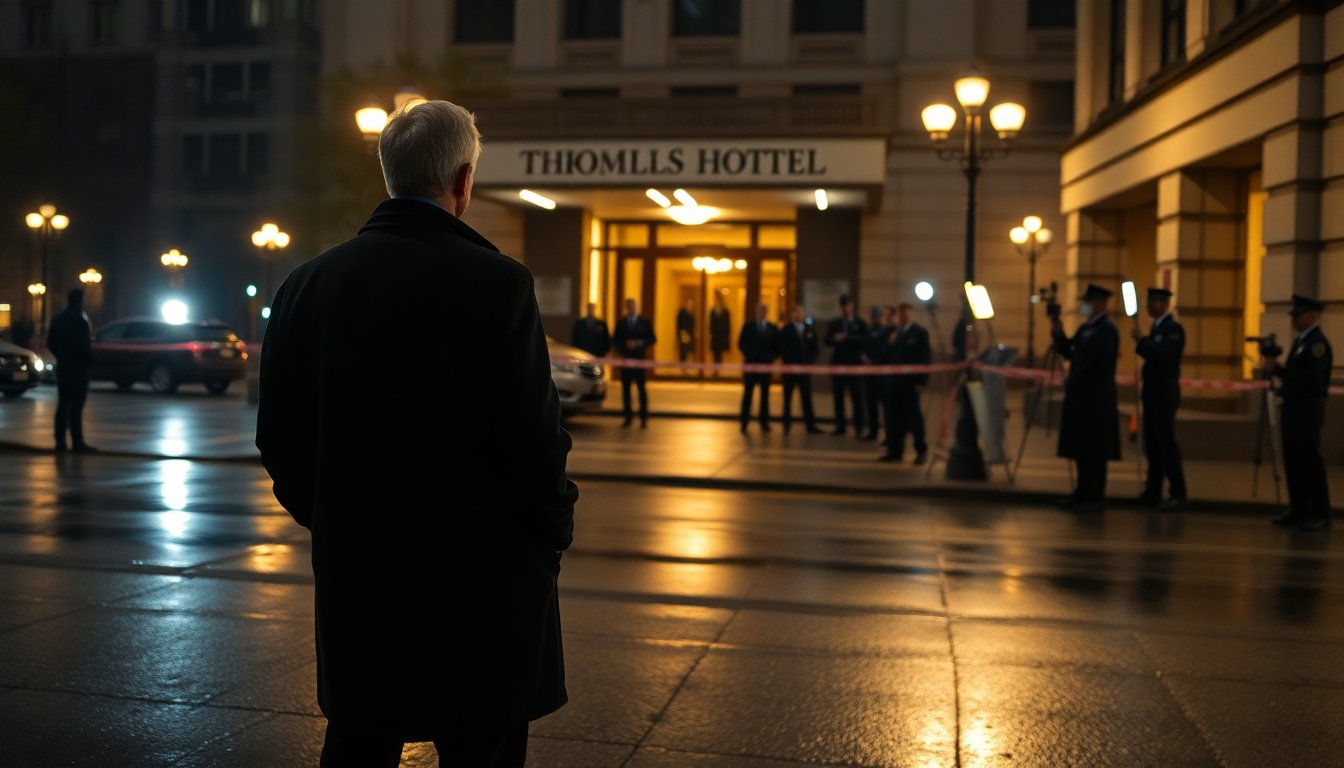
The shooting at the White House Correspondents’ Association event at the Washington Hilton left the capital shaken and reopened familiar debates about security and the effect of political language. A suspect who allegedly targeted President Donald Trump was apprehended after authorities say he tried to reach an event protected by the Secret Service. His circulated manifesto reportedly accused the president of criminal conduct, but officials and commentators quickly diverged over whether the attacker’s written claims should shape the broader public discussion.
The episode produced swift reaction across the political and media ecosystems. Some leaders demanded calmer tone and national unity, while others pointed to decades of charged commentary as a contributing factor. At the same time, the incident exposed procedural weaknesses at the venue and renewed proposals to create more secure spaces for presidential events. The following sections examine the security gaps, the rhetorical battlefield and the institutional responses that emerged.
Security at the venue: what went wrong and what to change
Investigations into the incident focused on how a lone attacker could navigate into a hotel where the president and senior officials were present. Witness reports described inconsistent ticket checks and easy access to pre-event receptions, highlighting vulnerabilities in a sprawling property with simultaneous gatherings. Critics noted the Washington Hilton’s history — the site of President Reagan’s 1981 shooting — as a reminder that venue design and entry protocols matter. Calls rose for alternatives: some voices suggested moving the association event or building a dedicated, secure space, and public figures like Whoopi Goldberg even proposed that President Trump consider constructing a new hotel ballroom after her April 27, 2026 remarks. Senators and other lawmakers echoed the need for safer spaces where a president can host events without the same level of perimeter risk.
Rhetoric and blame: how language shaped the fallout
Almost immediately, the incident reignited a familiar pattern of assigning culpability based on political speech. Some leaders blamed left-leaning commentary and media framing; others pointed to extreme language from the right. The subject of motive became a contested frame: while the suspect’s writings reportedly expressed hatred for Mr. Trump, many analysts argued that focusing on motive risks oversimplifying mental health and radicalization issues. Historical examples were cited on both sides — from the shooting that injured Rep. Gabby Giffords to earlier high-profile attacks — to argue for or against the view that public rhetoric can inspire violence. At the same time, commentators reminded audiences that violent acts often involve individuals with complex personal histories and should not automatically be treated as direct products of any single speech act.
Media handling and public reactions
How outlets covered the attacker’s notes became another flashpoint. A network segment that read passages from the alleged manifesto drew an angry public response from the president, who called the broadcast disgraceful for quoting language that accused him of heinous crimes. At the same time, controversies unrelated to the shooting — such as a late-night host’s joke about the first lady that provoked a sharp rebuke from her — added fuel to accusations that entertainers and journalists sometimes cross lines. White House spokespeople framed much of the criticism as evidence of a broader culture of hostility toward the president, while media defenders insisted on the public’s right to know what the suspect said and why it matters for reporting.
Institutional responses and the path forward
Top officials and law-enforcement leaders urged restraint and unity while announcing measures to review security. The FBI presence at the venue and statements from senior officials emphasized that a far worse outcome had been averted thanks to quick action at a final checkpoint. Political leaders across the spectrum issued calls to lower the temperature of public discourse, and some lawmakers moved to accelerate approval for new secure facilities to host high-profile events. Legal and criminal proceedings for the accused are moving through the courts, and prosecutors and judges will now confront questions about media access, jury contamination and the balance between transparency and a fair trial.
In the weeks ahead, officials face multiple tasks: strengthen operational security at civic gatherings, study how individuals are radicalized online and renew public commitments to discourage violent imagery in political debate. The event served as a stark reminder that robust protection and responsible public discourse are both essential to democratic life, and that avoiding simplistic explanations about motive or assigning collective guilt can help communities recover while pursuing accountability.


